
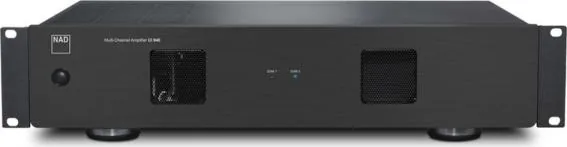
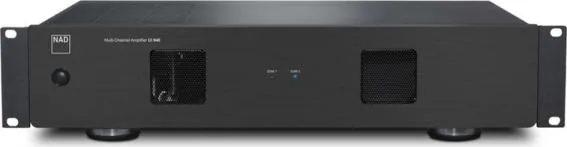
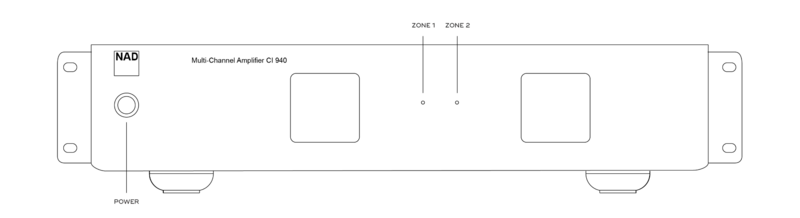
NAD CI 940 Manual
PDF manual · 12 Pages
English



Quick check
Incorrect answer, please try again.
Chat with your NAD CI 940 manual using AI
Get instant AI answers from your NAD CI 940 manual
Ask anything about the NAD CI 940. Answers come from this manual, with the pages they are based on.
CI 940 Maintenance Schedule
Disconnect the AC plug from the outlet before cleaning. Do not use liquid cleaners or sprays; only wipe with a damp cloth.
If the unit is not used for several months, unplug the power cord from the outlet.
Ask a Question
Do you recommend CI 940?
Yes NoFrequently Asked Questions
It is a multi-channel amplifier intended for custom audio systems, especially installations that need two zones of speaker output with flexible control and reliable day-to-day operation.
Is this answer helpful?
Yes. Each zone can be set to bridge mode, turning it into a mono output with higher power. This is useful when a single stronger channel is needed for a speaker or zone.
Is this answer helpful?
Yes. It can power on through a +12V trigger or by sensing an active audio signal, depending on how the rear-panel switch is configured.
Is this answer helpful?
It provides more than 35 W per channel into 8 or 4 ohms in stereo, and more than 70 W into 8 ohms in bridge mode, according to the listed specifications.
Is this answer helpful?
Make sure the AC power is connected, the power switch is on, the unit is out of standby, and an active input signal is reaching the zone input terminals. Also check speaker wiring.
Is this answer helpful?
The amplifier needs open airflow to avoid overheating and to operate reliably. The manual advises leaving space around the unit and avoiding enclosed or soft-surface placement.
Is this answer helpful?
Yes, as long as basic safety rules are followed. Keep it dry, use the correct fuse, avoid blocking vents, and disconnect power before changing connections or performing maintenance.
Is this answer helpful?
Advantages and Disadvantages
Advantages

- Two-zone design supports flexible stereo or bridged speaker setups for different installation needs.
- +12V trigger and input-sense modes make it easy to integrate with control systems and AV components.
- Compact chassis and clear rear-panel layout suit structured custom audio installations.
- Low standby power and auto-standby behavior help reduce unnecessary energy use.
Disadvantages

- Output power is modest compared with larger amplifiers, so it may not suit very demanding rooms.
- Bridge mode requires care and is not recommended with low-impedance speakers.
- Setup depends on correct wiring, ventilation, and mode selection, which may be complex for beginners.
- No user-serviceable parts inside, so repairs require qualified service support.
Product Specification
Channels
4
Power per Channel
35W (8Ω), 60W (4Ω)
Audio Connections
2x Stereo Line In (RCA), 2x Pre Out (RCA)
Power Consumption
55W muted, 0.5W Standby
Color
black
Dimensions
19.02x4.13x12.72in (WxHxD)
Weight
15.34lb
Product Description
NAD CI 940: Compact Multi-Zone Power with Practical Control
The NAD CI 940 is a multi-channel amplifier designed for custom audio installations where reliability, flexibility, and clean control matter. It is built to serve two separate zones, giving users a straightforward way to power distributed speakers in a home audio setup, media room, or small commercial environment. The NAD CI 940 Manual highlights that this amplifier is not just about output; it is also about safe operation, simple integration, and dependable everyday use.
One of the most useful features is the ability to configure each zone in either stereo or bridge mode. In stereo, the amplifier can drive two channels normally, while bridge mode allows a zone to act as a mono output with higher power. That makes the CI 940 adaptable to different speaker layouts and listening goals. For installers and enthusiasts, this flexibility can simplify system design without adding unnecessary complexity.
The unit also supports practical startup options, including front-panel standby control, +12V trigger input, and input-sensing auto turn-on. This means the amplifier can work smoothly with a preamplifier or AV processor and power on only when needed. The manual also explains that if no signal is present, the system can return to standby after a delay, helping reduce wasted energy.
Another strong point is the focus on safe installation. NAD includes clear guidance on ventilation, grounding, cable routing, and protection from moisture, overload, and heat. These notes matter because an amplifier installed in a confined rack or used with poor wiring can suffer performance loss or damage. The CI 940 is rated for modest but useful continuous power, with dynamic capability that supports a wide range of everyday audio applications.
For users who value long-term ownership, the CI 940 also offers straightforward maintenance rules. Keep it ventilated, use the correct fuse, avoid blocking airflow, and disconnect power before making connections. In short, this amplifier is a thoughtful solution for people who want multi-zone sound with dependable control and a clear operating philosophy.
Notes
- Best suited for custom installs and multi-room audio.
- Bridge mode increases power, but low-impedance speakers are not recommended.
- Proper ventilation and wiring are essential for stable performance.
Search for 67,706 Manuals online


Type-in Brand or Model