
Growatt ARK HV H Manual
PDF manual · 17 Pages
English



Quick check
Incorrect answer, please try again.
Chat with your Growatt ARK HV H manual using AI
Get instant AI answers from your Growatt ARK HV H manual
Ask anything about the Growatt ARK HV H. Answers come from this manual, with the pages they are based on.
ARK HV H Maintenance Schedule
If the battery is not operated for a longer period, perform a discharge/charge cycle every 3 months to maintain chemical properties. Do not exceed 6 months between charges.
If the battery is stored for longer than six months, charge it to 40% State of Charge using a charger every six months.
Free maintenance reminders
Timed to your purchase date. Always free, unsubscribe anytime.
Ask a Question
Do you recommend ARK HV H?
Yes NoFrequently Asked Questions
You can connect up to ten ARK 2.5H-A1 battery modules in series to expand the system capacity. This configuration allows you to achieve higher voltage and total energy storage tailored to your specific needs.
Is this answer helpful?
Yes, the system has an IP65 rating, making it suitable for outdoor use. However, it must be protected from direct sunlight and rain using appropriate shading or shelter to ensure longevity and safety.
Is this answer helpful?
The battery operates between -10°C and +50°C. Performance may be limited when ambient temperatures drop below 0°C, but the system includes thermal management to protect cells and ensure safe operation.
Is this answer helpful?
The system is optimized for use with Growatt PCS inverters using the CAN communication protocol. While physical connections might be possible, full functionality and safety features are best realized with compatible Growatt equipment.
Is this answer helpful?
If communication between the battery and PCS fails, the system will trigger an alarm. It may stop discharging to prevent unsafe conditions. You should check cable connections and contact a qualified technician if the issue persists.
Is this answer helpful?
If storing the battery for more than six months, you must recharge it every six months to a 40% State of Charge (SOC). This prevents deep discharge damage and maintains cell health during long-term inactivity.
Is this answer helpful?
Advantages and Disadvantages
Advantages

- Modular design allows scaling from 2 to 10 units for flexible capacity
- High safety standards with LFP chemistry and comprehensive BMS protection
- IP65 rated enclosure supports versatile indoor and outdoor installation
- Excellent round-trip efficiency minimizes energy waste during cycles
- Real-time monitoring via CAN protocol ensures stable system operation
Disadvantages

- Requires professional installation due to high voltage and safety risks
- Initial setup cost may be higher compared to lower voltage alternatives
- System performance can degrade slightly in extreme cold temperatures below zero
- Strict compatibility requirements limit use with non-Growatt inverters
- Heavy modules require reinforced mounting structures for wall installation
Product Specification
Note
Prices include partial 0% VAT rates for AT and DE
Battery Type
LiFePO4
Operating Temperature
14°F to 122°F
Lifespan
10 years
Display
No
Features
Battery Management System, State of Charge Indicator, Soft Start, Emergency Power Function
Interfaces
RS-485
Mounting Type
Freestanding (stackable), Wall-mounted
Protection Class
IP65
Product Description
Unlocking Energy Independence with the Growatt ARK HV H
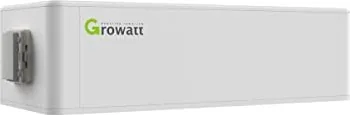
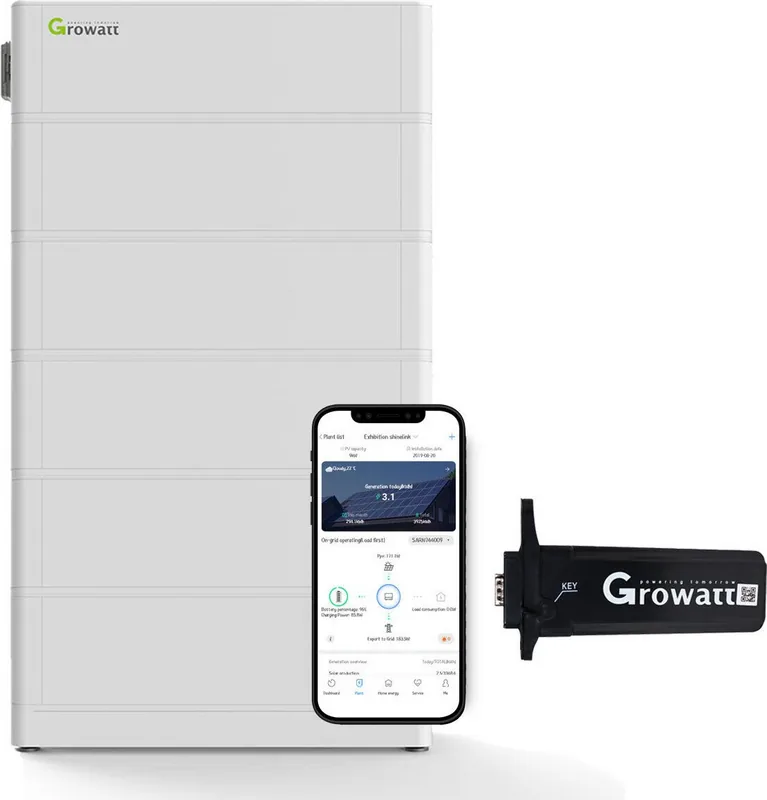
The Growatt ARK HV H represents a significant leap in residential and commercial energy storage, designed to maximize solar self-consumption and ensure power reliability during outages. This high-voltage battery system integrates seamlessly with Growatt inverters to create a robust energy ecosystem. By utilizing advanced Lithium Iron Phosphate (LFP) technology, the system offers superior safety, extended cycle life, and consistent performance across varying environmental conditions.
At the heart of the ARK HV H is a modular architecture that allows for scalable deployment. Users can configure the system by connecting between two and ten battery modules in series, tailoring the total capacity to meet specific energy demands. Whether powering a single home or a small business facility, the system intelligently manages energy flow. During daylight hours, excess solar generation is stored efficiently, while at night or during grid failures, the battery discharges to keep essential loads running without interruption.
Installation flexibility is a key feature, supporting both wall-mounted and floor-standing configurations. The unit boasts an IP65 rating, making it suitable for indoor and outdoor environments provided it is shielded from direct weather exposure. Advanced monitoring capabilities via CAN communication allow real-time tracking of voltage, current, and temperature, ensuring optimal operation and immediate alerts for any anomalies. Safety is paramount, with built-in protections against overvoltage, overheating, and short circuits, all managed by a sophisticated Battery Management System (BMS).
Key Operational Highlights
The system operates within a wide temperature range, maintaining efficiency even in challenging climates. Its high round-trip efficiency ensures minimal energy loss during charge and discharge cycles. Regular maintenance is straightforward, with clear indicators guiding users through diagnostics and module replacement if necessary. The integration of smart software updates ensures the system evolves with new features and security patches.
Important Notes
- Always ensure professional installation to maintain warranty validity.
- Regularly check ventilation areas to prevent overheating.
- Use only compatible Growatt components for optimal performance.
- Store spare modules in a dry, climate-controlled environment.
Search for 67,706 Manuals online


Type-in Brand or Model