
Manual.ly Logo

PowerWalker VI 1200 RLE Manual

0.0 · 0 Ratings

PDF manual · 6 Pages

English

M: OA-GPT-54-NAN
page

/ 6

Loading...
3c01400e44c4e117efcb34dace42fbaa335b page 1
Line-interactive UPS
PowerWalker VI 1200-3000 RLE
User Manual
IMPORTANT SAFETY INSTRUCTIONS
(SAVE THESE INSTRUCTIONS)
This manual contains important safety instructions. Please read and follow all instructions carefully during installation and operation of the unit. Read this
manual thoroughly before attempting to unpack, install, or operate your UPS.
CAUTION! To prevent the risk of fire or electric shock, install in a temperature and humidity controlled indoor area free of conductive contaminants. (See the
specifications for the acceptable temperature and humidity range.)
CAUTION! To reduce the risk of overheating the UPS, do not cover the UPS' cooling vents and avoid exposing the unit to direct sunlight or installing the unit
near heat emitting appliances such as space heaters or furnaces.
CAUTION! Do not attach non-computer-related items, such as medical equipment, life-support equipment, microwave ovens, or vacuum cleaners to UPS.
CAUTION! Do not plug the UPS input into its own output.
CAUTION! Do not allow liquids or any foreign object to enter the UPS. Do not place beverages or any other liquid-containing vessels on or near the unit.
CAUTION! In the event of an emergency, press the OFF button and disconnect the power cord from the AC power supply to properly disable the UPS.
CAUTION! Do not attach a power strip or surge suppressor to the UPS.
CAUTION! Unplug the UPS prior to cleaning and do not use liquid or spray detergent.
INSTALLING YOUR UPS SYSTEM
UNPACKING
The box should contain the following:
(1) UPS Unit x 1; (2) User Manual1; (3) USB Cable x 1; (4) RS232 Cable x 1;
HOW TO DETERMINE THE POWER REQUIREMENTS OF YOUR EQUIPMENT
1. Ensure that the equipment plugged into the battery power-supplied outlets does not exceed the UPS unit’s rated capacity. If rated unit capacities are
exceeded, an overload condition may occur and cause the UPS unit to shut down or the fuse blow.
2. There are many factors that can affect the amount of power that your computer system will require. For optimal system performance keep the load
below 80% of the unit’s rated capacity.
HARDWARE INSTALLATION GUIDE
1. Your new UPS may be used immediately upon receipt. However, recharging the battery for at least 8 hours is recommended to ensure that the battery's
maximum charge capacity is achieved. Charge loss may occur during shipping and storage. To recharge the battery, simply leave the unit plugged into
an AC outlet. The unit will charge in both the on and off position.
2. With the UPS unit off and unplugged, connect the computer, monitor, and any externally powered data storage device.
3. Plug the UPS into a 2 pole, 3 wire grounded receptacle (wall outlet). Make sure the wall branch outlet is protected by a fuse or circuit breaker and does
not service equipment with large electrical demands.
4. Depress the power switch to turn the unit on. The LCD indicator light will illuminate and the unit will "beep".
5. To maintain optimal battery charge, leave the UPS plugged into an AC outlet at all times.
6. To store your UPS for an extended period, cover it and store with the battery fully charged. Recharge the battery every three months to ensure battery
life.
ROUTINE MAINTENANCE AND STORAGE
ROUTINE MAINTENANCE
1. Use dry soft clothes to clean the front panel and plastic parts. Do not use any detergent that contains alcoholic ingredient.
2. The expected lifetime of the battery is around 3 years. Improper operation and harsh environment will reduce the actual lifetime.
3. Unplug the UPS from power inlet if the UPS will not operate for long period of time.
STORAGE
1. First turn off your UPS and disconnect its power cord from the wall outlet. Disconnect all cables connected the UPS to avoid battery drain.
2. The UPS should be stored in a cool dry location.
3. Make sure the battery is fully charged before the UPS is stored.
4. For extended storage in moderate climates, the battery should be charged for 12 hours every 3 months by plugging the power cord into the wall
receptacle and turning on the main switch. Repeat it every 2 months in high temperature locations.
BASIC OPERATION
FRONT AND TOP PANEL DESCRIPTION
PowerWalker VI 1200/ 2200 RLE Front View
PowerWalker VI 3000 RLE
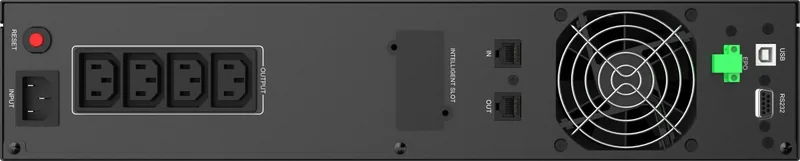
1. Input Circuit Breaker
The circuit breaker provides optimal overload protection.
2. AC Inlet
Connect to utility power through the input power cord.
3. AC outlet
The UPS provides outlets for connected equipment to insure temporary uninterrupted operation during a power failure and against surges and spikes.
4. SNMP/HTTP Network Port
The SNMP/HTTP port provides remote monitoring and management of your UPS over a network.
5. RJ45/11 Communication Protection Ports
Communication protection ports will protect any standard modem, fax, telephone line, or network cable.
6. EPO Port
Enables an emergency UPS Power-Off from a remote location. EPO terminal open, the UPS will turn off and the output shutdown immediately.
7. USB Port
This port allows connection and communication form the USB port on the computer to the UPS unit.
8. Serial Port
This port allows connection and communication from the DB9 serial on the computer to the UPS unit. The UPS communicates its status to the
software.
9. Not used
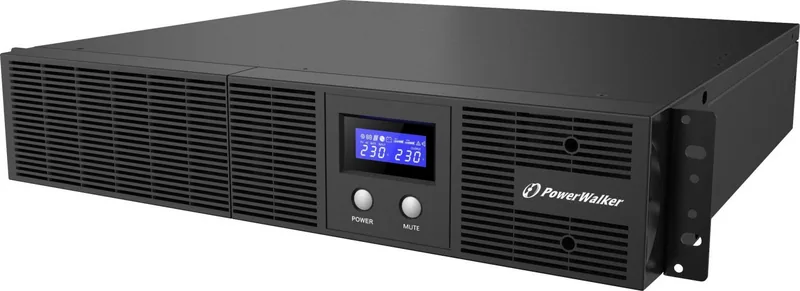
10. Power On/Off Switch
Press the power switch to turn the UPS ON or OFF.
11. Mute Button
The audible alarm can be turned off/on by pressing this button.
12. LCD Display
The LCD will display the UPS status including input voltage, output voltage, runtime, percentage of load and battery, etc.
SOFTWARE DOWNLOAD
Power Master management software provides a user-friendly interface for your power systems. The graphic user-interface is intuitive and displays essential
power information at a glance. Please follow procedure below to install the software.
Installation procedure:
1.Download Power Master from the website:
http://www.powermaster. powerwalker.com
2.Double-click the file and follow the installation steps.
3.When your computer restarts, the Power Master
software will appear as a blue icon located in the
system tray.

Chat with your PowerWalker VI 1200 RLE manual using AI

Get instant AI answers from your PowerWalker VI 1200 RLE manual

Ask anything about the PowerWalker VI 1200 RLE. Answers come from this manual, with the pages they are based on.

VI 1200 RLE Maintenance Schedule

Remind me when maintenance is due
Every 2 months
Recharge battery in high temperatures

In high temperature locations, repeat the charging process every 2 months during extended storage.

Every 3 months
Recharge battery during storage

For extended storage in moderate climates, charge the battery for 12 hours every 3 months by plugging into a wall outlet and turning on the main switch.

Free maintenance reminders

Timed to your purchase date. Always free, unsubscribe anytime.

By submitting you agree to the privacy policy. Unsubscribe with one click in any email.
M: QW-35-FL

Ask a Question

0/1000

Do you recommend VI 1200 RLE?

Yes No

Frequently Asked Questions

A

It is a line-interactive UPS designed to protect electronics from outages, surges, and voltage fluctuations. The built-in AVR helps correct power changes before the unit needs to switch heavily to battery mode.

Is this answer helpful?

A

It is a good fit for desktop computers, monitors, external storage, modems, routers, and similar office or home office equipment. It is not recommended for medical, life-support, or other non-computer devices.

Is this answer helpful?

A

They allow the UPS to communicate with a computer or monitoring software. That makes it easier to track status, manage shutdowns, and check battery or power conditions during outages.

Is this answer helpful?

A

The manual recommends charging the battery for at least 8 hours before regular use. This helps ensure the battery reaches its maximum charge capacity after shipping or storage losses.

Is this answer helpful?

A

The LCD shows important operating data such as input voltage, output voltage, runtime, battery level, load percentage, and whether the unit is running on line power or battery power.

Is this answer helpful?

A

Store it in a cool, dry place with a fully charged battery. For long storage periods, recharge it every 3 months in moderate climates, and more often in hotter environments.

Is this answer helpful?

M: OA-GPT-54-NAN

Advantages and Disadvantages

Advantages

  • Line-interactive design helps stabilize common voltage swings without overusing the battery.
  • USB and serial ports support software monitoring and controlled shutdowns.
  • LCD display gives clear live data on load, battery, runtime, and power status.
  • AVR boost and buck functions improve power quality for connected equipment.
VS

Disadvantages

  • Battery runtime depends on load, so heavy equipment may reduce backup time.
  • The unit is intended for computer and network gear, not medical or life-support devices.
  • Regular battery charging is needed during storage to maintain long-term health.
  • Overload or poor ventilation can trigger shutdowns or fault codes if not managed carefully.
M: OA-GPT-54-NAN

Product Specification

Type

Rackmount

Classification

VI (Line-Interactive)

Apparent Power

1200VA

Active Power

720W

Voltage

230V

Input

C14

Outputs

4x C13

Interfaces

USB, serial

Data Line Protection

RJ-11, RJ-45

Runtime

11.5min (50%), 3.1min (100%)

Charging Time

4h (90%)

Weight

32.41lb

Dimensions (WxHxD)

17.24x3.46x16.93in

Rack Units

2U

19" Rackmount Depth

16.93in

Features

LCD

M: OA-GPT-54-NAN

Product Description

BlueWalker PowerWalker VI 1200 RLE, USB/serial Manual: Practical Power Protection for Everyday Systems

The BlueWalker PowerWalker VI 1200 RLE, USB/serial Manual presents a compact line-interactive UPS designed to keep essential electronics running when the power gets unstable. This model is built for users who want dependable backup, surge protection, and clear status monitoring in one straightforward solution. With USB and serial connectivity, it also fits neatly into setups that need basic communication with a computer or management software.

What stands out most is the balance between simplicity and useful protection. The UPS uses AVR boost and buck functions to correct voltage fluctuations without switching to battery too often, which helps preserve battery life. It delivers a sine wave output on battery, making it a solid match for desktops, monitors, networking gear, and external storage devices. For a home office or small business workspace, that kind of stable output can make a big difference during short outages and frequent voltage dips.

The front panel LCD makes day-to-day use easier by showing key operating details such as input voltage, output voltage, battery level, load percentage, and runtime estimates. That means users can quickly understand whether the unit is charging, running on battery, or reporting a fault. The audible alarm can also be muted when needed, adding a bit of convenience in quieter environments.

Another practical strength is the communication support. The USB and serial ports let the UPS work with monitoring software, giving users a clearer view of power status and shutdown coordination. For anyone who values orderly shutdowns and data protection, that is an important advantage. The PowerWalker VI series also includes protection against overload, short circuits, and overtemperature situations, which adds confidence in daily operation.

Maintenance is uncomplicated. The battery can be recharged while the unit is on or off, and the manual recommends regular charging during storage to help extend battery life. With a sealed lead-acid battery and automatic restart support, the system is designed to recover smoothly after outages.

Notes

  • Keep the load below 80% for better performance.
  • Recharge the battery for at least 8 hours before first use.
  • Store the UPS in a cool, dry place when not used for long periods.
M: OA-GPT-54-NAN

© Copyright 2026 Manual.ly