
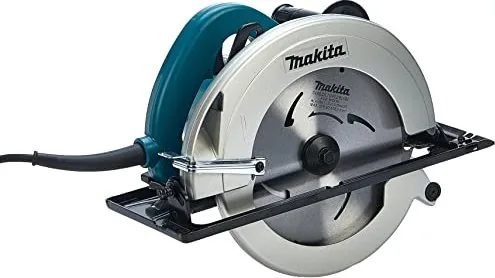
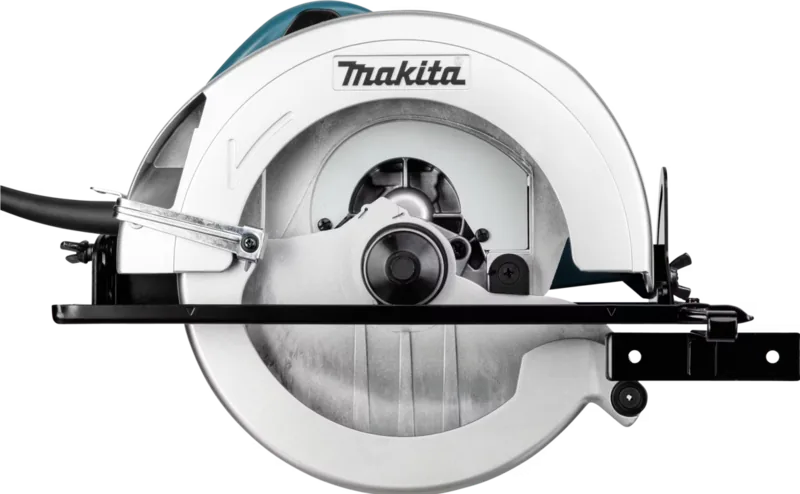
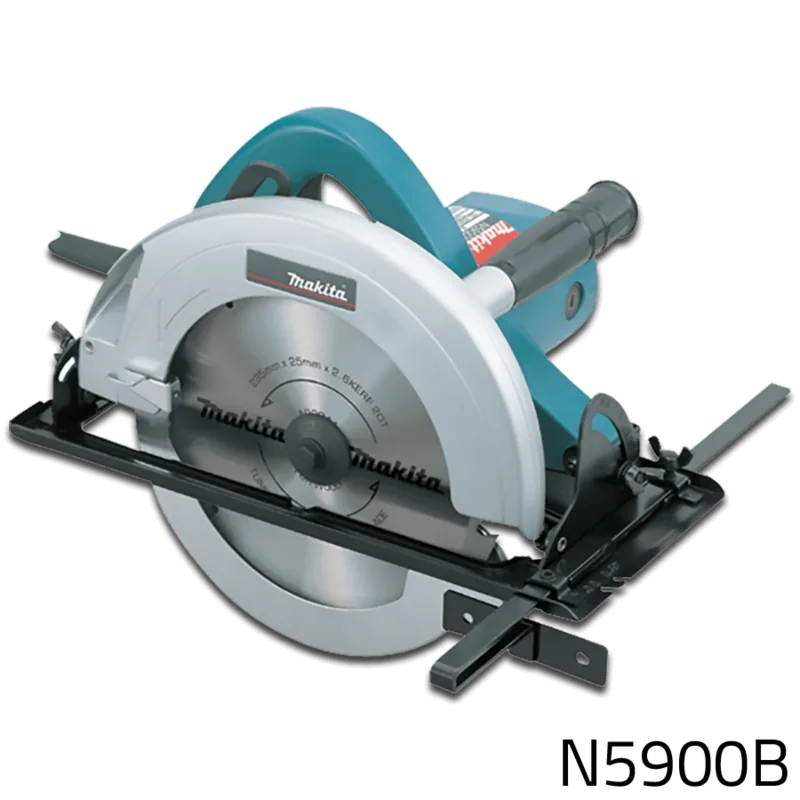
Makita N5900B Manual
PDF manual · 56 Pages
English



Quick check
Incorrect answer, please try again.
Chat with your Makita N5900B manual using AI
Get instant AI answers from your Makita N5900B manual
Ask anything about the Makita N5900B. Answers come from this manual, with the pages they are based on.
N5900B Maintenance Schedule
Ensure the lower guard moves freely and closes instantly. Check the spring; if sluggish or damaged, service before use.
Remove and check regularly. Replace both when worn to limit mark. Keep clean and free to slip in holders.
Ask a Question
Do you recommend N5900B?
Yes No
Elena Kowalski
6 months ago
Is this circular saw suitable for cutting hardwoods like Bongossi daily, and how easy is the depth adjustment mechanism?
Frequently Asked Questions
The Makita N5900B can cut up to 85 mm deep when set to a 90-degree angle. This allows for substantial material removal in a single pass.
Is this answer helpful?
Yes, the tool is Class II double-insulated. It is safe to operate on sockets without an earth wire, provided the voltage matches the nameplate specifications.
Is this answer helpful?
To prevent kickback, maintain a firm two-handed grip, support the workpiece properly near the cut line, and never force the saw forward too quickly.
Is this answer helpful?
This model accepts blades with a diameter between 230 mm and 235 mm. Ensure the arbor hole shape matches the mounting hardware for safe operation.
Is this answer helpful?
Inspect the carbon brushes regularly. Replace them when they wear down to the limit mark shown on the brush holder cap to maintain motor performance.
Is this answer helpful?
Advantages and Disadvantages
Advantages

- High-speed motor delivers 4,100 RPM for efficient cutting through thick timber
- Double insulation allows safe operation without an earth wire connection
- Ergonomic dual-grip design ensures stable control and reduces user fatigue
Disadvantages

- Relatively heavy at 7.2 kg which may cause arm strain during extended overhead work
- Noise emission of 100 dB requires mandatory ear protection for all users
- Lower guard mechanism requires regular cleaning to prevent sluggish movement
Product Specification
Type
Circular saw
Power
2000W
No-load speed
4100 rpm
Blade diameter
9.25 in
Cutting capacity
3.35 in (cutting depth at 0°), 2.36 in (cutting depth at 45° tilt)
Bevel angle
45° left
Tool holder
Bore 1.18 in, spindle lock
Features
Auxiliary handle, rip fence, dust extraction, bevel function
Weight
15.87 lbs
Product Description
Mastering Precision with the Makita N5900B Electric Hand Circular Saw
The Makita N5900B Electric Hand Circular Saw stands as a robust companion for professional carpenters and DIY enthusiasts alike. This powerful tool is designed to deliver clean, accurate cuts in wood with ease. Whether you are performing lengthwise cuts, crosscuts, or precise mitre angles, the N5900B handles the task with confidence. Its heavy-duty construction ensures durability, while the ergonomic design keeps operator fatigue to a minimum during long projects.
Equipped with a 235 mm blade diameter, this saw offers a maximum cutting depth of 85 mm at 90 degrees and 60 mm at 45 degrees. The no-load speed of 4,100 revolutions per minute provides the necessary power to slice through various timber types smoothly. The machine features a double-insulated safety class II system, allowing it to be used safely on standard sockets without an earth wire. Safety is paramount, which is why the N5900B includes a lower guard that automatically retracts upon contact with the workpiece and snaps back instantly when the cut is finished.
Adjustability is a key feature of this circular saw manual. Users can easily set the cutting depth by loosening the lever and moving the base plate to the desired level before securing it tightly. For bevel cuts ranging from 0 to 50 degrees, the clamping screws allow for quick and secure angle adjustments. The included rip fence ensures straight, repeatable cuts, making it ideal for ripping boards to uniform widths. Additionally, the side grip provides extra stability, ensuring both hands remain safely away from the blade path.
Maintenance is straightforward with accessible carbon brush holders. Regular inspection and replacement of brushes keep the motor running efficiently. Always ensure the tool is unplugged before any maintenance tasks. The saw also comes with detailed instructions for proper blade installation, emphasizing the use of the correct Makita wrench to prevent eccentric rotation. By following the guidelines in the manual, users can maximize the lifespan and performance of their Makita N5900B.
Important Notes
- Always wear hearing protection and a dust mask due to noise levels reaching 100 dB.
- Never force the saw; let the blade cut at its own pace to avoid kickback.
- Ensure the lower guard moves freely before every operation.
- Support large panels near the cut line to prevent sagging and binding.
Search for 67,706 Manuals online


Type-in Brand or Model
Ellen Schneider
6 months ago
Does this saw have a soft-start feature to reduce inrush current, and is the dust extraction port compatible with standard vacuum hoses?
Manual.ly
6 months ago
The Makita N5900B delivers powerful performance at 2000 watts but does not include a built-in soft-start function. For applications requiring it, we recommend using an external inrush current limiter on your power outlet. Regarding dust extraction, the included nozzle has a non-standard diameter that may not fit all commercial vacuum hose adapters directly. You might need specific adapters or a universal connector to ensure a tight seal with your existing vacuum cleaner.