
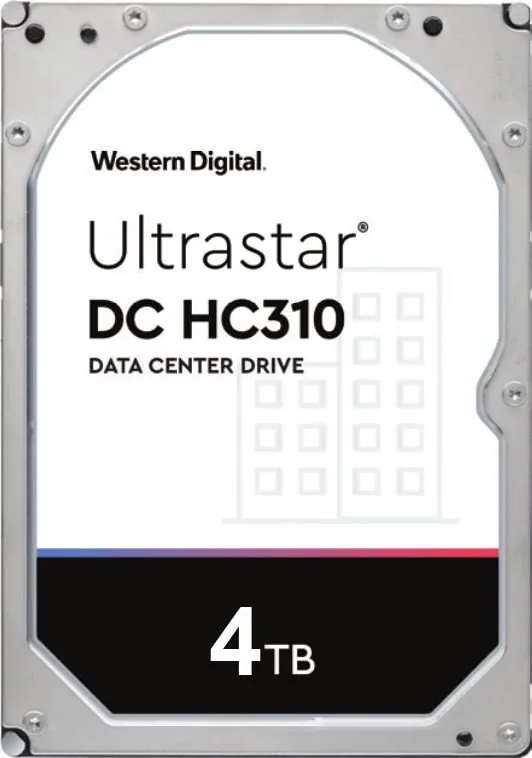
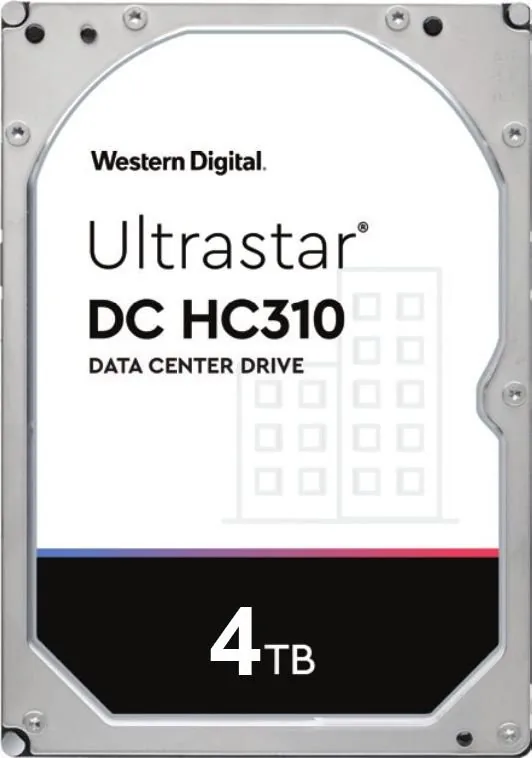
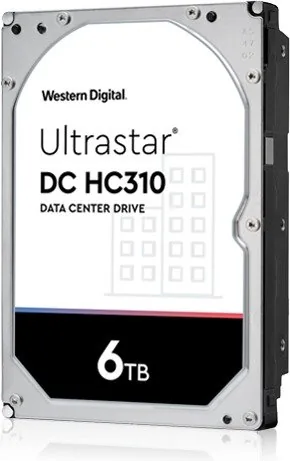
Western Digital Ultrastar DC HC310 Manual
PDF manual · 322 Pages
English



Quick check
Incorrect answer, please try again.
Chat with your Western Digital Ultrastar DC HC310 manual using AI
Get instant AI answers from your Western Digital Ultrastar DC HC310 manual
Ask anything about the Western Digital Ultrastar DC HC310. Answers come from this manual, with the pages they are based on.
Ask a Question
Do you recommend Ultrastar DC HC310?
Yes NoFrequently Asked Questions
The HC310 is available in 4TB and 6TB models and supports 512e, 512n (on select SKUs), and 4K sector formats depending on the model.
Is this answer helpful?
These drives use a Serial ATA interface rated up to 6 Gb/s (SATA 3.x) with typical sustained transfer rates around 230–255 MB/s depending on model and workload.
Is this answer helpful?
Optional SATA 3.3 Power Disable assigns P3 as a power-disable input; if a system drives P3 high (2.1–3.6V), the drive will not power up. Verify host/backplane compatibility before using drives with PWDIS enabled.
Is this answer helpful?
The drives include S.M.A.R.T./SCT logging, self-test routines, automatic defect remapping, rotational vibration safeguard (RVS), and on certain models, full-disk encryption and PSID support.
Is this answer helpful?
Operating ambient range is 5–60°C with 8–90% non-condensing humidity (max wet bulb 29.4°C). Storage range extends to –40 to 70°C with specified packaging and time limitations.
Is this answer helpful?
Design power supplies to meet the drive's start-up and peak currents per the spec tables. The document provides detailed start-up peaks, recovery currents for different standby modes, and typical/workload power values.
Is this answer helpful?
Defects are remapped via internal translation tables; shipped format uses inner-zone spare tracks to absorb remaps and maintain sector continuity without wasting spare sectors across user data areas.
Is this answer helpful?
Advantages and Disadvantages
Advantages

- Enterprise-grade reliability with SMART, RVS, and automatic defect reallocation
- High capacities (4TB/6TB) with 256 MiB buffer and 7200 RPM performance
- Comprehensive SATA/ATA feature support including NCQ, sanitize, and security
- Detailed power/thermal specifications enable predictable integration
- Robust mechanical design: dual-stage actuator and load/unload parking
Disadvantages

- Higher random I/O latency compared to SSDs
- Optional SATA 3.3 Power Disable pin may prevent power-up in some systems
- Larger/heavier than 2.5-inch drives, limiting some enclosures
- Requires careful cooling and vibration control in dense racks
- Specification summary lacks explicit warranty/service details
Product Specification
Form Factor
3.5" (Width)
Interface
SATA 6Gb/s
Rotational Speed
7200/min
Cache
256MB
Power Consumption
7W (Operating), 5.9W (Idle)
Noise Level
36dB(A) (Operating), 29dB(A) (Idle)
Recording Method
Conventional Magnetic Recording (CMR)
Reliability Prediction
2 Million Hours (MTBF)
Special Features
suitable for continuous operation (24/7)
Warranty
60 Months
Attention/Note/Trivia
Note: Unmarked OEM/System Builder hard drives are in circulation. Reduced warranty performance is possible. Manufacturer's warranty can be checked via the serial number.Important: For use within a RAID array, hard drives with different recording methods (CMR, SMR) should not be combined. When using hard drives with SMR in a RAID array, it must be ensured that the RAID controller (or the NAS system) is compatible with SMR hard drives, so as not to falsely interpret the partially blocked recording behavior of SMR as a "hardware defect".Trivia: The hard drive division of HGST/Hitachi was acquired by Western Digital WDC in 2012. In 2018, most Ultrastar models received a visual overhaul with Western Digital Corporate Design. Technical data and product numbers remained unchanged.
Product Description
Western Digital Ultrastar DC HC310 HDD SATA Manual
Overview
The Western Digital Ultrastar DC HC310 is a 3.5-inch, 7200 RPM SATA hard drive family offered in 4TB and 6TB capacities. Engineered for enterprise and data-center use, these drives combine high areal density, robust actuators, and advanced firmware features to deliver sustained throughput, reliable random I/O performance, and extensive drive management capabilities. They support SATA 6Gb/s interfaces, large sector formats (512e/512n/4K), a 256 MiB buffer, and a dual-stage actuator with fluid dynamic bearings for stable operation under demanding workloads.
Key capabilities and design
The HC310 lineup emphasizes durability and predictable behavior: closed-loop actuator servo, load/unload ramping to protect heads at power-off, and automatic defect reallocation that remaps bad media sectors at manufacturing and during operation. Firmware implements SMART monitoring, power-management states (multiple idle and standby modes, low-RPM idle), and features like Native Command Queuing (NCQ), write caching, and optional full-disk encryption on supported SKUs. Mechanical and electrical specifications include defined vibration/shock tolerances, precise power consumption profiles for various workloads and power states, and comprehensive SATA signal/power pin definitions including optional SATA 3.3 Power Disable (PWDIS) support.
Performance targets are tuned for mixed enterprise workloads: typical seek times near 7–8 ms, rotational latency at 4.16 ms (7200 RPM), and sustained sequential transfer rates in the 230–255 MB/s range depending on model. The drives provide extensive command support (48-bit LBA, SMART, SCT, sanitize/secure-erase, security features, and many SATA/ATA command extensions) and detailed logging for diagnostics and telemetry. Environmental and storage limits, packaging and humidity requirements, and corrosion resistance testing reinforce suitability for long-term deployment in controlled data-center environments.
Practical notes for deployment
When integrating the HC310, ensure enclosure or backplane support for SATA 6Gb/s, adequate cooling to keep drive sensor temps below 65°C, and power supplies that meet the drive's measured start-up and operational current profiles. Be aware of the optional Power Disable pin behavior (P3) in SATA 3.3; systems that drive P3 high will prevent drive power-up. Use SMART/SCT logs and the drive’s device statistics for preventive maintenance and monitoring.
Pros and Cons (summary)
Pros:
- Enterprise-grade reliability with SMART, RVS, and defect management
- 4TB and 6TB high-capacity models with 256 MiB buffer and 7200 RPM
- Wide SATA command and feature support (NCQ, security, sanitize, TCG options)
- Defined power and thermal profiles for predictable data-center integration
- Robust mechanical design: dual-stage actuator, load/unload ramping
Cons:
- Mechanical HDD latencies higher than SSDs for random I/O
- Optional SATA 3.3 Power Disable can prevent power-up if unsupported by system
- Heavier and larger than 2.5-inch drives limiting some enclosure options
- Requires careful cooling and vibration management in dense deployments
- No mention of enterprise warranty specifics in the spec summary
Most important results (top 3–5)
- Performance: Typical seek times ~7.4 ms read / 8.2 ms write; sustained sequential ~230–255 MB/s.
- Capacities & formats: Available in 4TB and 6TB; supports 512e, 512n, and 4K sector formats.
- Interface & features: SATA 6Gb/s (SATA 3.2/3.3 compatibility), NCQ, large 256 MiB buffer, optional Power Disable (P3).
- Reliability & management: SMART/SCT, automatic defect reallocation, RVS, and extensive command/log support for diagnostics.
- Power & environment: Detailed power states and consumption tables; operate up to 60°C ambient with temp sensor reporting and storage limits to 70°C.
FAQ
-
Q: What capacities and sector formats are supported? A: HC310 models are offered in 4TB and 6TB capacities and support 512e, 512n, and 4K (4Kn) sector formats depending on the model.
-
Q: Which interface and transfer rates does the drive use? A: The drives use a SATA interface rated up to 6 Gb/s (SATA 3.x) with typical sustained transfer rates around 230–255 MB/s depending on model and workload.
-
Q: Is the SATA Power Disable (P3) supported and what are implications? A: Some SKUs implement the optional SATA 3.3 Power Disable on pin P3. If P3 is driven high (2.1–3.6V) by a system, the drive will be disabled and will not power up—ensure backplane/system compatibility before deployment.
-
Q: What reliability and monitoring features are available? A: The drive supports S.M.A.R.T., SCT logs, device statistics, self-test routines, automatic defect reallocation, rotational vibration safeguards (RVS), and optional full-disk encryption on specific models.
-
Q: What are the environmental limits for operation and storage? A: Operating ambient range is 5–60°C with non-condensing humidity up to 90% (max wet bulb 29.4°C). Storage temperatures span –40 to 70°C (with some packaging conditions); drives must be stored per WDC packaging and time limits.
-
Q: What are typical power characteristics to plan for? A: The specification lists start-up peaks and workload power profiles: idle and active power values vary by model and mode (Idle_0, Idle_B, Idle_C, Standby). Design power supplies to handle start-up and peak recovery currents per model tables.
-
Q: How does the drive handle media defects? A: Defects are remapped via internal tables during manufacturing and runtime; shipped format uses inner-zone spare tracks to absorb remaps without wasting spare sectors across user data areas.
Search for 67,706 Manuals online


Type-in Brand or Model