
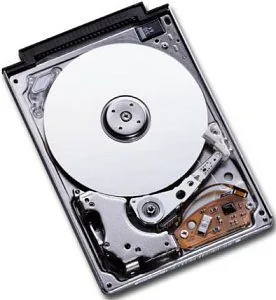
Toshiba MK6006GAH/MK4006GAH/MK3006GAL Manual
PDF manual · 153 Pages
English



Quick check
Incorrect answer, please try again.
Chat with your Toshiba MK6006GAH/MK4006GAH/MK3006GAL manual using AI
Get instant AI answers from your Toshiba MK6006GAH/MK4006GAH/MK3006GAL manual
Ask anything about the Toshiba MK6006GAH/MK4006GAH/MK3006GAL. Answers come from this manual, with the pages they are based on.
Ask a Question
Do you recommend MK6006GAH/MK4006GAH/MK3006GAL?
Yes NoFrequently Asked Questions
The MK6006GAH model provides approximately 60.0116 GB formatted capacity. Related family models include 40.000 GB and 30.0058 GB variants.
Is this answer helpful?
The drive supports ATA/IDE interfaces including ATA-2 through ATA-6 feature sets, LBA addressing, Ultra DMA (including Ultra100), Multiword DMA, and advanced PIO modes for flexible host compatibility.
Is this answer helpful?
The drive uses a 3.3V supply and implements adaptive power mode control (active idle, low-power idle, standby, sleep). Typical low-power idle is about 0.3 W and standby around 0.12 W, with start-up and seek currents higher.
Is this answer helpful?
It includes on-the-fly ECC with multi-bit correction capability, SMART self-monitoring, shock detection circuitry, and an automatic carriage lock for non-operating shock protection. MTTF is specified at about 300,000 hours under stated conditions.
Is this answer helpful?
Yes. Observe ESD precautions, avoid dropping or applying force to the top cover, ensure mounting flatness (<0.1 mm recommended), keep top-cover temperatures below 65°C, and avoid magnetic sources near the drive.
Is this answer helpful?
Operating temperature is specified from 5°C to 60°C, humidity 8%–90% non-condensing. Shock and vibration limits are defined (operating shock up to 500G, non-operating up to 1500G) and altitude/pressure conditions are listed in the spec.
Is this answer helpful?
Use ATA commands like Standby, Standby Immediate, or Sleep to perform normal unloads before removing power. Emergency unload uses back-EMF only if the host cannot perform a normal unload and is limited in allowed cycles.
Is this answer helpful?
Advantages and Disadvantages
Advantages

- High capacity (approximately 60.01 GB formatted) in a compact 1.8" form factor suitable for ultra-small devices.
- Supports wide range of ATA modes including Ultra DMA (Ultra100), Multiword DMA and advanced PIO for flexible host compatibility.
- Low power design with adaptive power modes and favorable W/GB figures for battery-powered applications.
- Robust reliability features: strong ECC, SMART monitoring, shock detection and automatic carriage lock for transport safety.
- Comprehensive interface and timing specs, register map and ATA command support simplify integration and driver development.
Disadvantages

- Mechanical HDD (spinning media) vulnerable to shock and vibration compared with solid-state alternatives.
- Limited spindle speed (4,200 RPM) yields higher latency and lower IOPS than modern high-RPM or SSD solutions.
- Capacity and performance constrained by 1.8" physical limits and older IDE/LIF interface compared with SATA/NVMe.
- Handling and installation require strict ESD precautions and thermal/mounting constraints (top cover <65°C).
- Product life defined (five years or 20,000 power-on hours) and parts are not intended for field-level repair.
Product Specification
Capacity
60GB (equivalent to approx. 55.88GiB, further information on this here)
Form Factor
1.8" (Width)
Interface
LIF IDE
Rotational Speed
4200/min
Cache
2MB
Recording Method
Conventional Magnetic Recording (CMR)
Sectors
512B native (512n)
Reliability Prediction
300,000 Hours (MTTF)
Warranty
24 Months (Processing via reseller)
Attention/Note/Trivia
Note: Unlabeled OEM/System Builder hard drives in circulation. Reduced warranty performance possible. Manufacturer's warranty verifiable via serial number - via reseller or distributor.Important: For use within a RAID array, hard drives with different recording methods (CMR, SMR) should not be combined. When using SMR hard drives in a RAID array, ensure that the RAID controller (or the NAS system) is compatible with SMR hard drives, so that the partially blocked recording behavior of SMR is not mistakenly interpreted as a "hardware defect".
Product Description
Toshiba 60GB, 512n / 1.8" / LIF IDE Manual
The Toshiba 60GB, 512n 1.8-inch LIF IDE drive is a compact, high-density hard disk aimed at ultraportable devices and embedded systems. At roughly 60.01 GB formatted capacity, this two-platter design delivers a surprising combination of storage density and mechanical miniaturization, using Winchester-style head/disk technology and a closed-loop servo to ensure stable performance. With a 1.8" form factor and low-profile heights (models in the family include 5 mm and 8 mm variants), the drive suits slim enclosures where space and weight are critical.
Performance is tailored for small-system demands: spindle speed of 4,200 RPM yields average latency around 7.1 ms and average access times near 15 ms. Internal transfer throughput is strong for the class, while the host interface supports ATA/IDE standards including Ultra DMA modes (Ultra100 capable), multiple PIO and DMA modes, LBA addressing, and translation modes for flexible capacity mapping. A built-in cache and read-ahead/write cache strategies help smooth sequential and random transfers.
Power efficiency and reliability are emphasized. The drive runs on a 3.3V supply and supports adaptive power modes (active/idle/low-power/standby/sleep) to reduce consumption—typical idle and standby currents are low, and the drive’s energy-per-GB figures are favorable for battery-powered devices. Robustness features include shock detection and automatic carriage lock for non-operating conditions, multi-stage error correction (strong ECC) and SMART monitoring for health reporting. Manufacturing and regulatory compliance across major safety and EMC standards are documented, and the drive provides detailed electrical, timing, mechanical and environmental specifications for integration.
Integration notes highlight careful handling, ESD precautions, mounting flatness and thermal considerations (top cover temperature limits). The LIF/IDE connector and signaling details, register map, ATA command set support (including extended LBA commands), and DMA/PIO timing tables provide the data required to implement host-side drivers and firmware interactions. Security and maintenance features—password/erase commands, SMART attribute tables, load/unload cycle data, and recommended command sequences for safe power-down—help designers protect data and device longevity.
In short, the Toshiba 60GB 1.8" LIF IDE drive blends high capacity in a tiny package with ATA compatibility, low power modes, and enterprise-grade reliability controls—making it suitable for slim notebooks, portable media players, and embedded applications requiring a balance of capacity, efficiency, and resilience.
Notes
- Designed for non-life-critical equipment; special consultation required for safety-critical systems.
- Observe ESD handling, mounting flatness, top-cover temperature (<65°C), and anti-magnetic precautions.
- Backup is recommended: despite strong ECC and SMART features, non-recoverable errors and data loss remain possible.
Search for 67,706 Manuals online


Type-in Brand or Model