Manual.ly Logo

Telwin Telmig 250/2 Manual

0.0 · 0 Ratings

PDF manual · 108 Pages

English

M: QW-35-FL
page

/ 108

Loading...
150090d926629b5278fa0c7401956c69edad page 8
- 8 -
7. MAINTENANCE
WARNING! BEFORE CARRYING OUT MAINTENANCE
OPERATIONS MAKE SURE THE WELDING MACHINE IS SWITCHED OFF
AND DISCONNECTED FROM THE MAIN POWER SUPPLY.
ROUTINE MAINTENANCE:
ROUTINE MAINTENANCE OPERATIONS CAN BE CARRIED OUT BY THE
OPERATOR.
Torch
- Do not put the torch or its cable on hot pieces; this would cause the
insulating materials to melt, making the torch unusable after a very
short time;
- Make regular checks on the gas pipe and connector seals;
- Every time the wire reel is changed, blow out the wire-guide hose using
dry compressed air (max. 5 bar) to make sure it is not damaged;
- Before every use, check the wear and correct assembly of the parts at
the end of the torch: nozzle, contact tip, gas diuser.
Wire feeder
- Make frequent checks on the state of wear of the wire feeder rollers,
regularly remove the metal dust deposited in the feeder area (rollers
and wire-guide infeed and outfeed).
EXTRAORDINARY MAINTENANCE
EXTRAORDINARY MAINTENANCE MUST ONLY BE CARRIED OUT BY
TECHNICIANS WHO ARE EXPERT OR QUALIFIED IN THE ELECTRIC-
MECHANICAL FIELD, AND IN FULL RESPECT OF THE IEC/EN 60974-4
TECHNICAL DIRECTIVE.
WARNING! BEFORE REMOVING THE WELDING MACHINE
PANELS AND WORKING INSIDE THE MACHINE MAKE SURE THE
WELDING MACHINE IS SWITCHED OFF AND DISCONNECTED FROM
THE MAIN POWER SUPPLY OUTLET.
If checks are made inside the welding machine while it is live, this
may cause serious electric shock due to direct contact with live parts
and/or injury due to direct contact with moving parts.
- Inspect the welding machine regularly, with a frequency depending
on use and the dustiness of the environment, and remove the dust
deposited on the transformer, reactance and rectier using a jet of dry
compressed air (max. 10 bar).
- Do not direct the jet of compressed air on the electronic boards; these
can be cleaned with a very soft brush or suitable solvents.
- At the same time make sure the electrical connections are tight and
check the wiring for damage to the insulation.
- At the end of these operations re-assemble the panels of the welding
machine and screw the fastening screws right down.
- Never, ever carry out welding operations while the welding machine is
open.
- After having carried out maintenance or repairs, restore the connections
and wiring as they were before, making sure they do not come into
contact with moving parts or parts that can reach high temperatures.
Tie all the wires as they were before, being careful to keep the high
voltage connections of the primary transformer separate from the low
voltage ones of the secondary transformer.
Use all the original washers and screws when closing the casing.
(IT)
MANUALE ISTRUZIONE
ATTENZIONE:
PRIMA DI UTILIZZARE LA SALDATRICE LEGGERE ATTENTAMENTE IL
MANUALE DI ISTRUZIONE.
SALDATRICI A FILO CONTINUO PER LA SALDATURA AD ARCO MIG/MAG E
FLUX PREVISTE PER USO INDUSTRIALE E PROFESSIONALE.
Nota: Nel testo che segue verrà impiegato il termine “saldatrice”.
1. SICUREZZA GENERALE PER LA SALDATURA AD ARCO
L’operatore deve essere sucientemente edotto sull’uso sicuro
della saldatrice ed informato sui rischi connessi ai procedimenti per
saldatura ad arco, alle relative misure di protezione ed alle procedure
di emergenza.
(Fare riferimento anche alla norma ”EN 60974-9: Apparecchiature
per saldatura ad arco. Parte 9: Installazione ed uso”).
- Evitare i contatti diretti con il circuito di saldatura; la tensione
a vuoto fornita dal generatore può essere pericolosa in talune
circostanze.
- La connessione dei cavi di saldatura, le operazioni di verica
e di riparazione devono essere eseguite a saldatrice spenta e
scollegata dalla rete di alimentazione.
- Spegnere la saldatrice e scollegarla dalla rete di alimentazione
prima di sostituire i particolari d’usura della torcia.
- Eseguire l’installazione elettrica secondo le previste norme e leggi
antinfortunistiche.
- La saldatrice deve essere collegata esclusivamente ad un sistema
di alimentazione con conduttore di neutro collegato a terra.
- Assicurarsi che la presa di alimentazione sia correttamente
collegata alla terra di protezione.
- Non utilizzare la saldatrice in ambienti umidi o bagnati o sotto la
pioggia.
- Non utilizzare cavi con isolamento deteriorato o con connessioni
allentate.
- Non saldare su contenitori, recipienti o tubazioni che contengano
o che abbiano contenuto prodotti inammabili liquidi o gassosi.
- Evitare di operare su materiali puliti con solventi clorurati o nelle
vicinanze di dette sostanze.
- Non saldare su recipienti in pressione.
- Allontanare dall’area di lavoro tutte le sostanze inammabili (p.es.
legno, carta, stracci, etc.).
- Assicurarsi un ricambio d’aria adeguato o di mezzi atti ad asportare
i fumi di saldatura nelle vicinanze dell’arco; è necessario un
approccio sistematico per la valutazione dei limiti all’esposizione
dei fumi di saldatura in funzione della loro composizione,
concentrazione e durata dell’esposizione stessa.
- Mantenere la bombola al riparo da fonti di calore, compreso
l’irraggiamento solare (se utilizzata).
- Adottare un adeguato isolamento elettrico rispetto la torcia, il
pezzo in lavorazione ed eventuali parti metalliche messe a terra
poste nelle vicinanze (accessibili).
Ciò è normalmente ottenibile indossando guanti, calzature,
copricapo ed indumenti previsti allo scopo e mediante l’uso di
pedane o tappeti isolanti.
- Proteggere sempre gli occhi con gli appositi ltri conformi alla UNI
EN 169 o UNI EN 379 montati su maschere o caschi conformi alla
UNI EN 175.
Usare gli appositi indumenti ignifughi protettivi (conformi alla
UNI EN 11611) e guanti di saldatura (conformi alla UNI EN 12477)
evitando di esporre l’epidermide ai raggi ultravioletti ed infrarossi
prodotti dall’arco; la protezione deve essere estesa ad altre
persone nelle vicinanze dell’arco per mezzo di schermi o tende non
riettenti.
- Rumorosità: Se a causa di operazioni di saldatura particolarmente

Chat with your Telwin Telmig 250/2 manual using AI

Get instant AI answers from your Telwin Telmig 250/2 manual

Ask anything about the Telwin Telmig 250/2. Answers come from this manual, with the pages they are based on.

Telmig 250/2 Maintenance Schedule

Before every use
Check wear and assembly of torch parts

Inspect the nozzle, contact tip, and gas diffuser for wear and correct assembly before using the welding machine.

Every time wire reel is changed
Blow out wire-guide hose with dry compressed air

Use dry compressed air (max. 5 bar) to clean the wire-guide hose and check it for damage when changing the wire reel.

Frequently
Check wire feeder rollers and remove metal dust

Regularly inspect the wear state of the wire feeder rollers and remove accumulated metal dust from the feeder area.

Periodically
Check gas pipe and connector seals

Perform regular checks on the integrity of the gas pipe and connector seals to ensure no leaks.

Periodically
Clean internal components with compressed air

Remove dust from the transformer, reactance, and rectifier using a jet of dry compressed air (max. 10 bar). Frequency depends on usage and environment dustiness.

M: qwen/qwen3.8-flash

Ask a Question

0/1000

Do you recommend Telmig 250/2?

Yes No

Frequently Asked Questions

A

No, this machine is classified as Class A equipment intended exclusively for industrial and professional environments. It does not guarantee compliance with electromagnetic compatibility limits for domestic dwellings.

Is this answer helpful?

A

Absolutely not. The welding current generates electromagnetic fields that can interfere with vital medical equipment like pacemakers. Users with such devices or metal prostheses are strictly forbidden from operating the machine.

Is this answer helpful?

A

For flux welding without gas, open the reel compartment door. Connect the torch cable from the wire feeder to the black terminal (-) and the clamp return cable to the red terminal (+). Close the door securely after connecting.

Is this answer helpful?

A

You must wear protective clothing, welding gloves, and eye protection filters compliant with UNI EN 169 or 379. A protective mask or helmet complying with UNI EN 175 is also compulsory to shield against UV and IR rays.

Is this answer helpful?

A

You should frequently check the state of wear on the rollers and regularly remove metal dust deposited in the feeder area. Use dry compressed air to clean the guide hose when changing wire reels.

Is this answer helpful?

A

No, it is strictly prohibited to use the handle as a means of suspension or hanging the welding machine. Always secure the machine on a flat surface to prevent tipping.

Is this answer helpful?

M: QW-35-FL

Advantages and Disadvantages

Advantages

  • Versatile capability for MIG/MAG and Flux welding on various metals including steel and aluminum
  • Comprehensive safety warnings and clear instructions for professional environments
  • Durable design suitable for heavy industrial use with high duty cycle options
  • Includes standard accessories like torch and earth clamp for immediate setup
VS

Disadvantages

  • Not suitable for domestic use due to Class A equipment classification and EMF levels
  • Strict prohibition for users with pacemakers or metal prostheses limits accessibility
  • Requires qualified personnel for installation and extraordinary maintenance procedures
  • No built-in lifting device necessitates external handling methods for transport
M: QW-35-FL

Product Specification

Power

7kW (230V/400V)

Open circuit voltage

33V

Control range

35-260A (MIG/MAG)

Protection class

IP21

Dimensions

25.8x31.5x17.7in (HxDxW)

Weight

110.23lbs

M: QW-35-FL

Product Description

The Telwin Telmig 250/2 MIG/MAG Welding Machine Manual: A Comprehensive Guide for Professionals

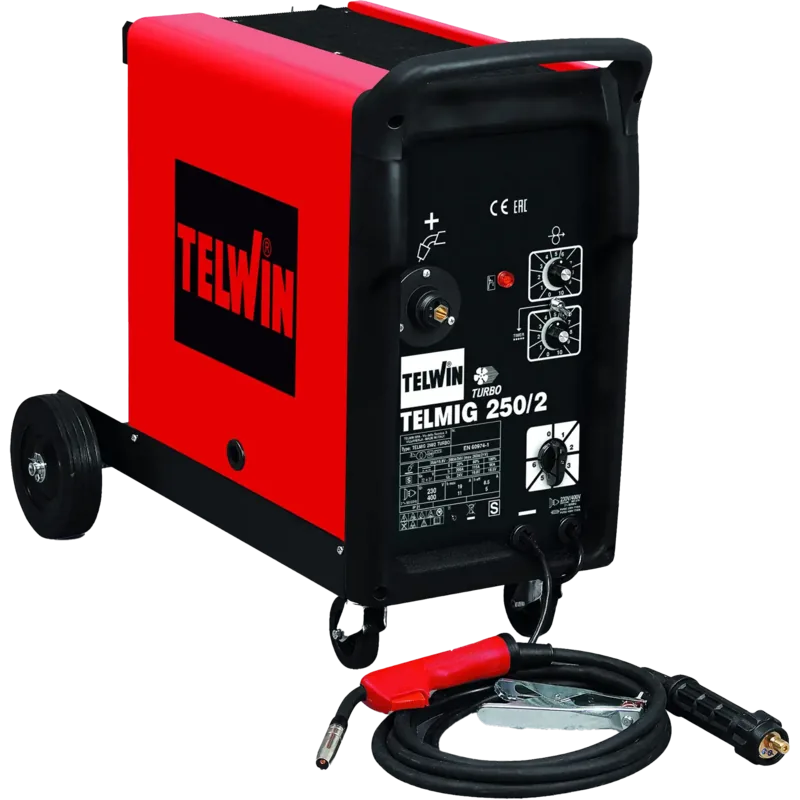
The Telwin Telmig 250/2 is a robust continuous wire welding machine designed specifically for industrial and professional applications. This powerful unit excels in MIG/MAG and Flux arc welding, making it an essential tool for working with carbon steel, low-alloy steel, stainless steel, and aluminum. Whether you are using solid or cored electrode wires with CO2 or Argon shielding gases, this machine delivers consistent performance. It is engineered to handle demanding tasks while adhering to strict safety standards like EN 60974-9.

Operating this equipment requires careful attention to detail and adherence to the guidelines found within its instruction manual. The machine features advanced control systems that allow users to adjust wire feed rates and welding currents precisely. Safety is paramount; the manual emphasizes the dangers of electric shock, welding fumes, ultraviolet radiation, and fire. Users must wear protective clothing, gloves, and masks compliant with UNI EN standards to prevent injury from arcs and fumes. Additionally, specific precautions are necessary regarding electromagnetic fields, which can interfere with medical devices like pacemakers.

Installation and setup are critical steps before the first use. The machine must be connected to a power source with proper earth grounding, and all electrical connections should only be performed by qualified personnel. The unit includes standard accessories such as a torch, return cable with earth clamp, and a wheel kit for mobility. Proper ventilation is required to remove hazardous fumes, and gas bottles must be secured away from heat sources. Regular maintenance ensures longevity, involving checks on rollers, wire guides, and internal components using dry compressed air.

Essential Notes for Safe Operation

  • Always disconnect power before performing any maintenance or changing wire reels.
  • Do not lift the machine by the handle or hang it from the handle.
  • Ensure a minimum distance of 50 cm from the machine during operation to reduce EMF exposure.
  • Avoid welding in damp conditions or near flammable materials.
  • Users with metal prostheses or vital electronic implants should strictly avoid using this machine.
M: QW-35-FL

© Copyright 2026 Manual.ly