
Skil 7338 AA Manual
PDF manual · 100 Pages
English



Quick check
Incorrect answer, please try again.
Chat with your Skil 7338 AA manual using AI
Get instant AI answers from your Skil 7338 AA manual
Ask anything about the Skil 7338 AA. Answers come from this manual, with the pages they are based on.
7338 AA Maintenance Schedule
Keep tool and cord clean, especially ventilation slots. Remove adhering sanding dust with a brush. Disconnect plug before cleaning.
Do not continue to use worn, torn or heavily clogged sanding sheets. Replace them in time.
Ask a Question
Do you recommend 7338 AA?
Yes NoFrequently Asked Questions
No, this tool is explicitly designed for DIY and hobbyist use rather than professional continuous operations.
Is this answer helpful?
No, the Skil 7338 is strictly intended for dry sanding and finishing only.
Is this answer helpful?
It operates on a standard voltage range of 220 to 240 volts.
Is this answer helpful?
Disconnect the plug first, then remove the old sheet and attach a new perforated one ensuring alignment with the foot holes.
Is this answer helpful?
Yes, because the noise level can exceed 85 dB(A), wearing ear protection is recommended for safety.
Is this answer helpful?
No, you must not use the vacuum when sanding metal as sparks may be generated.
Is this answer helpful?
Start with coarse grit sizes like 40 or 60 for extremely rough wood or paint removal.
Is this answer helpful?
Advantages and Disadvantages
Advantages

- Compact and lightweight design at only 1 kg for easy handling
- High-speed motor reaches 24,000 orbits per minute for efficient sanding
- Double insulation provides enhanced electrical safety without an earth wire
- Dust extraction port allows connection to a vacuum cleaner for cleaner workspaces
- Compatible with various grit sizes for different sanding needs from rough to fine
Disadvantages

- Not suitable for professional or heavy-duty continuous use
- Incompatible with wet sanding applications
- Noise level exceeds 85 dB(A) requiring hearing protection
- Cannot be used with a vacuum cleaner when sanding metal due to sparks
- Requires specific perforated sanding sheets for effective dust collection
Product Specification
Type
Orbital sander
Power
160W (230V)
No-load stroke rate
24000/min
Stroke
0.08in
Sanding area
7.3x3.6in (LxB)
Sandpaper size
7.3x3.7in (Hook and loop)
Tool attachment
Hook and loop
Features
Softgrip, auxiliary handle, restart protection, vibration damping, dust extraction
Weight
3.31lbs
Package contents
3-piece accessory set
Product Description
Skil 7338 AA Electric Sander Review
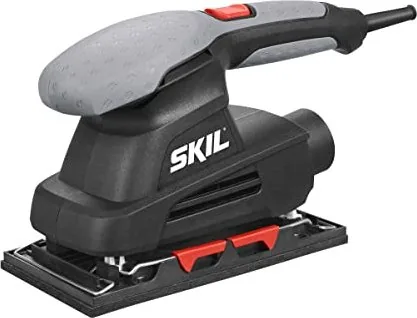
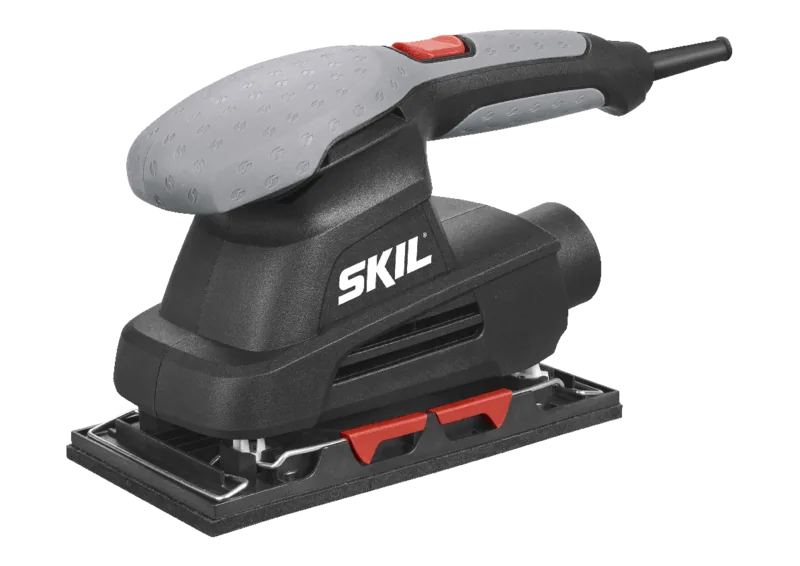
The Skil 7338 AA Electric Sander is a versatile tool designed for dry sanding and finishing tasks on wood, painted surfaces, plastic, and filler. While it is not intended for professional heavy-duty use, it serves as an excellent choice for DIY enthusiasts and home improvement projects requiring precision and ease of use.
This orbital sander features a powerful 160-watt motor that delivers up to 24,000 orbits per minute, ensuring efficient material removal without excessive effort. Its compact dimensions of 186 by 93 millimeters allow for comfortable handling in tight spaces, while the lightweight design of just 1 kg reduces user fatigue during extended sessions. The device operates on standard 220-240 volt power supplies, making it compatible with most household outlets in Europe.
Safety is a top priority with this model. It includes double insulation, eliminating the need for an earth wire, which enhances electrical safety. The tool comes with specific ventilation slots to keep the motor cool and prevent overheating. Users are advised to wear personal protective equipment such as eye protection, dust masks, and hearing protection due to noise levels exceeding 85 dB(A). The sander also features a connection point for a vacuum cleaner to manage dust effectively, though users should avoid using the vacuum when sanding metal to prevent spark-related hazards.
Proper maintenance ensures longevity. Always disconnect the plug before cleaning or changing accessories. Regularly clean the air vents to prevent dust accumulation inside the housing. Replace worn sanding sheets promptly to maintain performance. The tool requires perforated sanding sheets for optimal dust suction. When selecting grit sizes, coarse options like 40 or 60 are best for removing paint or rough wood, medium grits like 80 to 120 suit general wood sanding, and fine grits like 180 to 320 are ideal for smoothing and finishing.
Important Notes
- Do not use this tool for wet sanding.
- Never use the same sanding sheet for both wood and metal.
- Keep the workpiece securely clamped to ensure stability.
- Avoid tilting the tool to prevent unwanted sanding marks.
- Ensure ventilation slots remain uncovered during operation.
Search for 67,732 Manuals online


Type-in Brand or Model