Manual.ly Logo

Skil 7338 AA Manual

0.0 · 0 Ratings

PDF manual · 100 Pages

English

M: QW-35-FL
page

/ 100

Loading...
0b3a4ce209a466a5cdc076b4f8db4854b4ad page 8
8
• Secure the workpiece (a workpiece clamped with
clamping devices or in a vice is held more securely than
by hand)
DURING USE
• The noise level when working can exceed 85 dB(A); wear
ear protection
• Wear protective gloves, safety glasses, close-tting
clothes and hair protection (for long hair)
• Always keep the cord away from moving parts of the tool;
direct the cord to the rear, away from the tool
• Do not touch the moving sanding sheet
• In case of electrical or mechanical malfunction,
immediately switch o the tool and disconnect the plug
• If the cord is damaged or cut through while working, do
not touch the cord, but immediately disconnect the plug
AFTER USE
• When you put away the tool, switch o the motor and
ensure that all moving parts have come to a complete
standstill
EXPLANATION OF SYMBOLS ON TOOL
3
Read the instruction manual before use
4
Double insulation (no earth wire required)
5
Do not dispose of the tool together with household waste
material
WHEN CONNECTING NEW 3-PIN PLUG (U.K. ONLY):
• Do not connect the blue (= neutral) or brown (= live) wire
in the cord of this tool to the earth terminal of the plug
• If for any reason the old plug is cut o the cord of this
tool, it must be disposed of safely and not left unattended
USE
• Mounting of sanding sheet
6
! disconnect the plug
- if necessary, clean backing pad rst
! perforation in sanding sheet should correspond
with perforation in sanding foot
! the dust suction requires the use of perforated
sanding sheets
! always use the tool with the total sanding surface
covered with sanding paper
! replace worn sanding sheets in time
• On/o switch
- switch on/o the tool by pushing switch A
2
forward/
backwards
! before the sanding surface reaches the workpiece,
you should switch on the tool
! 
the workpiece
• Dust suction
7
- connect vacuum cleaner to connection B
! do not use vacuum cleaner when sanding metal
• Holding and guiding the tool
8
! 
coloured grip area(s)
- guide the tool parallel to the working surface
- do not apply too much pressure on the tool; let the tool
do the work for you
- do not tilt the tool in order to avoid unwanted sanding
marks
- keep ventilation slots C
2
uncovered
• Sanding
- the amount of material removed is determined by the
selection of the sanding sheet and the applied pressure
power tool's operation. If damaged, have the power
tool repaired before use. Many accidents are caused
by poorly maintained power tools.
f) Keep cutting tools sharp and clean. Properly
maintained cutting tools with sharp cutting edges are less
likely to bind and are easier to control.
g) Use the power tool, accessories and tool bits etc.,
in accordance with these instructions, taking into
account the working conditions and the work to be
performed. Use of the power tool for operations dierent
from those intended could result in a hazardous situation.
h) Keep handles and grasping surfaces dry, clean
and free from oil and grease. Slippery handles and
grasping surfaces do not allow for safe handling and
control of the tool in unexpected situations.
5) SERVICE
a) 
person using only identical replacement parts. This
will ensure that the safety of the power tool is maintained.
SAFETY INSTRUCTIONS FOR SANDERS
GENERAL
• This tool should not be used by people under the age of
16 years
• Use completely unrolled and safe extension cords with a
capacity of 16 Amps (U.K. 13 Amps)
• Never use the tool when cord is damaged; have it
replaced by a qualied person
• This tool is not suitable for wet sanding
• Dust from material such as paint containing lead, some
wood species, minerals and metal may be harmful
(contact with or inhalation of the dust may cause allergic
reactions and/or respiratory diseases to the operator or
bystanders); wear a dust mask and work with a dust
extraction device when connectable
• Certain kinds of dust are classied as carcinogenic
(such as oak and beech dust) especially in conjunction
with additives for wood conditioning; wear a dust
mask and work with a dust extraction device when
connectable
• Follow the dust-related national requirements for the
materials you want to work with
• Do not work materials containing asbestos (asbestos
is considered carcinogenic)
• When sanding metal, sparks are generated; do not use
vacuum cleaner and keep other persons and combustible
material from work area
• Regularly clean the power tool’s air vents (the
motor’s fan will draw the dust inside the housing and
excessive accumulation of powdered metal may cause
electrical hazards)
• Always disconnect plug from power source before
making any adjustment or changing any accessory
ACCESSORIES
• SKIL can assure awless functioning of the tool only
when original accessories are used
• Do not continue to use worn, torn or heavily clogged
sanding sheets
BEFORE USE
• Always check that the supply voltage is the same as the
voltage indicated on the nameplate of the tool
• Avoid damage that can be caused by screws, nails and
other elements in your workpiece; remove them before
you start working

Chat with your Skil 7338 AA manual using AI

Get instant AI answers from your Skil 7338 AA manual

Ask anything about the Skil 7338 AA. Answers come from this manual, with the pages they are based on.

7338 AA Maintenance Schedule

Regularly
Clean the ventilation slots

Keep tool and cord clean, especially ventilation slots. Remove adhering sanding dust with a brush. Disconnect plug before cleaning.

When worn
Replace sanding sheets

Do not continue to use worn, torn or heavily clogged sanding sheets. Replace them in time.

M: qwen/qwen3.8-flash

Ask a Question

0/1000

Do you recommend 7338 AA?

Yes No

Frequently Asked Questions

A

No, this tool is explicitly designed for DIY and hobbyist use rather than professional continuous operations.

Is this answer helpful?

A

No, the Skil 7338 is strictly intended for dry sanding and finishing only.

Is this answer helpful?

A

It operates on a standard voltage range of 220 to 240 volts.

Is this answer helpful?

A

Disconnect the plug first, then remove the old sheet and attach a new perforated one ensuring alignment with the foot holes.

Is this answer helpful?

A

Yes, because the noise level can exceed 85 dB(A), wearing ear protection is recommended for safety.

Is this answer helpful?

A

No, you must not use the vacuum when sanding metal as sparks may be generated.

Is this answer helpful?

A

Start with coarse grit sizes like 40 or 60 for extremely rough wood or paint removal.

Is this answer helpful?

M: QW-35-FL

Advantages and Disadvantages

Advantages

  • Compact and lightweight design at only 1 kg for easy handling
  • High-speed motor reaches 24,000 orbits per minute for efficient sanding
  • Double insulation provides enhanced electrical safety without an earth wire
  • Dust extraction port allows connection to a vacuum cleaner for cleaner workspaces
  • Compatible with various grit sizes for different sanding needs from rough to fine
VS

Disadvantages

  • Not suitable for professional or heavy-duty continuous use
  • Incompatible with wet sanding applications
  • Noise level exceeds 85 dB(A) requiring hearing protection
  • Cannot be used with a vacuum cleaner when sanding metal due to sparks
  • Requires specific perforated sanding sheets for effective dust collection
M: QW-35-FL

Product Specification

Type

Orbital sander

Power

160W (230V)

No-load stroke rate

24000/min

Stroke

0.08in

Sanding area

7.3x3.6in (LxB)

Sandpaper size

7.3x3.7in (Hook and loop)

Tool attachment

Hook and loop

Features

Softgrip, auxiliary handle, restart protection, vibration damping, dust extraction

Weight

3.31lbs

Package contents

3-piece accessory set

M: QW-35-FL

Product Description

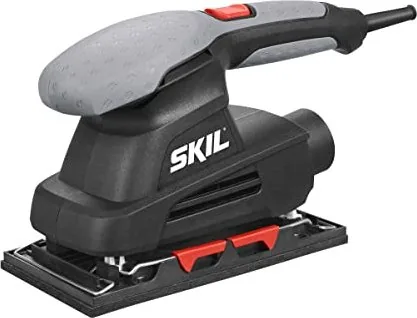
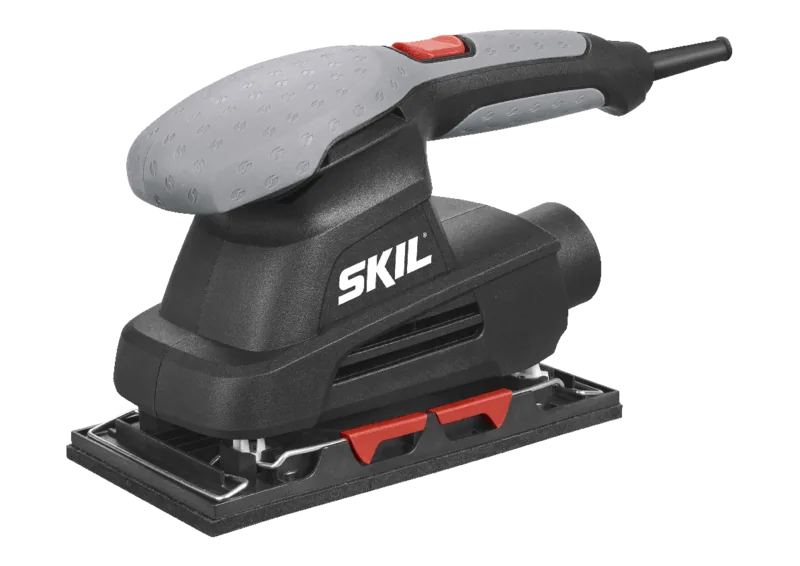
Skil 7338 AA Electric Sander Review

The Skil 7338 AA Electric Sander is a versatile tool designed for dry sanding and finishing tasks on wood, painted surfaces, plastic, and filler. While it is not intended for professional heavy-duty use, it serves as an excellent choice for DIY enthusiasts and home improvement projects requiring precision and ease of use.

This orbital sander features a powerful 160-watt motor that delivers up to 24,000 orbits per minute, ensuring efficient material removal without excessive effort. Its compact dimensions of 186 by 93 millimeters allow for comfortable handling in tight spaces, while the lightweight design of just 1 kg reduces user fatigue during extended sessions. The device operates on standard 220-240 volt power supplies, making it compatible with most household outlets in Europe.

Safety is a top priority with this model. It includes double insulation, eliminating the need for an earth wire, which enhances electrical safety. The tool comes with specific ventilation slots to keep the motor cool and prevent overheating. Users are advised to wear personal protective equipment such as eye protection, dust masks, and hearing protection due to noise levels exceeding 85 dB(A). The sander also features a connection point for a vacuum cleaner to manage dust effectively, though users should avoid using the vacuum when sanding metal to prevent spark-related hazards.

Proper maintenance ensures longevity. Always disconnect the plug before cleaning or changing accessories. Regularly clean the air vents to prevent dust accumulation inside the housing. Replace worn sanding sheets promptly to maintain performance. The tool requires perforated sanding sheets for optimal dust suction. When selecting grit sizes, coarse options like 40 or 60 are best for removing paint or rough wood, medium grits like 80 to 120 suit general wood sanding, and fine grits like 180 to 320 are ideal for smoothing and finishing.

Important Notes

  • Do not use this tool for wet sanding.
  • Never use the same sanding sheet for both wood and metal.
  • Keep the workpiece securely clamped to ensure stability.
  • Avoid tilting the tool to prevent unwanted sanding marks.
  • Ensure ventilation slots remain uncovered during operation.
M: QW-35-FL

© Copyright 2026 Manual.ly