
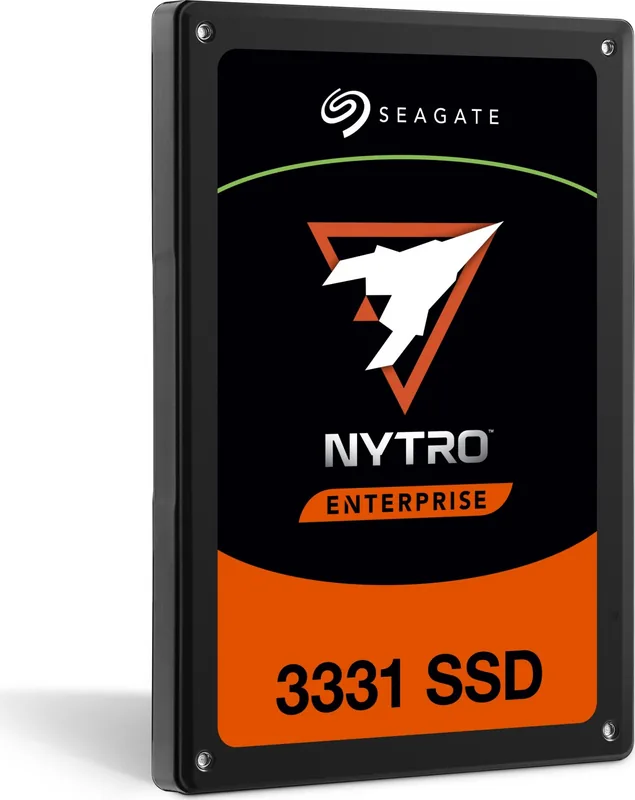
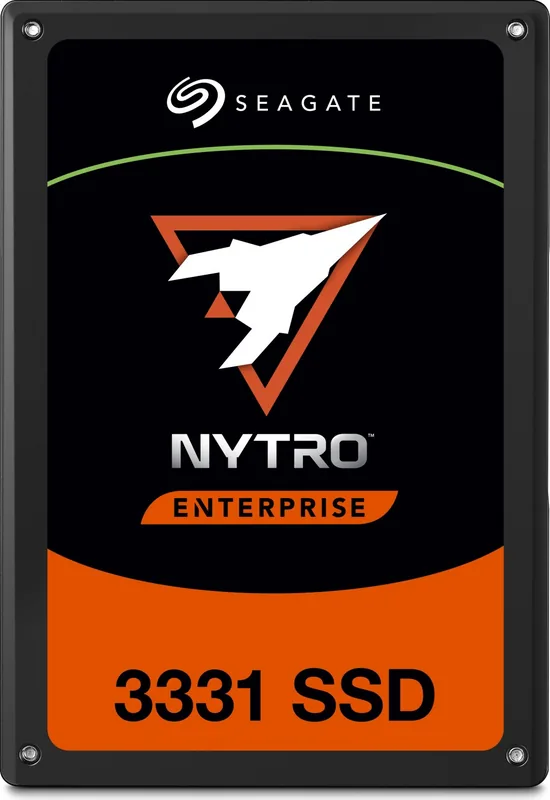
Seagate Nytro 3031 Manual
PDF manual · 90 Pages
English



Quick check
Incorrect answer, please try again.
Chat with your Seagate Nytro 3031 manual using AI
Get instant AI answers from your Seagate Nytro 3031 manual
Ask anything about the Seagate Nytro 3031. Answers come from this manual, with the pages they are based on.
Ask a Question
Do you recommend Nytro 3031?
Yes NoFrequently Asked Questions
It is designed for enterprise storage systems that need fast access, high reliability, and strong endurance. Typical uses include servers, arrays, virtualization, and other demanding data-center workloads.
Is this answer helpful?
Yes. Select models support self-encryption, controlled access, drive locking, and cryptographic erase. Some versions also align with FIPS 140-2 Level 2 requirements for regulated environments.
Is this answer helpful?
The family includes write-intensive, mixed-use, read-intensive, and very read-intensive drives. This lets buyers choose a model that matches the workload instead of using a one-size-fits-all SSD.
Is this answer helpful?
No. Performance changes by model class and capacity. Read-heavy models may prioritize throughput, while write-intensive versions are tuned for stronger sustained write endurance.
Is this answer helpful?
Yes. Capacity can be reduced using supported SCSI mode commands or management tools. The drive also supports formatted block-size options and thin provisioning features.
Is this answer helpful?
The drives include SMART monitoring, thermal warnings, wear leveling, garbage collection, power-loss protection, and drive self-test functions to help detect and manage issues early.
Is this answer helpful?
Advantages and Disadvantages
Advantages

- High-speed 12Gb/s SAS performance for enterprise workloads.
- Multiple endurance classes for write-heavy and read-heavy use cases.
- Self-encrypting and FIPS-capable models improve data security.
- Dual-port and SAS expander support fit enterprise infrastructures.
Disadvantages

- Best value is in server/storage environments, not general consumer use.
- Advanced security and provisioning features can add deployment complexity.
- Performance and endurance vary significantly by model and capacity.
- Requires good cooling and proper system integration for best reliability.
Product Specification
Design
Solid State Drive (SSD)
Form factor
2.5"
Interface
SAS 12Gb/s
Memory modules
3D-NAND TLC (eTLC)
Protocol
AHCI
Power consumption
4.4W (idle)
Dimensions
3.94x2.76x0.59in (without heatsink)
Warranty
60 months
Product Description
Seagate Nytro 3031 SAS: Enterprise SSD Performance with Built-In Resilience
The Seagate Nytro 3031 SAS Manual highlights a family of enterprise solid state drives designed for demanding storage environments where speed, reliability, and data protection matter. Built around SAS connectivity, these SSDs aim to deliver high throughput, low latency, and strong endurance across write-intensive, mixed-use, read-intensive, and very read-intensive workloads.
What stands out most is the flexibility of the lineup. Different models are tuned for specific duty cycles, from heavy write scenarios to large-capacity read-focused deployments. That makes the series a practical fit for data centers, virtualization layers, analytics platforms, and storage arrays that need predictable behavior under pressure. With dual-port support, expanders, and compatibility with SAS infrastructure, these drives are made for professional systems rather than casual desktop use.
Security is another major theme. Select models include self-encryption, controlled access, drive locking, cryptographic erase, authenticated firmware download, and support for SANITIZE commands. The platform also references FIPS 140-2 Level 2 options, which makes it appealing for organizations that handle sensitive or regulated data. For teams focused on lifecycle management, the drive’s monitoring tools, SMART support, thermal warnings, and endurance indicators help simplify maintenance.
Performance is equally important. The series supports 12Gb/s SAS operation and uses enterprise-grade 3D NAND media. It also offers thin provisioning, UNMAP support, configurable logical block sizes, and non-volatile write caching to improve efficiency and workload consistency. In practice, this means the drives are built not just for raw speed, but for sustained enterprise service with careful management of flash wear.
Capacity choices are broad, ranging from smaller high-endurance options to multi-terabyte models. That makes the product family suitable for mixed storage tiers, whether the goal is maximizing performance per drive bay or packing more usable capacity into a compact form factor. The result is a balanced enterprise SSD platform that combines speed, safety, and flexibility in one SAS-based package.
Notes
- Best suited for enterprise storage systems, not consumer desktops.
- Self-encrypting variants add strong data-at-rest protection.
- Endurance ratings differ by workload class and capacity.
- Proper cooling and deployment practices are important for longevity.
Search for 67,706 Manuals online


Type-in Brand or Model