
Seagate Cheetah 15K.4 Manual
PDF manual · 108 Pages
English



Quick check
Incorrect answer, please try again.
Chat with your Seagate Cheetah 15K.4 manual using AI
Get instant AI answers from your Seagate Cheetah 15K.4 manual
Ask anything about the Seagate Cheetah 15K.4. Answers come from this manual, with the pages they are based on.
Ask a Question
Do you recommend Cheetah 15K.4?
Yes NoFrequently Asked Questions
The drive operates at a rotational speed of 15,000 RPM. This high speed ensures low latency and fast access times suitable for enterprise servers and mainframes.
Is this answer helpful?
Yes, the drive supports hot plugging for LVD configurations. Proper host connectors must be used to ensure power and ground connections are made before signal contact is established.
Is this answer helpful?
The product comes with a five-year warranty. Seagate warrants the product against defects in materials and workmanship for five years from the date of shipment to the customer.
Is this answer helpful?
The drive handles defect management internally. Factory formatting identifies media defects and tags them as unusable. Background media scans perform automatic checks when the drive is idle.
Is this answer helpful?
It utilizes an Ultra320 SCSI interface. It supports both single-ended and low voltage differential signaling for flexible compatibility with host adapters and older SCSI systems.
Is this answer helpful?
The drive requires specific DC power levels. Average idle current is approximately 0.55 amperes for the 5 volt rail. Power supplies must meet the specified voltage and current profiles.
Is this answer helpful?
The dimensions are designed for standard 3.5 inch bays. The height is 1 inch, width is 4 inches, and depth is 5.75 inches. Mounting holes are standardized for secure rack installation.
Is this answer helpful?
Advantages and Disadvantages
Advantages

- Spin speed of 15000 RPM provides low latency for high performance tasks.
- Mean time between failure rating is high at 1.4 million hours for reliability.
- Five year warranty ensures support and confidence for long term deployments.
- 8 megabyte buffer manages data flow efficiently between host and media.
- S.M.A.R.T. technology allows early detection of potential hardware issues.
Disadvantages

- High rotational speed generates significant heat requiring proper cooling systems.
- Acoustic noise levels are higher compared to slower storage options.
- Requires specific DC power levels to operate within specified limits.
- SCSI interface is legacy technology compared to modern SATA and SAS.
- Heavy drive weight of 1.6 pounds adds load to server racks.
Product Specification
Capacity
73GB (equals approx. 67.99GiB, further information on this)
Form Factor
3.5" (Width)
Interface
U320-SCA
Rotation Speed
15000 RPM
Cache
8MB
Recording Method
Conventional Magnetic Recording (CMR)
Warning / Note / Trivia
Note: Unmarked OEM/System Builder drives in circulation. Reduced warranty performance possible. Manufacturer warranty verifiable via serial number. Important: For use within a RAID array, do not combine drives with different recording methods (CMR, SMR). When using SMR drives in a RAID array, ensure the RAID controller (or NAS system) is compatible with SMR drives to avoid misinterpreting the partially blocked recording behavior in SMR as a "Hardware Defect".
Product Description
Seagate Cheetah 15K.4 Enterprise Storage Solution
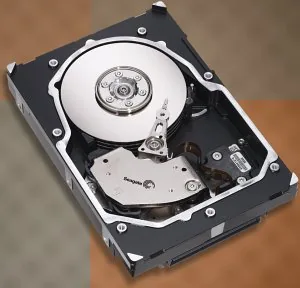
This enterprise-level hard drive provides exceptional speed for demanding server applications. The Seagate Cheetah 15K.4 73GB, 3.5" / U320-SCA Manual defines the interface standards for this hardware family. Users require stable data storage for network servers and mainframes. The design incorporates giant magnetoresistive heads for improved data density. Engineering workstations benefit from the rapid access times provided by the 15k RPM spindle speed.
Technical Specifications
The storage capacity is formatted to standard sector sizes. It supports programmable sector reallocation and flaw management. This ensures long-term data integrity during heavy workloads. The interface negotiates transfer rates depending on the host adapter capabilities. It maintains backward compatibility for older SCSI systems. The 16 bit I/O data bus facilitates high speed communication. This drive also records data on approximately 70 mm non-removable discs.
Operational Reliability
Reliability is a top priority for mission critical data. The product features a mean time between failure rating of one million four hundred thousand hours. Thermal monitoring helps maintain safe operating temperatures. A drive self-test allows for early detection of potential hardware issues. The five-year warranty provides confidence for buyers planning long-term infrastructure. Background media scan functions during idle periods to check sector health.
Power and Environment
The drive requires specific DC power levels for operation. It fits within standard server racks with specific mounting configurations. Cooling requirements must be met to ensure optimal lifespan. Environmental limits cover standard operating temperatures. Shock and vibration specs ensure durability during transport. Power sequencing does not require specific steps for most setups.
This hardware supports hot plugging in specific LVD configurations. System integrators must verify proper termination for the SCSI bus. The 8 megabyte buffer helps manage data flow efficiently. Zoned bit recording optimizes capacity across the platters. Prefetch operations reduce read latency for subsequent data requests. Users can optimize cache performance for desktop or server applications.
Hardware Dimensions
Physical dimensions are designed for standard 3.5 inch bays. The front panel is exclusive of the decorative accessory. Weight per drive is approximately 1.6 pounds. Mounting holes are standardized for rack installation. Screw torque limits ensure mechanical stability without damage. Airflow requirements exist due to heat generation from the spindle.
Connectivity Options
Low voltage differential signaling reduces electromagnetic interference. Single-ended mode remains available for older systems. The connector type differs between LC and LW models. The LC model uses an 80-pin connector. The LW model uses a 68-pin connector. Proper cabling is essential for signal integrity.
Error Management
The drive handles defect management internally before delivery. Factory formatting identifies media defects and tags them as unusable locations. Systems can query the defect lists using specific commands. The firmware manages background scans automatically when idle.
Search for 67,706 Manuals online


Type-in Brand or Model