
Rockford Fosgate P300-12T Manual
PDF manual · 22 Pages
English



Quick check
Incorrect answer, please try again.
Chat with your Rockford Fosgate P300-12T manual using AI
Get instant AI answers from your Rockford Fosgate P300-12T manual
Ask anything about the Rockford Fosgate P300-12T. Answers come from this manual, with the pages they are based on.
Ask a Question
Do you recommend P300-12T?
Yes NoDo you recommend P300-12T?
Yes NoFrequently Asked Questions
The P300-12T has a variable low-pass crossover with an adjustable range from 50 Hz to 200 Hz, using a 12 dB/octave slope. The crossover is set for low-pass operation only, so it is designed to guide bass frequencies to the sub.
Is this answer helpful?
You can use either. The input level switch matches your source to the amplifier. For low-level input, use RCA. For systems without RCA output, use high-level (speaker-level) input with the supplied RCA/speaker harness wiring guidance.
Is this answer helpful?
Three modes are available: REM (+12V) uses the remote lead, DC Offset detects DC offset from high-level speaker outputs when the source turns on, and Audio senses incoming audio signal. Using DC Offset or Audio can also output +12V out on REM for triggering additional amplifiers.
Is this answer helpful?
The LED is blue when the unit is on. It turns red if a short circuit or too-low impedance is detected at the speaker connections. In that case, the amplifier automatically shuts down. The fix is to inspect speaker wiring and ensure proper impedance.
Is this answer helpful?
Punch Bass is a bass boost control that works with the low-pass operation. It is adjustable from 0 dB up to +12 dB at 45 Hz. Set it to your preference while listening, but avoid excessive boost because high levels can cause over-excursion and damage.
Is this answer helpful?
Turn the amplifier gain down initially, then raise the head unit volume until distortion is just audible and back it off slightly. Slowly increase the amplifier gain until you reach the desired level. The guidance emphasizes keeping gain low for best signal-to-noise and avoiding distortion caused by too-high gain.
Is this answer helpful?
Start with wiring checks: verify the POWER LED, inspect the inline fuse and amplifier fuses, confirm the ground is clean metal, and confirm voltage at the battery positive and remote turn-on lead (range specified in the manual). If Protect turns on, check for speaker shorting or incorrect impedance. Then verify RCA input connections and test with a known-good RCA source.
Is this answer helpful?
Advantages and Disadvantages
Advantages

- Built-in 12-inch powered subwoofer tuned for 35 Hz to 200 Hz sound
- Variable 50 Hz to 200 Hz low-pass crossover with 12 dB/oct slope
- Phase switch from 0 to 180 deg helps tighten integration with speakers
- Punch Bass adds up to +12 dB at 45 Hz, with remote Punch Level control
Disadvantages

- High Punch Bass boost can increase over-excursion risk at high volumes
- Protect LED can indicate shorts or too-low speaker impedance
- Requires careful power and ground setup to prevent noise and failures
- Gain and crossover must be tuned to avoid distortion and excess noise
Product Specification
Type
Subwoofer with enclosure
Amplification
passive
Woofer
12"/12in
Frequency Range
20Hz-20kHz
Power
300W RMS
Enclosure Dimensions
25.83x14.96x8.46in (WxHxD)
Consists of
1x Woofer
Product Description
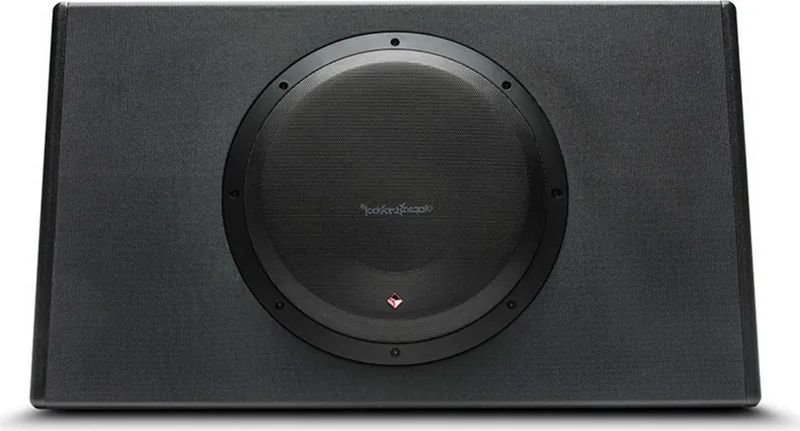
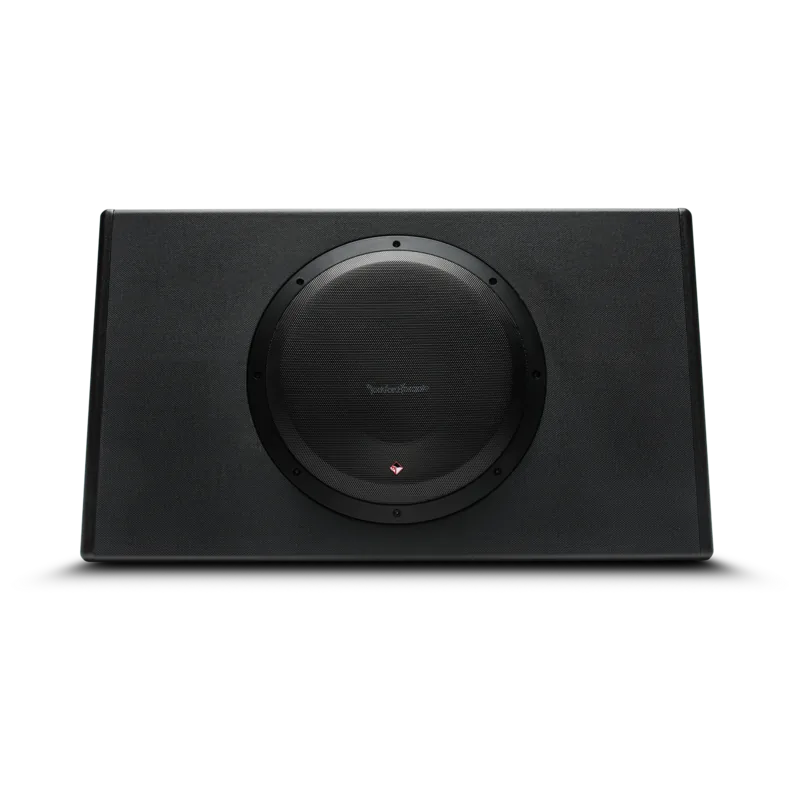
Rockford Fosgate P300-12T: Compact Power for Deep, Clean Bass
If you want a tight, musical subwoofer experience without adding a complicated amplifier stack, the Rockford Fosgate P300-12T is built for you. This 12-inch powered subwoofer combines a dedicated amplifier with key tuning controls so you can dial in bass that fits your vehicle and your music. For many installers, using the Rockford Fosgate P300-12T Manual style guidance helps keep setup safe and predictable.
The P300-12T delivers 300W RMS and up to 600W peak power, engineered to produce a frequency response from 35 Hz to 200 Hz. A variable low-pass crossover (12 dB/octave) lets you choose where the sub takes over, while the Punch Bass control adds adjustable bass boost up to +12 dB at 45 Hz. With a phase switch offering 0 to 180 deg, you can also correct time alignment for smoother integration with your front speakers.
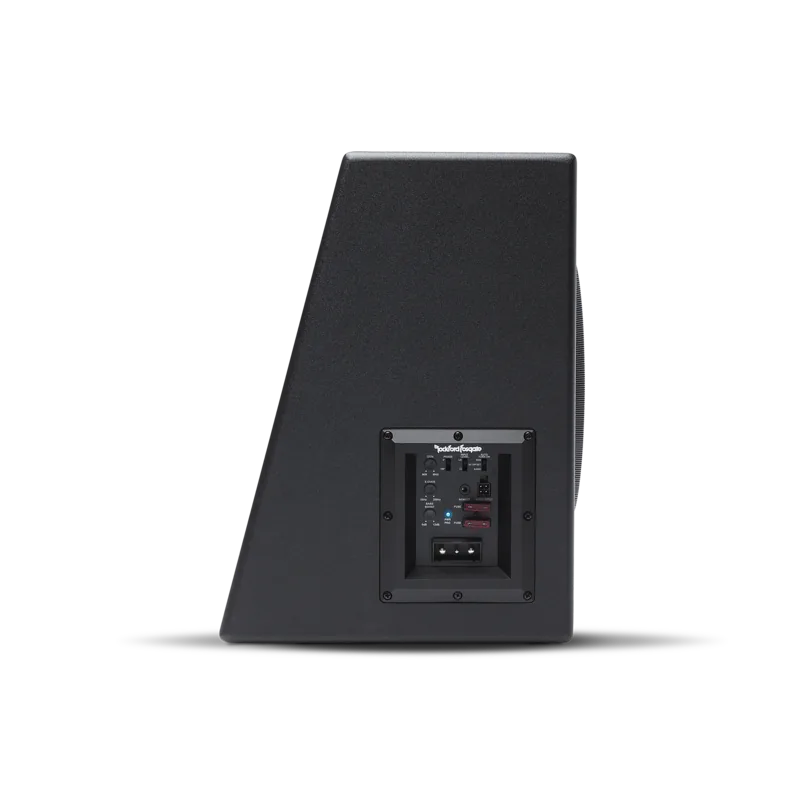
Installation is designed to be straightforward, with features like an auto turn-on system and clear protection behavior. The unit includes a blue Power/Protect LED that indicates when the amplifier is on and alerts you to short-circuit or low-impedance conditions. For turn-on, you can select REM (+12V), DC Offset, or Audio sensing, depending on what your source unit supports. If your system includes additional amplification, the auto modes can provide +12V out to help trigger other amps.
Fine control continues once the system is running. The input level switch matches your source signals, supporting both low-level RCA inputs and high-level speaker inputs. The gain control is set up for strong compatibility with many head units, and the remote Punch Bass option links gain to a dash or center-console control so you can adjust output on the fly.
Key results from the P300-12T specs
- 12-inch powered subwoofer with 300W RMS / 600W peak power for confident daily listening
- Variable 50 Hz to 200 Hz low-pass crossover to blend bass with your existing speakers
- Punch Bass boost up to +12 dB at 45 Hz for stronger impact when you want it
- Phase switch (0 to 180 deg) helps reduce cancellation for cleaner integration
Notes
- Disconnect the battery negative terminal before wiring, and fuse the B+ line within 18 in (45.7 cm) of the battery.
- Keep RCA cables routed away from power wires to minimize noise pickup.
- For best signal-to-noise, the manual guidance emphasizes avoiding excessive gain and setting it conservatively.
Pros and cons summary
Pros
- Strong 300W RMS output with a built-in 12 dB/oct crossover
- Useful tuning options: phase switch, variable low-pass, and Punch Bass
- Auto turn-on modes (REM, DC Offset, Audio) for flexible installs
- Remote Punch Level support for quick in-cabin adjustments
Cons
- Punch Bass boost can lead to over-excursion if pushed too far
- Protect mode can trigger if impedance drops too low or wiring is incorrect
- Performance depends on correct grounding and clean routing of power vs RCA cables
- Wiring errors are the most common cause of turn-on and audio issues
Search for 67,732 Manuals online


Type-in Brand or Model