

QNAP Enterprise Dual-Controller Series Manual
PDF manual · 61 Pages
English



Quick check
Incorrect answer, please try again.
Chat with your QNAP Enterprise Dual-Controller Series manual using AI
Get instant AI answers from your QNAP Enterprise Dual-Controller Series manual
Ask anything about the QNAP Enterprise Dual-Controller Series. Answers come from this manual, with the pages they are based on.
Ask a Question
Do you recommend Enterprise Dual-Controller Series?
Yes NoFrequently Asked Questions
The QNAP ES2486dc is primarily designed for enterprise environments requiring high availability and scalable storage. It features dual controllers to ensure data redundancy and minimal downtime for critical business applications.
Is this answer helpful?
Base models support 96 GB or 128 GB of RAM per configuration. The system uses DDR4 ECC RDIMM modules and can expand up to 512 GB total system memory depending on the specific variant purchased.
Is this answer helpful?
This NAS runs the QNAP Enterprise Storage operating system, known as QES. It is designed specifically for ZFS storage management and enterprise-grade features like high availability and advanced data protection.
Is this answer helpful?
Yes, the system supports hot-swapping failed drives in various RAID types including RAID 1, 5, 6, 10, 50, 60, and Triple Mirror. This allows for drive replacement without shutting down the storage pool or system.
Is this answer helpful?
Yes, the system supports connecting up to seven SAS expansion units like the EJ1600 v2. These require specific storage expansion cards and SAS cables to extend storage capacity beyond the main chassis limits.
Is this answer helpful?
Each controller includes four 10GbE SFP+ ports and three Gigabit Ethernet RJ45 ports. This setup facilitates high-speed data transfer and provides redundancy through multipath I/O configurations for critical network access.
Is this answer helpful?
The Battery Backup Unit keeps the system powered during outages to flush data from cache to flash memory via the Copy-to-Flash feature. This ensures data integrity is preserved and prevents corruption when power returns.
Is this answer helpful?
Advantages and Disadvantages
Advantages

- Dual-controller architecture ensures high availability and seamless failover protection for critical business data.
- Intel Xeon processor paired with 10GbE ports delivers optimal performance for enterprise-level storage solutions.
- Supports up to 24 drive bays allowing for massive scalable capacity while maintaining ZFS reliability standards.
- Battery Backup Unit protects cached data during unexpected power outages ensuring integrity through Copy-to-Flash.
- Hot-swappable components simplify maintenance and reduce downtime during hardware upgrades or replacements.
Disadvantages

- Requires professional knowledge to install and configure the dual-controller system effectively for maximum redundancy.
- Noise level at 60.9 db may be noticeable in quiet office environments without dedicated server room placement.
- High memory configuration options increase initial cost beyond standard single-controller enterprise storage units.
- Specific rail kits and SAS expansion accessories are additional purchases rather than included in the base package.
- Complex multipath I/O configuration requires dedicated network switches or VLANs to prevent storage downtime completely.
Product Specification
Hard Drive
N/A
RAID Level
0, 1, 5, 6, 10, 50, 60, JBOD, 16 GB Cache, mSATA SSD Backup (Redundant)
USB Write Mode
Link
Product Description
Revolutionizing Enterprise Storage with QNAP ES2486dc
The QNAP Enterprise - Dual-Controller NAS represents a significant leap forward for organizations requiring robust and scalable data management solutions. Designed specifically for enterprise environments, this system combines powerful hardware with intelligent software to deliver unmatched reliability and performance. At its core lies a dual-active architecture that ensures continuous uptime even if one side of the system encounters issues. This setup is perfect for mission-critical applications where data availability is non-negotiable.
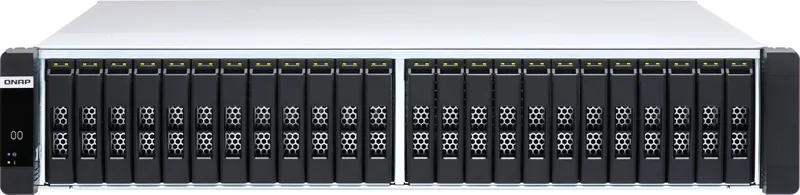
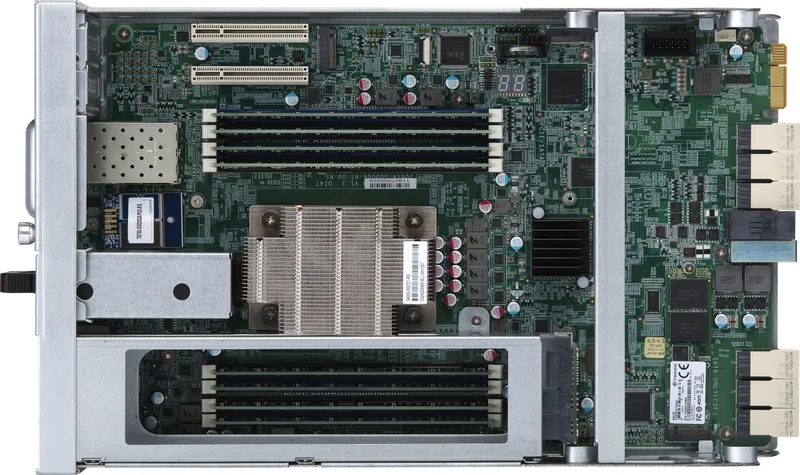
Powered by an Intel Xeon D-2142IT processor, this unit handles complex workloads with ease. The multi-core design paired with AES-NI hardware encryption ensures data security without compromising speed. Memory configurations come in two main tiers, supporting substantial RAM per controller to cache data efficiently. Storage capacity is vast, featuring 24 bays for 2.5-inch drives. Users can mix SSDs and HDDs to balance cost and performance or opt for all-flash configurations for maximum IOPS. The ZFS file system provides data integrity features that are critical for business continuity, protecting against silent data corruption.
Reliability is paramount in this design. Redundant power supplies and hot-swappable fan modules mean maintenance can happen without shutting down the entire infrastructure. A crucial feature is the Battery Backup Unit (BBU). In the event of a sudden power failure, the BBU keeps the system alive long enough to write cached data to flash memory, preventing corruption. This Copy-to-Flash technology safeguards your investment against unexpected outages. If a drive fails, the system allows for hot-swapping in RAID configurations like RAID 60 or Triple Mirror, ensuring minimal data loss risk during repairs.
Connectivity options are extensive. Each controller boasts four 10GbE SFP+ ports and three Gigabit Ethernet ports. This allows for high-speed network connections essential for modern application demands like video editing or database management. Multipath I/O support further enhances stability by routing data through multiple physical paths. Expansion capabilities are strong as well, supporting SAS expansion units to grow storage significantly beyond the initial chassis limits.
Installation is designed for ease by qualified administrators. Whether using static IPs or DHCP, setting up the QES OS is straightforward via Qfinder Pro. The front panel OLED display gives instant feedback on controller status, fan health, and drive activity without needing remote access logs immediately.
Important Considerations
This system requires careful planning for network topology. Dedicated management ports help separate maintenance traffic from production traffic to avoid congestion. Always review warranty terms before opening the chassis. Regular backups remain essential regardless of hardware redundancy to ensure complete disaster recovery. The high-end nature of this hardware demands professional setup to maximize the redundancy features provided by the dual-controller design.
Search for 67,706 Manuals online


Type-in Brand or Model