
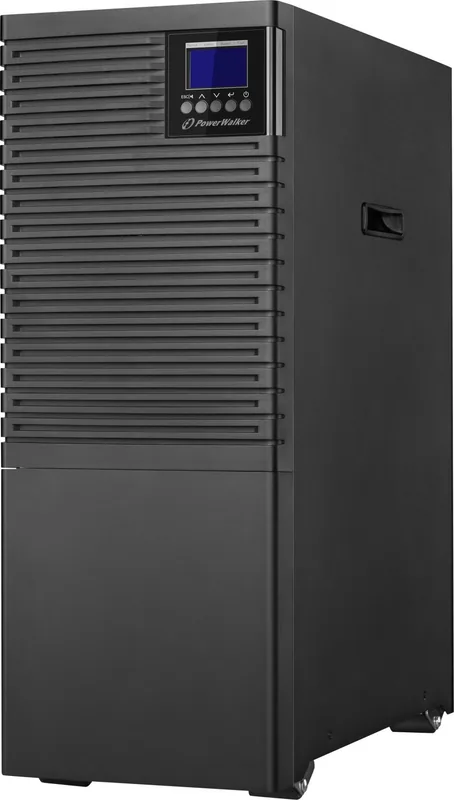
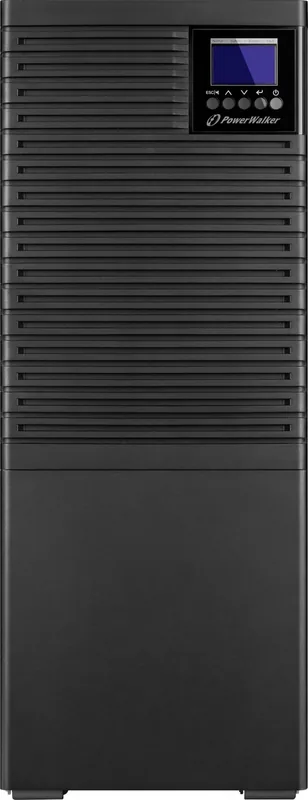
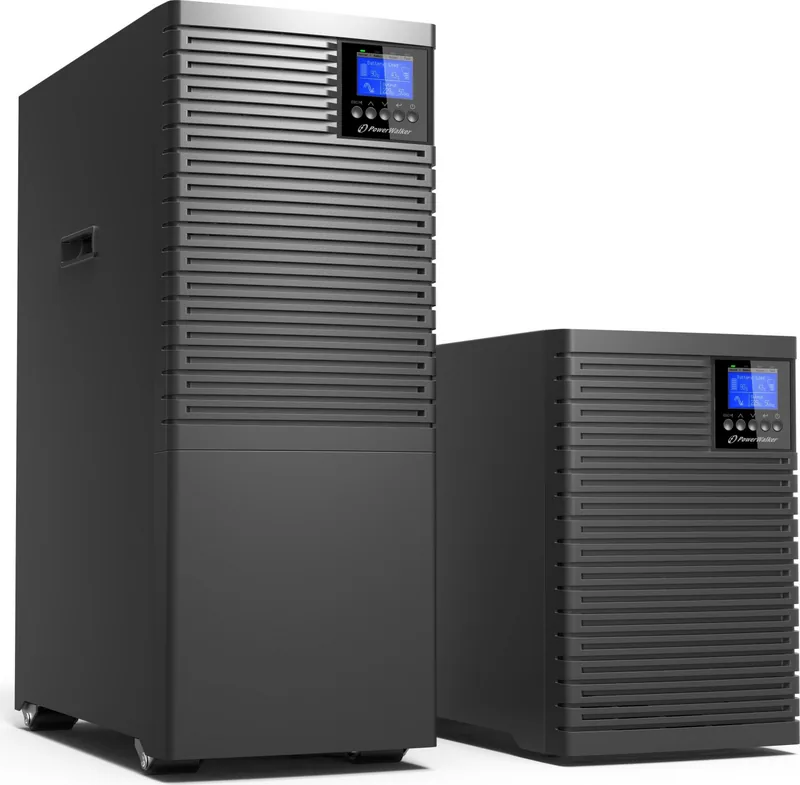
PowerWalker VFI 10000 TGB PF1 Manual
PDF manual · 59 Pages
English



Quick check
Incorrect answer, please try again.
Chat with your PowerWalker VFI 10000 TGB PF1 manual using AI
Get instant AI answers from your PowerWalker VFI 10000 TGB PF1 manual
Ask anything about the PowerWalker VFI 10000 TGB PF1. Answers come from this manual, with the pages they are based on.
VFI 10000 TGB PF1 Maintenance Schedule
If the UPS remains de-energized for a long period, energize it for at least 24 hours once every 6 months to charge the battery and avoid irreversible damage.
If storing equipment for a long period, recharge the battery every 6 months by connecting the UPS to utility power.
Replace batteries at least every 4 years to keep units running at peak efficiency as they are rated for a 3-5 year service life.
Free maintenance reminders
Timed to your purchase date. Always free, unsubscribe anytime.
Ask a Question
Do you recommend VFI 10000 TGB PF1?
Yes NoFrequently Asked Questions
It uses online double-conversion protection, which continuously cleans and stabilizes incoming power before sending it to connected devices. This helps guard against outages, surges, dips, noise, and other power disturbances.
Is this answer helpful?
Yes. The series supports tower and rack mounting, making it flexible for server rooms, office environments, or mixed equipment installations. Proper brackets and rail kits should be used for the chosen format.
Is this answer helpful?
The unit supports USB and RS232 communication, plus dry in/dry out contacts. Some versions also support optional network management cards, which make remote monitoring and shutdown control easier.
Is this answer helpful?
Yes. External battery modules can be added to extend backup runtime. The battery configuration must match the UPS model and voltage requirements, so compatibility should be checked before connecting anything.
Is this answer helpful?
Yes, up to three UPS units can be connected in parallel when the proper parallel board and cables are installed. This helps increase output capacity or create redundancy for critical loads.
Is this answer helpful?
Batteries should be tested regularly, kept charged during storage, and replaced with the same type and number specified for the system. Safe handling is essential because battery current and voltage can be dangerous.
Is this answer helpful?
Advantages and Disadvantages
Advantages

- True online double-conversion design helps deliver clean, uninterrupted output for sensitive equipment.
- USB, serial, LAN, dry contacts, and optional network cards support flexible monitoring and integration.
- Power factor 1 design provides strong usable output capacity for demanding loads.
- Rack or tower installation options and external battery support make it adaptable to different setups.
Disadvantages

- Installation requires qualified personnel and careful handling because the unit is heavy and safety-sensitive.
- Battery replacement and transport need strict procedures to avoid shock, burn, or equipment damage.
- Some settings should only be changed in bypass mode, which can limit quick on-the-fly adjustments.
- High loads, temperature, or poor cabling can reduce performance and require derating or extra attention.
Product Specification
Type
Tower
Classification
VFI (On-Line)
Apparent power
10,000VA
Active power
10,000W
Voltage
230V
Input
Terminal connection
Outputs
1x Dry Contact
Interfaces
USB, serial, LAN
Data line protection
N/A
Runtime
8min (50%), 2min (100%)
Charging time
3h (90%)
Weight
132.94lb
Dimensions (WxHxD)
8.86x23.19x17.80in
Features
LCD, HID-Support
Product Description
BlueWalker PowerWalker VFI 10000 TGB PF1, USB/serial/LAN Manual
BlueWalker PowerWalker VFI 10000 TGB PF1, USB/serial/LAN Manual introduces a high-capacity online UPS built for users who need steady, clean power and dependable system control. Designed for demanding office, server, and equipment-room environments, this model focuses on continuous protection, flexible installation, and practical monitoring through USB, serial, and LAN connectivity.
At its core, the VFI 10000 TGB PF1 uses true double-conversion technology, which means connected devices receive stable output even when the incoming mains supply is unstable. That makes it well suited for protecting servers, network gear, storage systems, and other sensitive electronics from blackouts, surges, brownouts, frequency shifts, and electrical noise. With a power factor of 1, the unit delivers strong real-world output capacity, making the most of its 10 kVA class rating.
The design also gives attention to deployment flexibility. Depending on the setup, the UPS can be used in tower or rack orientation, and it supports external battery modules for longer runtime. The interface layout is practical too: users can work with an LCD control panel, review status information, adjust core settings, and check alarms or event logs. For administrators, the communication options are especially useful, since USB, RS232, dry contacts, and network management support help the UPS fit into both local and remote monitoring workflows.
Another strength of this model is its ability to adapt to different power strategies. Users can choose normal online operation, high-efficiency mode, or converter mode, depending on performance needs and energy priorities. Parallel capability also expands the concept, allowing multiple units to work together for redundancy or higher load support when needed.
This kind of UPS is not just about backup time; it is about keeping critical operations stable and reducing the risk of data loss, downtime, and hardware stress. For IT rooms, industrial control points, and advanced home lab setups, it offers a serious layer of power confidence.
Notes
- Always follow grounding and battery safety rules during installation.
- Check cable sizing, breaker ratings, and airflow before startup.
- External battery modules should match the UPS voltage configuration.
- Regular battery testing and maintenance help preserve runtime quality.
Search for 67,706 Manuals online


Type-in Brand or Model