
NAD C 390DD Manual
PDF manual · 26 Pages
English



Quick check
Incorrect answer, please try again.
Chat with your NAD C 390DD manual using AI
Get instant AI answers from your NAD C 390DD manual
Ask anything about the NAD C 390DD. Answers come from this manual, with the pages they are based on.
Ask a Question
Do you recommend C 390DD?
Yes NoVideo Manual
The new NAD C390DD digital amplifier
Frequently Asked Questions
You can upgrade the device by installing optional MDC modules such as the DD HDM-1 for HDMI connectivity or the DD AP-1 for analog phono inputs. Simply power down the unit, access the expansion slot, and install the module according to the installation guide provided by your authorized dealer.
Is this answer helpful?
Yes, via the computer USB input you can stream 24-bit/96-kHz PCM content directly from your PC or Mac. The front and back USB ports support MP3, WMA, and FLAC files at 48 kHz from portable storage devices.
Is this answer helpful?
Check that the rear power switch is set to ON and then press the standby button on the front panel. Also verify the main power cord is plugged in and the voltage settings match your local supply. If issues persist, ensure the unit has not tripped its protection circuitry due to overheating.
Is this answer helpful?
The built-in Equalization section allows you to adjust specific low-frequency filters to compensate for standing waves in your listening room. You can adjust levels for 40Hz, 60Hz, 90Hz, 120Hz, 180Hz, and 240Hz to smooth out bass response based on your room acoustics.
Is this answer helpful?
The AVR 4 remote can be programmed to control other NAD components by loading code libraries. You can adjust IR channel settings to ensure multiple devices in the same zone respond to the correct commands without interference from your C 390DD.
Is this answer helpful?
The amplifier delivers over 150 watts continuously into both 8 ohm and 4 ohm loads. The dynamic power capacity is even higher, capable of exceeding 350 watts into 2 ohms, ensuring it can drive sensitive speakers with adequate dynamic headroom.
Is this answer helpful?
Advantages and Disadvantages
Advantages

- 100% digital signal path ensures highest fidelity and no analog signal degradation
- Modular Design Construction allows for future software and module upgrades
- Built-in Room EQ function corrects acoustic standing waves for better sound
- High power output of 150 watts into 8 ohms handles demanding speakers easily
- Multiple digital inputs including USB and AES/EBU for versatile connectivity
Disadvantages

- HDMI and Phono inputs require purchase of optional add-on modules
- Strict grounding requirements must be followed to prevent electrical hazards
- Front panel controls are limited compared to the full remote control functionality
- No analog line level inputs available without the specific optional analog module
- USB file system limits are restricted to FAT12/16/32 formats for storage
Product Specification
Channels
2
Power per channel
195W (8 Ohm), 350W (4 Ohm)
Audio Connections
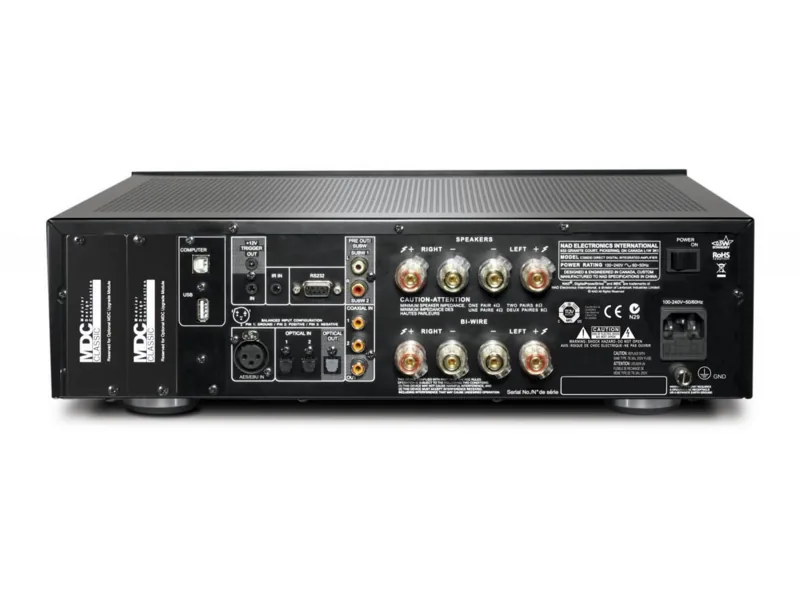
2x Digital Audio Input (coaxial), 2x Digital Audio Input (optical), AES/EBU In (XLR)
Additional Connections
USB-B, 2x USB-A
Power Consumption
100W max, 0.5W Standby
Features
Bi-Wiring
Color
Black
Dimensions
17.13 x 5.20 x 15.28 in (WxHxD)
Weight
16.98 lbs
Product Description
Discovering the NAD C 390DD
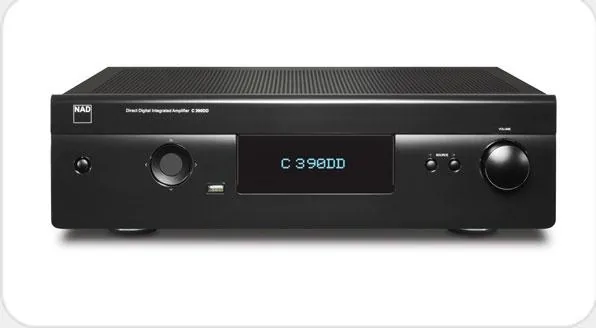
Welcome to the world of pure sound with the NAD C 390DD. This Direct Digital Integrated Amplifier redefines how audio enthusiasts listen to music by keeping the signal pathway entirely within the digital domain. Unlike traditional amplifiers that convert digital signals to analog midway, this unit maintains high fidelity from the source to the speakers. Understanding the capabilities of this device is essential, which is why referencing the NAD C 390DD Manual is recommended during setup. The guidelines outlined within help users navigate the sophisticated features safely and ensure optimal performance.
Core Technology
The amplifier features a 35 Bit Architecture with a 108-MHz Master Clock, providing precision that rivals top-tier DAC technologies. Its design philosophy centers on Music first, ensuring that audio playback remains authentic and dynamic. The Modular Design Construction allows for future upgrades without replacing the main unit. Users can install optional modules like the Direct Digital HDMI or Direct Digital Analog Phono as needs change. This flexibility keeps the system relevant as audio formats evolve over time.
Connectivity and Inputs
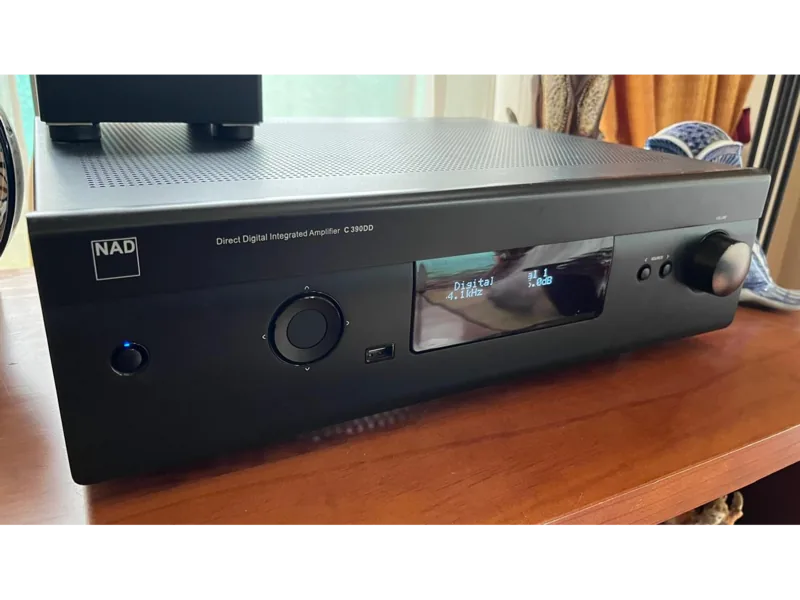
Connectivity is robust with multiple digital inputs including Coaxial, Optical, and AES/EBU. The front panel includes a Digital USB port for portable media, while the rear offers another USB connection for computers. High-end users will appreciate the ability to stream 24/96 PCM directly from a PC or Mac. Bass management capabilities include speaker compensation filters and a built-in Room Equalizer section. This Room EQ feature helps tame standing waves in smaller listening rooms for a flatter frequency response.
Installation and Power
Installation requires attention to ventilation. The unit needs clearance on sides and back to prevent overheating. Safety guidelines emphasize grounding the chassis correctly to avoid electrical hazards. The included remote control offers full control over functions like volume, mute, and source selection. Navigation through the menu system is intuitive, allowing adjustments to tone, balance, and listening modes. Whether using the built-in Soft-Clipping circuit or managing external subwoofer outputs, the amplifier provides control. Power consumption is moderate for its class, delivering over 150 watts into 8 Ohms.
Usage and Maintenance
This energy-efficient design supports continuous high-power operation without excessive heat generation. The unit also supports various listening modes such as Stereo, Mono, and Reversed channel options for specific playback scenarios. Grounding the device properly ensures the shield against voltage spikes. The remote can also control other compatible NAD components by loading specific code libraries. The infrared channel settings allow multiple devices to coexist in one zone without interference. The front display utilizes a vacuum fluorescent display to provide clear visual feedback. This display shows menu options and source information effectively. The power supply handles voltages from 100 to 240 volts AC for global use. Regular cleaning with a dry cloth keeps the unit looking new. Never expose the unit to rain or liquid. Ensure the power cord is removed before cleaning. Proper maintenance ensures longevity for years of musical enjoyment.
Search for 67,706 Manuals online


Type-in Brand or Model