
MDT SCN-LSEN1.01 Manual
PDF manual · 2 Pages
English



Quick check
Incorrect answer, please try again.
Chat with your MDT SCN-LSEN1.01 manual using AI
Get instant AI answers from your MDT SCN-LSEN1.01 manual
Ask anything about the MDT SCN-LSEN1.01. Answers come from this manual, with the pages they are based on.
Ask a Question
Do you recommend SCN-LSEN1.01?
Yes NoFrequently Asked Questions
It is designed primarily for tap water detection using electrolytic measurement. Specialized liquids may not trigger the sensor reliably depending on conductivity.
Is this answer helpful?
No, installation and commissioning must be carried out by authorized electricians to ensure safety compliance with KNX standards and electrical codes.
Is this answer helpful?
An alarm message sends over the KNX bus and a red LED activates locally. Sensors on the underside must be cleaned to reset the system.
Is this answer helpful?
Programming uses ETS software and a magnetic key included in the scope of delivery to upload physical addresses and parameters efficiently.
Is this answer helpful?
Operation temperatures range from minus twenty degrees Celsius up to plus seventy degrees Celsius suitable for most indoor climates.
Is this answer helpful?
The device receives power directly from the KNX bus line and consumes typically less than 0.3 watts during operation.
Is this answer helpful?
Devices carry CE marks for EU approval. Safety notes emphasize avoiding installation in USA or Canada where restrictions apply.
Is this answer helpful?
Advantages and Disadvantages
Advantages

- Advanced electrolytic measurement detects 1mm water level effectively.
- KNX bus integration allows immediate alarm messaging to central systems.
- Red LED indicator provides visual confirmation directly on the device unit.
- Compact size fits easily in tight spaces on floor surfaces easily.
- Low power consumption of under 0.3 watts ensures energy efficiency.
Disadvantages

- Requires professional electrician installation due to high voltage safety risks.
- Restricted to European Union markets and lacks US or Canada certification.
- Sensors on underside require manual cleaning after every water detection event.
- Physical address assignment needs specific programming tools and ETS software access.
- Single point monitoring requires multiple units for large area coverage completely.
Product Specification
Type
Sensor
Standard
KNX
Function
Flood sensor, warning function
Topology
Star
Dimensions
DIA 2.76 x 0.94 in
Features
IP66, battery operated
Product Description
Protect Your Home from Water Damage
Water damage remains one of the most costly and destructive issues homeowners face during their entire residence life cycle. Unexpected leaks from washing machines, dishwashers, burst pipes, or heavy flooding can destroy property, flooring, and furniture in mere minutes. The MDT Leak Sensor offers a robust automated solution designed specifically to alert occupants immediately when moisture is detected near valuable equipment or vulnerable areas. By integrating directly into a KNX ecosystem, this device ensures that critical alerts reach central control panels or mobile notifications instantly, allowing for swift intervention before catastrophic loss occurs.
How the System Works
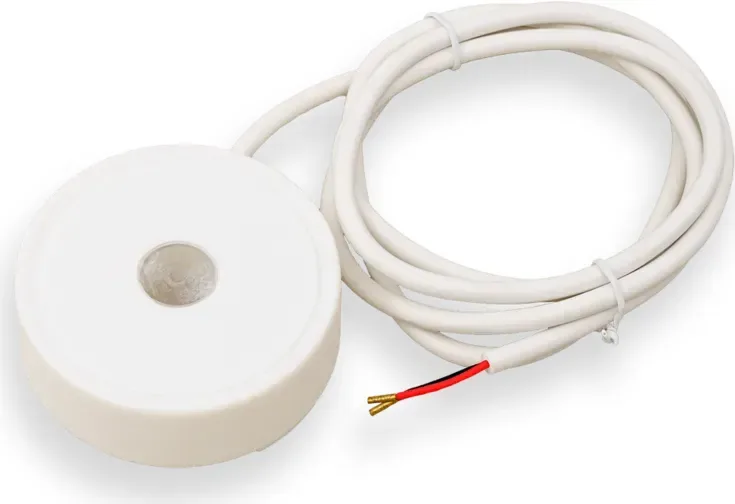
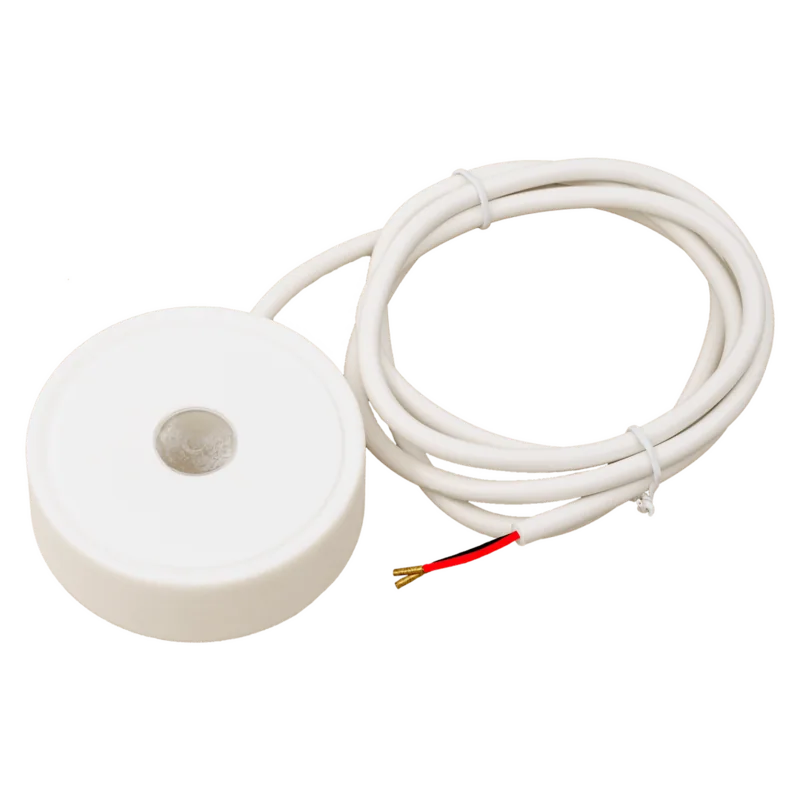
The core functionality relies on electrolytic AC voltage measurement technology. This method allows the Flood Sensor Manual guidelines to specify highly sensitive detection capabilities, identifying water levels as low as one millimeter effectively. When liquid touches the sensors located on the underside of the unit, it triggers an immediate digital signal through the KNX bus network. Simultaneously, a bright red LED on the casing illuminates to provide a clear local visual alarm. This dual notification system guarantees that someone notices the leak issue regardless of where they are positioned within the building infrastructure or control zone.
Installation and Safety Requirements
Proper setup is crucial for optimal performance and safety compliance. Although the device is compact with dimensions around seventy millimeters wide and twenty-four deep, it requires professional installation by authorized electricians due to high voltage risks. Users must strictly adhere to specific KNX directives and current European Union regulations regarding CE marks. The enclosure boasts a solid IP66 rating, providing excellent dust and water resistance for indoor environmental stability. Operation temperatures range widely from negative twenty up to positive seventy degrees Celsius, making it versatile for various climates within residential heating environments.
Maintenance and Configuration
Programming involves uploading physical addresses via ETS software using a magnetic programming key found in the package. Once configuration completes successfully, the red light extinguishes permanently to show readiness status. If a flood event occurs later, users must thoroughly clean the undersensors to restore normal monitoring function. Adhering to these maintenance steps ensures maximum equipment longevity. The system consumes less than 0.3 watts on the bus, ensuring energy efficiency alongside total reliability over time. Consulting the detailed operational protocols helps prevent simple configuration errors. Maintenance is straightforward but mandatory. Ultimately, modern early warning systems save considerable money and reduce household stress compared to reactive measures taken after substantial structural damage has already occurred.
Notes: After detection, clean underside sensors.
Search for 67,732 Manuals online


Type-in Brand or Model