Manual.ly Logo

HJC CS-15 Dosta Manual

0.0 · 0 Ratings

PDF manual · 19 Pages

English

M: QW-35-FL
page

/ 19

Loading...
481aa955fbdd7d8c950f542c35c469aa55de page 2
English P. 1-6 Français
P. 7-12 Deutsch P. 13-18
Español P. 19-24 Italian P. 25-30 Dutch P. 31-36
Contents
Important Safety Information
Specifications
Selecting the Right Helmet
Using Your Helmet Correctly
Inspect your helmet
To ensure that your helmet is in the best condition to maximize your protection, always inspect your helmet for damage
before riding :
• Check
the shield and shield ratchet – re-tighten shield ratchet screws if necessary. Be sure not to over-tighten any
screws. Plastic base plate screws can break and plastic screws can strip the screw sleeves if over-tightened.
• C
heck
for helmet damage. If your helmet is damaged or cracked, stop using it immediately. See “Helmet Replacement” (p. 6)
section for further information. If your helmet has been dropped, you may not be able to see the damage.
• C
heck for worn or damaged parts.
Plastic components may wear out over time. If you find worn or damaged parts, replace them
or purchase a new helmet. See “Replacement Parts” (p. 6) for information on parts replacement.
Check Your Face Shield
If your face shield is scratched or damaged it may reduce the visibility-replace if necessary.
Always make sure you can see well enough to safely operate your motorcycle.
Fasten the Retention System
Fasten the retention system (chin strap) as tight as possible under your jaw without causing pain. There must be no slack in the
strap, and the strap must be snug up against your jaw. If the retention system is not tight, your helmet may become dislodged or
knocked off in an accident.
The instructions in this manual are designed to help you select the right helmet, wear it properly, take care of it, and know when
to replace it. Failure to follow these instruction may increase your risk of serious injury or death in an accident.
In order to get the most protection possible from your helmet, you should always do the following:
• Wear your helmet when you ride;
• Handle your helmet carefully to avoid accidental damage; and
• Ride safely – do not take risks because you are wearing a helmet.
Although your HJC helmet is designed to reduce or prevent some injuries when worn, no helmet can protect you from all possible or
foreseeable impacts. For example, your helmet cannot protect you from spinal or neck injuries. In addition, there is no guarantee that your
helmet will PREVENT injuries to the area of your head that is covered. A low speed accident may even result in serious injury or death.
Never buy a used helmet or borrow someone else’s helmet. Over time the protective foam in helmets will adjust
to the contours of a user’s head. A used or borrowed helmet may not offer as much protection as a new helmet.
Wearing the wrong size helmet can increase your risk of serious injury or death in an accident. A helmet that is
too large for your head may be dislodged or knocked off in an accident. To select the right size helmet for your
head, follow these instruction :
The size chart is only for reference. Always
try the helmet on and follow this manual's
instructions for a proper fit.
Always make sure you can see well enough to safely operate your motorcycle.
To reduce the risk of serious injury or death, always use your helmet correctly.
If parts fall off while riding, your vision may be blocked which could cause an accident.
• Check the retention system (chin strap) for damage. If it is frayed or ripped, replace the helmet.
• Check that all pads are in place. Both of the cheek pads and the crown pads must be in place.
If helmet comes off or shifts over your eyes, try another size or another model or brand. You must be able
to see the edge in your upper field of vision.
Size Chart
1. Measure your head. Wrap a tape measure around your head about one inch (2.5cm) above your eyebrows.
2.
Use the sizing chart to select the helmet size that corresponds most closely to your head measurement. If your head
size falls between two helmet sizes, try on the larger helmet first and then the smaller size.
6.
Test the helmet fit by placing your hands on each side of the helmet. While holding your head as motionless
as possible, try rotating your helmet from left to right then up and down. If you can feel the helmet padding
sliding on your head, it is too big, try a size smaller. You should feel the helmet move the skin on your
head and face as you try to move the helmet.
7. F
asten the retention system (chin strap) as tight as possible under your jaw without causing pain. There must be no slack
in the strap, and the strap must be tight up against your jaw. See page 2-3.
3.
Try on the helmet by grasping both chin straps to pull the helmet completely onto your head, ensuring that the top of your head
is in contact with the top of the helmet interior.
4.
Check for a proper fit. To make sure your helmet is the right size, check that :
• The helmet inner lining fits snugly around your head.
• The top pad presses firmly on your head.
• The cheek pads contact your cheeks.
• There is no space around your brow under the inner lining. Test this by trying to insert your fingers.
If the helmet does not fit snugly, try on a smaller size.
5.
Check your field of vision when trying on a helmet. Some helmets may obstruct or block your vision when looking left, right, up, or down.
8.
Test the retention system (chin strap)
• Put your hands on the back of the helmet and try to push the helmet off by rotating it forward.
• Put your hands on the front of the helmet above your forehead (or on the chin guard) and try to push
the helmet off by rotating backward.
Repeat steps 3 throught 8 until you find a helmet that fits your head snugly and securely.
1. Outer Shell
2. Rear Venturi Exhausts
3. Impact Absorbent Liner
4. Comfort Liner
5. Rubber Edge Trim
6. Chin Strap
7. Micro Buckle
8. Front Chin Vent
9. Eyeport Gasket
10. Breath Deflector
11. Tool-less Shield
12. Shield Retention Button
13. Shield Ratchet
14. Top Front Vent
CLOSE
CLOSE
OPEN
OPEN
CLOSE
CLOSE
OPEN
OPEN
To reduce the risk of serious injury or death and to help prevent damage to your helmet :
• Never adjust your helmet accessories while riding – Only make helmet adjustments when stopped.
• Never
drop your helmet – Dropping your helmet may crack the shell or damage the protective foam. The damage may
not be visible. Your helmet is only designed for ONE impact. Refer to “Helmet Replacement” (p. 6) for more information on
what
to do
after helmet has been dropped.
• Never wear anything between your head and your helmet – this may reduce the effectiveness of your helmet.
• Never
hang or hook your helmet on anything including mirror stalks or sissy bars - Doing so may cause damage
to the helmet protective foam or liner.
• Never use
insect repellent on or around your helmet – insect repellant may damage your helmet’s shield, shell, protective
foam, or other components.
• Never
expose helmet to gasoline or gasoline fumes – Gasoline may damage your helmet’s shield, shell, protective
foam, or other components.
• Never use a dark or tinted face shield at night or in low visibility conditions.
- If you have any questions on what other substances may damage your helmet, please contact us.
• Always
wear eye protection – If you are not using a helmet with a face shield, always wear eye protection when riding.
Always lock your face shield in place when you are riding.
• Always
be alert for sounds – Your helmet may impair your hearing. However, your helmet is not a form of hearing protection.
• Always store your helmet in its helmet bag when not in use to help reduce accidental surface damage.
1 2

Chat with your HJC CS-15 Dosta manual using AI

Get instant AI answers from your HJC CS-15 Dosta manual

Ask anything about the HJC CS-15 Dosta. Answers come from this manual, with the pages they are based on.

CS-15 Dosta Maintenance Schedule

Remind me when maintenance is due
Every 3-5 years
Replace helmet

Replace the helmet every 3 to 5 years due to UV exposure and component aging, even if no visible damage exists.

Before every ride
Inspect helmet for damage

Check shield ratchet tightness, look for shell cracks or worn parts, and ensure retention system is secure before riding.

Regularly
Clean removable pads

Machine wash removable cheek and crown pads with mild soap and air dry to remove sweat and dirt accumulation.

As needed
Clean vents with compressed air

Use compressed air cans to blow debris from ventilation system after removing interior pads.

Free maintenance reminders

Timed to your purchase date. Always free, unsubscribe anytime.

By submitting you agree to the privacy policy. Unsubscribe with one click in any email.
M: qwen/qwen3.8-flash

Ask a Question

0/1000

Do you recommend CS-15 Dosta?

Yes No

Frequently Asked Questions

A

Use warm water and mild soap. Do not use rubbing compounds or excessive pressure, as this can create a glossy effect that ruins the matte appearance.

Is this answer helpful?

A

No, modifying the helmet by drilling, cutting, or painting increases the risk of injury. Modifications void the warranty and compromise structural integrity.

Is this answer helpful?

A

Replace your helmet every 3 to 5 years due to aging materials. Also replace it immediately after any impact, even if no damage is visible.

Is this answer helpful?

A

Yes, the HJC CS-15 features a tool-less shield mechanism that allows for easy removal and installation without requiring additional tools.

Is this answer helpful?

A

Avoid insect repellents, gasoline, and gasoline fumes. These chemicals can damage the shield, shell, and protective foam liner.

Is this answer helpful?

M: QW-35-FL

Advantages and Disadvantages

Advantages

  • Meets ECE R 22-05 safety standards for high-level protection
  • Tool-less shield system allows for quick and easy adjustments
  • Micro-buckle ensures a secure and comfortable chin strap fit
  • Removable and washable cheek pads maintain hygiene and comfort
  • Aerodynamic design with effective front and rear ventilation
VS

Disadvantages

  • Open-face design offers less coverage than full-face helmets
  • Matte finish requires specific cleaning methods to avoid glossing
  • No built-in sun visor included in the base model
  • Replacement parts must be genuine HJC to maintain warranty
  • Helmet must be replaced every 3-5 years regardless of condition
M: QW-35-FL

Product Specification

Type

Integral helmet

M: QW-35-FL

Product Description

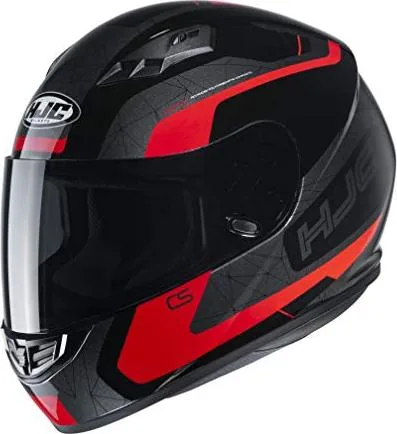
Discover the HJC CS-15 Dosta MC1 Helmet

The HJC CS-15 Dosta MC1 in a striking black and red color scheme is a versatile open-face helmet designed for riders who value both style and safety. This model features a sleek, aerodynamic shell that reduces wind noise while providing excellent protection on the road. The distinctive MC1 graphic adds a modern touch to the classic open-face design, making it a favorite among urban commuters and weekend cruisers alike.

Safety is at the core of this helmet's construction. It meets the rigorous ECE R 22-05 standards, ensuring reliable impact absorption. The micro-buckle retention system allows for quick and secure fastening under the chin, ensuring the helmet stays firmly in place even during sudden maneuvers. The face shield is tool-less, enabling easy adjustments or replacements without needing extra equipment. Proper ventilation is managed through front chin vents and rear exhaust ports, keeping the rider cool and comfortable during long rides.

Comfort is enhanced by the soft inner lining and removable cheek pads, which can be washed to maintain hygiene. The crown pad is also adjustable and removable, allowing for a customized fit. Riders should always ensure the helmet fits snugly around the head and cheeks without causing pressure points. A proper fit is crucial for maximum safety; if the helmet slides easily or obstructs vision, a different size should be tried immediately.

Maintaining your HJC CS-15 involves regular cleaning with approved products. For glossy finishes, automotive cleaners are recommended, while matte finishes require warm water and mild soap to preserve the texture. Avoid using insect repellents or gasoline near the helmet, as these substances can damage the shell and visor. Always store the helmet in its bag when not in use to protect it from dust and accidental scratches.

Remember that helmets have a lifespan. Even without visible damage, it is advisable to replace your helmet every three to five years due to material degradation from UV exposure and sweat. Never modify the helmet structure, as this compromises its safety integrity. Whether you choose the black/red combo or another variant, the HJC CS-15 offers a blend of performance and aesthetics suitable for various riding styles.

M: QW-35-FL

© Copyright 2026 Manual.ly