
HiKOKI SV13YA Manual
PDF manual · 100 Pages
English



Quick check
Incorrect answer, please try again.
Chat with your HiKOKI SV13YA manual using AI
Get instant AI answers from your HiKOKI SV13YA manual
Ask anything about the HiKOKI SV13YA. Answers come from this manual, with the pages they are based on.
SV13YA Maintenance Schedule
Empty the dust bag when it gets full to maintain collection efficiency. Remove the bag, open the fastener, and dispose of contents.
Replace sanding paper immediately upon noting excessive abrasion to prevent damage to the pad and loss of efficiency.
Regularly inspect all mounting screws and ensure they are properly tightened. Retighten any loose screws immediately.
Exercise care to ensure the motor winding does not become damaged or wet with oil or water.
If the supply cord is damaged, return the tool to an authorized HiKOKI Service Center for replacement.
Ask a Question
Do you recommend SV13YA?
Yes NoFrequently Asked Questions
The SV13YA features a variable speed dial allowing adjustment from about 7,000 to 12,000 min⁻¹ for matching speed to material and task. The SV13YB operates at a fixed no-load speed of 12,000 min⁻¹.
Is this answer helpful?
Both models use a 125 mm outer-diameter sanding pad and corresponding 125 mm hook-and-loop sanding paper for quick, tool-free abrasive changes.
Is this answer helpful?
The sander includes a dust bag and supports connection to dust-extraction systems. For hazardous or toxic dusts (e.g., lead paint), use a proper extraction system and wear a dust mask—do not rely on the dust bag alone.
Is this answer helpful?
Wear eye protection, hearing protection (measured sound levels: 90 dB(A) power, 79 dB(A) pressure), and a dust mask as needed. Keep the switch off when plugging in, avoid excessive pressure, and prevent accidental starts.
Is this answer helpful?
Empty and clean the dust bag regularly, replace worn sanding paper promptly, inspect and tighten mounting screws, protect motor windings from oil and water, and have repairs performed by authorized service agents.
Is this answer helpful?
The tool draws 230 W and is available for multiple mains voltages depending on region. Use matching plugs and suitable extension cords for outdoor use; damaged supply cords must be replaced at an authorized HiKOKI Service Center.
Is this answer helpful?
Match grit and speed to the material, avoid turning the sander on while contacting the workpiece, apply light, even pressure, and after fitting new abrasive paper tilt slightly until the paper beds in to stabilize motion.
Is this answer helpful?
Advantages and Disadvantages
Advantages

- Variable speed control on SV13YA (7,000–12,000 min⁻¹) for material-specific tuning
- Lightweight and compact (≈1.3 kg) for comfortable handheld use
- Hook-and-loop sanding pad for fast, tool-free abrasive changes
- Dust bag included and compatible with dust-extraction systems for cleaner operation
- Broad application: roughing, finishing, paint and rust removal on wood and metal
Disadvantages

- Measured sound power level is 90 dB(A); hearing protection recommended
- Vibration emission can be significant (example ah = 7.0 m/s²); limit exposure time
- Dust bag may be insufficient for toxic dusts — external extraction advised
- Supply cord replacement requires authorized service, adding downtime
- Guarantee excludes misuse, normal wear, and may vary by region
Product Specification
Type
Orbital Sander
Power
230W (230V)
No-load Speed
7000-12000/min
Disc Diameter
4.92 in
Orbit Diameter
0.13 in
Pad Attachment
Hook and Loop
Special Features
Speed Regulation, Soft Grip, Dust Extraction
Weight
3.09 lb
Product Description
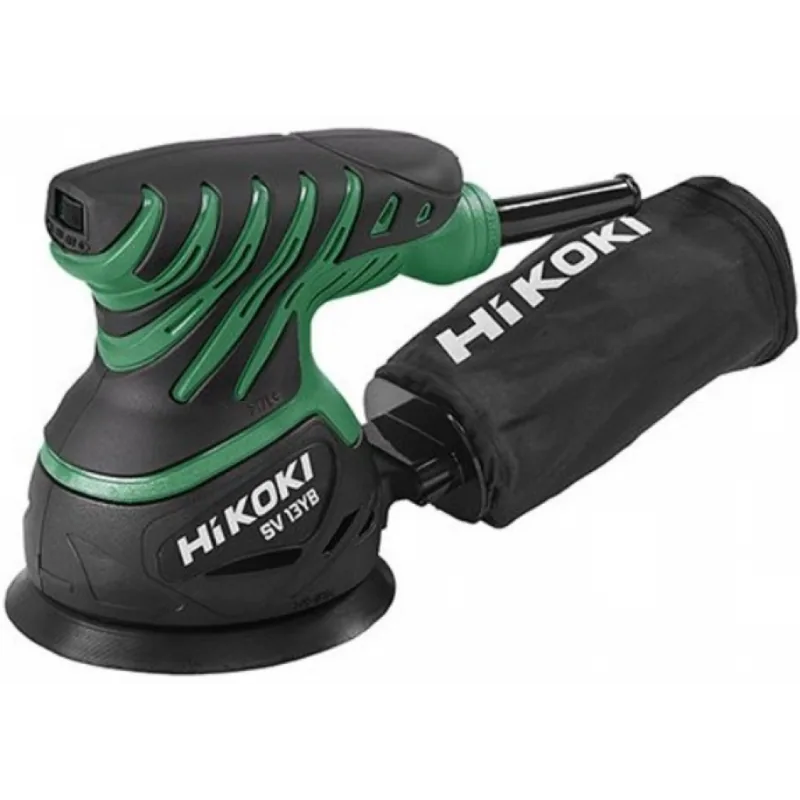
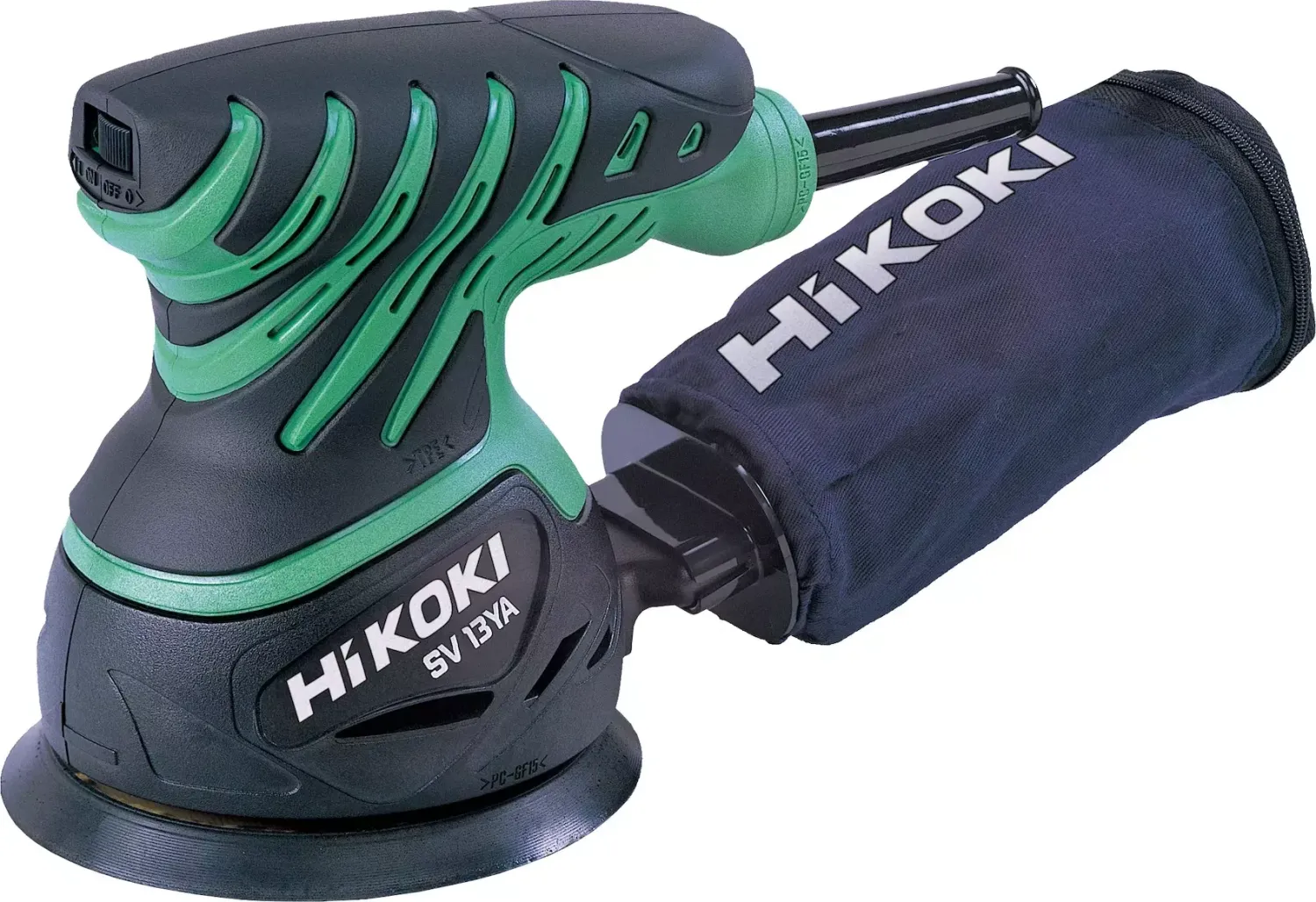
Hikoki SV13YA Electric Random Orbital Sander — Essential Guide
The Hikoki SV13YA electric random orbital sander is a compact, versatile tool designed for smoothing, finishing, paint and rust removal on wood and metal. Lightweight at about 1.3 kg (without cord) and fitted with a 125 mm sanding pad, it delivers efficient performance for both hobbyists and professionals. The SV13YA model features an adjustable speed dial (7,000–12,000 min⁻¹) so you can tune the orbital action to the material and task; the SV13YB offers a fixed no-load speed of 12,000 min⁻¹. Both models run on standard mains voltages (region-dependent) and draw 230 W of input power, making them well suited for bench and on-site sanding jobs.
Comfort and safety are built into the design. The sander uses hook-and-loop sanding paper for quick changes and includes a dust bag for basic dust collection; it also supports dust-extraction attachments for more demanding, hazardous-dust applications. Safety guidance emphasizes preventing accidental starts, wearing appropriate PPE (eye, hearing, dust protection), keeping switches off when plugging in, and avoiding excessive pressure to prevent motor overload and shortened sanding-paper life. Measured noise and vibration values call for hearing protection and consideration of vibration exposure during prolonged use.
Practical features include an easy-to-install sanding disc—align holes by folding the paper—and clear maintenance recommendations: empty the dust bag regularly, replace worn abrasive discs promptly, tighten mounting screws, and protect the motor windings from oil or water. If the supply cord is damaged, service by an authorized HiKOKI center is required. A manufacturer guarantee covers defects per local statutory regulations but excludes misuse, abuse, and normal wear.
How to get the most from it: match grit and dial speed to material (coarse for quick paint/rust removal, fine for finishing), avoid turning the tool on while contacting the workpiece, and don’t force the tool—let the orbital action do the work. After fitting new abrasive paper, expect initial uneven motion until the paper beds in; slight tilting during the first pass helps stabilize movement.
Notes
- Use appropriate dust extraction and masks when sanding hazardous coatings (e.g., lead paint).
- Measured A-weighted sound power: 90 dB(A); sound pressure: 79 dB(A).
- Vibration emission example: ah = 7.0 m/s² (steel plate), K = 1.5 m/s² — assess exposure when planning long operations.
Key specs at a glance
- Models: SV13YA (variable speed), SV13YB (fixed speed)
- Power input: 230 W
- No-load speed: 7,000–12,000 min⁻¹ (SV13YA), 12,000 min⁻¹ (SV13YB)
- Sanding pad: 125 mm
- Weight: ~1.3 kg (without cord)
Search for 67,732 Manuals online


Type-in Brand or Model