
HiKOKI SB8V2WAZ Manual
PDF manual · 100 Pages
English



Quick check
Incorrect answer, please try again.
Chat with your HiKOKI SB8V2WAZ manual using AI
Get instant AI answers from your HiKOKI SB8V2WAZ manual
Ask anything about the HiKOKI SB8V2WAZ. Answers come from this manual, with the pages they are based on.
SB8V2WAZ Maintenance Schedule
Replace the sanding belt as soon as excessive abrasion is noted to maintain efficiency.
Regularly inspect all mounting screws to ensure they are properly tightened. Retighten any loose screws immediately.
Remove dust from the bag when it is deposited up to about 2/3 of its capacity to ensure collecting efficiency.
Ask a Question
Do you recommend SB8V2WAZ?
Yes NoFrequently Asked Questions
It is intended for finishing and preparation work on wood, metal, wood-coated surfaces, metal-coated surfaces, slate, concrete, and similar materials. Typical tasks include smoothing woodwork, refinishing floors, removing rust, and stripping paint before recoating.
Is this answer helpful?
The sander has a 1020 W power input and an adjustable no-load belt speed range of 250 to 450 m/min. Variable speed helps users adapt the sanding action to the material, abrasive grit, and required finish.
Is this answer helpful?
The HiKOKI SB8V2WAZ uses 76 x 533 mm sanding belts. The supplied accessory belt is #80 grit, which is suitable for semi-fine sanding work.
Is this answer helpful?
Use 30-40 grit for coarse finishing, 40-100 for medium finishing, 80-240 for semi-fine work, and 180-400 for fine finishing. Keep using one grit until the surface is even, since changing grits too soon can lead to an inconsistent result.
Is this answer helpful?
Yes. It includes a dust bag and a dust collection adapter. Always use the bag or connect a suitable dust extraction system. Empty the bag at about two-thirds full to maintain dust collection and sanding efficiency.
Is this answer helpful?
Wear eye protection and hearing protection at all times. Use a dust mask when sanding materials that can create harmful or toxic dust, including lead paint, certain woods, and metals. A residual current device rated at 30 mA or less is also recommended.
Is this answer helpful?
Advantages and Disadvantages
Advantages

- 1020 W motor provides strong power for wood, metal, paint removal, and surface preparation.
- Variable belt speed of 250-450 m/min supports controlled finishing or faster material removal.
- 76 x 533 mm belt size is suitable for broad surfaces, floor work, and general workshop sanding.
- Includes a #80 sanding belt, dust bag, and dust collection adapter.
- Adjustable belt tracking can be corrected during operation for more consistent sanding.
Disadvantages

- At 4.5 kg without the cord, it may feel heavy during prolonged or overhead work.
- Corded operation requires access to mains power and careful cable management.
- Noise levels are high, with a measured sound pressure level of 90 dB(A).
- Dust bag performance drops as it fills and requires emptying at about two-thirds capacity.
- Carbon brush servicing and damaged power-cord replacement require an authorized service center.
Product Specification
Type
Belt Sander
Power
1,020 W (230 V)
Belt Speed
820-1,476 ft/min
Sanding Width
3 in
Belt Length
21 in
Features
Variable speed control, auxiliary handle, dust extraction
Weight
9.92 lb
Included
Dust collection bag
Product Description
HiKOKI SB8V2WAZ Electric Belt Sander - Read, Download & Print Free
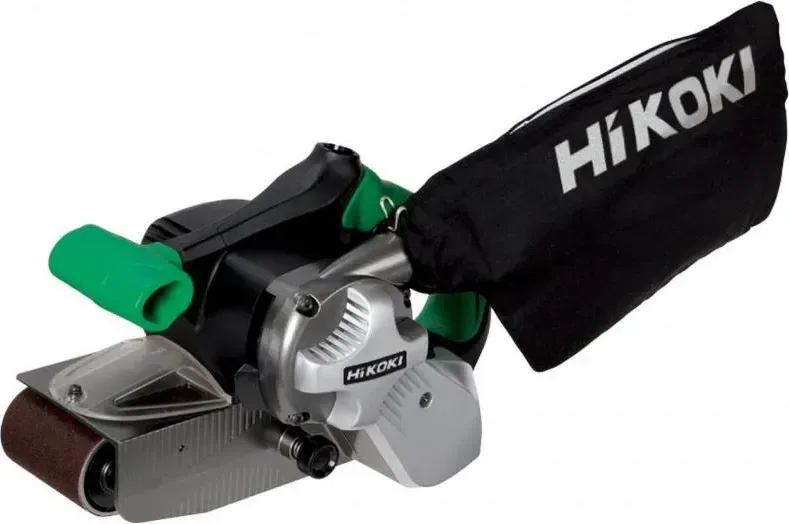
The HiKOKI SB8V2WAZ Electric Belt Sander is built for demanding surface-preparation and finishing work across wood, metal, coated materials, slate, concrete, and similar surfaces. With a 1020 W motor and adjustable no-load belt speed from 250 to 450 m/min, it gives users the power and control needed for both rapid stock removal and more careful finishing passes.
Strong Performance for Workshop and Renovation Tasks
This corded belt sander uses a 76 x 533 mm sanding belt, a widely practical size for leveling boards, smoothing woodwork, preparing floors, removing old paint, tackling rust, and refining metal surfaces. The variable-speed adjustment helps match the sanding action to the material and desired finish. Lower speeds can support controlled work, while higher speeds are suited to efficient material removal.
At 4.5 kg without the cord, the tool has a substantial, stable feel that can be useful when working on broad flat surfaces. Correct handling and steady movement are important for achieving an even result. The belt position can be adjusted during operation if it begins to drift, helping maintain accurate tracking and reduce unnecessary belt wear.
Dust Collection and Abrasive Selection
The supplied dust bag and dust collection adapter support cleaner sanding by directing debris away from the work area. For dependable collection performance, the dust bag should be emptied when it reaches approximately two-thirds of its capacity. A suitable external dust extraction system can also be connected through the adapter.
Choosing the right abrasive is central to a good finish. Coarse 30-40 grit belts are intended for aggressive work, while 40-100 grit suits medium finishing. For semi-fine work, use 80-240 grit; fine finishing generally calls for 180-400 grit. AA grain belts are suitable for steel and wood, while WA grain belts are recommended for wood and bamboo. Continue with the same grit until the surface is uniform before changing grades.
Safety and Care Notes
Always use eye and hearing protection, and wear a dust mask when sanding materials that may produce harmful dust. Keep the work area clean and well lit, disconnect the tool before adjustments or belt changes, and ensure the switch is off before connecting power. A 30 mA or lower residual current device is recommended.
Notes
- Fit the sanding belt in the correct direction for efficient sanding and longer belt life.
- Inspect belts and mounting screws regularly, replacing worn abrasives promptly.
- Carbon brush inspection and power-cord replacement should be handled by an authorized HiKOKI service center.
- Measured sound pressure is 90 dB(A), so hearing protection is essential.
Search for 67,732 Manuals online


Type-in Brand or Model