
HiKOKI RP350YDMWAZ Manual
PDF manual · 240 Pages
English



Quick check
Incorrect answer, please try again.
Chat with your HiKOKI RP350YDMWAZ manual using AI
Get instant AI answers from your HiKOKI RP350YDMWAZ manual
Ask anything about the HiKOKI RP350YDMWAZ. Answers come from this manual, with the pages they are based on.
RP350YDMWAZ Maintenance Schedule
For Class H vacuum cleaners, check the effectiveness of the unit at least once a year in accordance with national regulations.
Clean and disinfect the device immediately after use to prevent microbial contamination. Do not use steam jets or high-pressure cleaners.
Clean the water level sensors regularly and examine them for signs of damage to ensure proper operation during wet vacuuming.
Free maintenance reminders
Timed to your purchase date. Always free, unsubscribe anytime.
Ask a Question
Do you recommend RP350YDMWAZ?
Yes NoDo you recommend RP350YDMWAZ?
Yes NoFrequently Asked Questions
It is designed for wet and dry collection, including non-flammable liquids, general debris, and suitable dry dust. Use the correct filter, bag, and operating procedure for the material being collected.
Is this answer helpful?
The electromagnetic system alternately shakes the folding filter cartridges when a defined negative-pressure level is reached. This removes accumulated dust and helps maintain consistent airflow during operation.
Is this answer helpful?
Yes. In AR standby mode, the vacuum can be switched on and off through a connected electric or compressed-air tool. After the tool stops, the vacuum runs for about 10 seconds to clear remaining material from the hose.
Is this answer helpful?
Yes. For wet collection, operate without a fleece filter bag. An integrated water-level sensor shuts off the motor when the container is full. Clean the sensors regularly and empty the container promptly.
Is this answer helpful?
Check whether the container or fleece bag is full, then inspect the nozzle, tubes, and hose for blockages. Clean the filters using the automatic system. If performance does not return, replace the folding filter cartridges.
Is this answer helpful?
No. Do not vacuum petrol, oil, alcohol, thinners, combustible or explosive solvents, explosive dust, or material hotter than 60 C. These materials can create serious fire and explosion hazards.
Is this answer helpful?
Advantages and Disadvantages
Advantages

- Wet and dry capability supports collection of non-flammable liquids, dust, and general debris.
- Automatic electromagnetic filter cleaning helps sustain airflow during long cleaning sessions.
- Auto-start standby mode works with connected electric or compressed-air tools and adds a 10-second run-on period.
- Fill-level indicator and hose-blockage warning improve awareness during operation.
- Large 8,400 cm2 filter surface, wheels, steering rollers, and onboard accessory storage support practical jobsite use.
Disadvantages

- The 17.1 kg weight may make lifting or carrying the unit less convenient.
- Fine dry dust requires compatible fleece bags and folding filter cartridges for best results.
- Wet and dry work may require separate dry filters or a second filter set when switching tasks frequently.
- The built-in socket remains live when the mains plug is connected, so careful connection practices are required.
- It must not be used for explosive materials, flammable liquids, solvents, or material hotter than 60 C.
Product Specification
Type
Canister vacuum cleaner
Power source
Mains power (1,200 W)
Suction power
Vacuum 3.63 psi
Capacity
5.81 gal wet, 6.60 gal dry
Filtration
Yes
Special features
Filter cleaning, M dust class, power tool outlet with automatic switch-on
Noise level
69.5 dB(A)
Operating radius
Cord length 26.25 ft
Dimensions
21.65 x 21.65 x 15.75 in (W x H x D)
Weight
34.61 lb
Included accessories
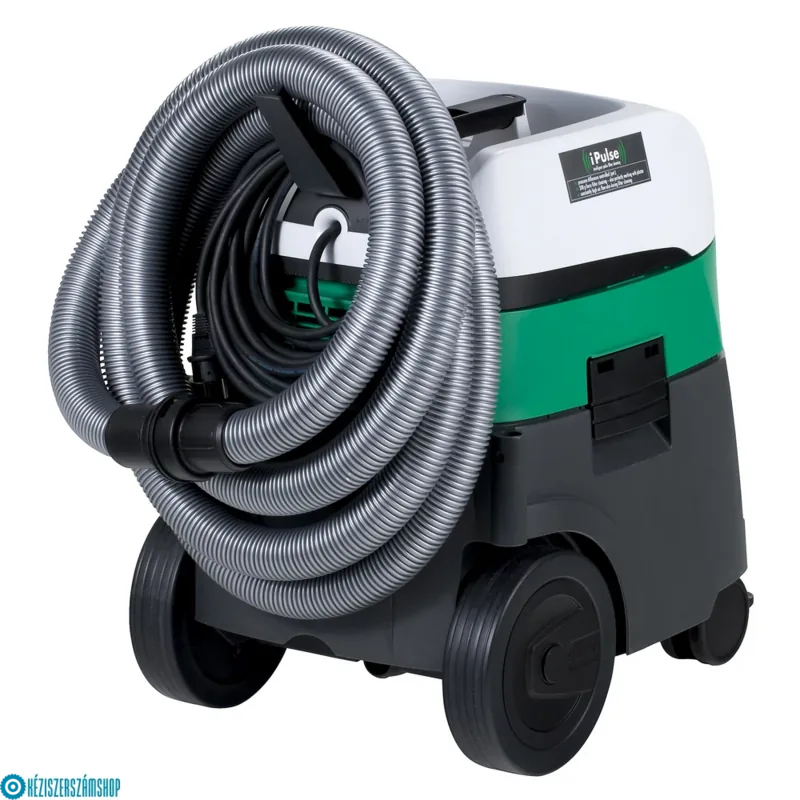
Hose (16.4 ft), suction tube, floor nozzle, crevice nozzle
Product Description
HiKOKI RP350YDMWAZ Wet/Dry Vacuum Cleaner - Read, Download & Print Free
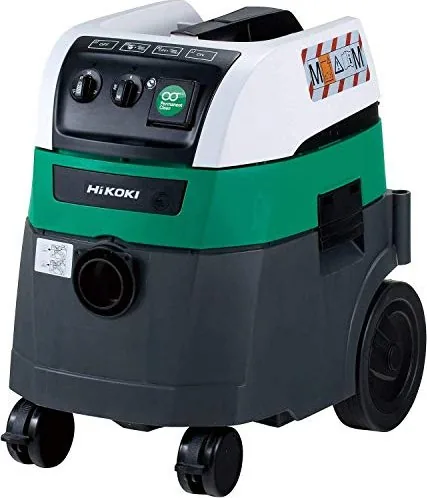
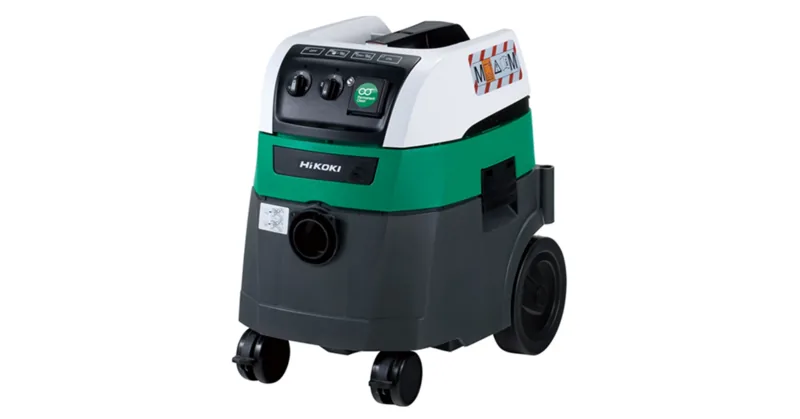
The HiKOKI RP350YDMWAZ Wet/Dry Vacuum Cleaner is designed for demanding cleanup work where ordinary household vacuums are not enough. Built for wet and dry applications, it supports workshops, renovation sites, trade environments, and other spaces where dust, debris, and non-flammable liquids need to be collected efficiently. Its robust container, wheeled base, steering rollers, and practical handles help make transport and positioning easier around the work area.
Built for Continuous Cleanup
A key feature is the electromagnetic automatic filter-cleaning system. The machine alternately cleans its folding filter cartridges when a defined negative-pressure level is reached, helping to maintain airflow during extended work. This is especially useful when collecting fine dusts that can quickly reduce suction performance. A fill-level indicator warns when the container is full or the hose is blocked, while applicable M and H versions also provide an audible alert.
The vacuum cleaner offers several operating modes through its rotary switch. Users can select standard operation with or without automatic filter cleaning, or choose automatic standby mode. In standby mode, a connected electric or compressed-air tool can control the vacuum, and the unit continues running for about 10 seconds after the tool stops. This helps clear residual material from the hose and supports cleaner, more efficient tool-assisted work.
Ready for Wet and Dry Tasks
For dry collection, a dry filter and suitable accessories should be used to prevent dust buildup. Fleece filter bags are recommended for fine materials such as soot, cement, plaster, flour, and similar dusts. For wet collection, the vacuum can operate without a fleece bag, while an integrated water-level sensor stops the motor when the container reaches capacity. Regular cleaning of the water sensors is important for dependable operation.
The RP350YDMWAZ platform includes a hose-diameter setting to match the vacuum's warning and filter-cleaning behavior to compatible hose sizes. A sliding air control on the handle also allows the user to adjust suction at the point of use. The integrated power socket supports connected equipment, with a combined vacuum and tool connection limit of up to 16 A.
Practical Maintenance and Safe Use
Routine maintenance is straightforward: empty the container, replace full bags, clean blockages, and change filter cartridges when suction does not recover after filter cleaning. The unit should always be switched off and unplugged before maintenance. Only genuine compatible accessories and replacement parts should be used.
Note: Do not collect flammable or explosive liquids, hot materials above 60 C, explosive dust, or combustible solvents. Clean the vacuum after use and allow the container and accessories to dry thoroughly.
Note: The product is intended for professional-style wet and dry collection. Select filters, bags, and disposal procedures appropriate to the material being collected.
Search for 67,732 Manuals online


Type-in Brand or Model