
HiKOKI RP250YDMWAZ Manual
PDF manual · 232 Pages
English



Quick check
Incorrect answer, please try again.
Chat with your HiKOKI RP250YDMWAZ manual using AI
Get instant AI answers from your HiKOKI RP250YDMWAZ manual
Ask anything about the HiKOKI RP250YDMWAZ. Answers come from this manual, with the pages they are based on.
RP250YDMWAZ Maintenance Schedule
For Class H vacuum cleaners, check the effectiveness at least once a year.
Clean and disinfect immediately after use to prevent microbial contamination, especially in food-processing environments.
Clean the water level sensors regularly and examine them for signs of damage.
Free maintenance reminders
Timed to your purchase date. Always free, unsubscribe anytime.
Ask a Question
Do you recommend RP250YDMWAZ?
Yes NoFrequently Asked Questions
It is intended for wet and dry cleanup of non-combustible materials. It can collect ordinary dry debris and suitable liquids. Use the correct filtration setup for the task, and do not collect flammable solvents, explosive dust, petrol, oil, alcohol, or materials hotter than 60 C.
Is this answer helpful?
Yes. The integrated power socket can be used with a compatible electric tool. In automatic modes, the vacuum can be switched on and off by the connected tool. The total connected load of the vacuum and attached tool must not exceed 16 A.
Is this answer helpful?
In RA mode, the vacuum uses an electromagnetic shaking function to clean the folding filter cassettes. When the set minimum airflow is reached, cleaning occurs during the next work break. This helps remove attached dust and maintain suction performance.
Is this answer helpful?
No. Fleece filter bags are only for dry vacuuming and should not be used for liquid pickup. The folding filter cassettes are suitable for wet cleaning, while the water-level sensor switches the motor off when the container is full.
Is this answer helpful?
Check whether the filter is dirty, the fleece bag is full, the container needs emptying, or the nozzle, tubes, or hose are blocked. Activate filter cleaning where applicable. If performance remains low after these checks, replace the folding filter cassettes.
Is this answer helpful?
Switch off the vacuum and unplug it before cleaning. Wash the container and accessories with water, wipe the top section using a damp cloth, and let all components dry. Avoid steam cleaners, pressure washers, acids, acetone, and solvents.
Is this answer helpful?
Advantages and Disadvantages
Advantages

- Wet and dry capability supports cleanup of non-combustible dust, debris, and liquids.
- Integrated tool socket enables automatic start and stop with connected power tools.
- Electromagnetic filter cleaning helps restore airflow without frequent manual filter removal.
- Water-level sensor shuts off the motor when the container becomes full.
- Compact RP250YDM dimensions and castors support practical movement around work areas.
Disadvantages

- The vacuum always operates at maximum speed and does not provide speed regulation.
- Fleece filter bags are for dry use only and must be removed before wet pickup.
- Frequent switching between wet and dry tasks may require a second filter set.
- The connected vacuum and power tool load must not exceed 16 A.
- Flammable, explosive, and hot materials above 60 C cannot be collected.
Product Specification
Type
Canister vacuum cleaner
Power source
Corded electric (1200 W)
Suction power
Vacuum pressure 2.46 psi
Capacity
4 gal wet, 5.28 gal dry
Filtration
Yes
Special features
Filter cleaning, dust class M, power outlet with automatic start
Noise level
69.5 dB(A)
Operating radius
Cord length 26.25 ft
Dimensions
16.93 x 19.29 x 15.35 in (W x H x D)
Weight
28 lb
Included accessories
Hose (16.4 ft), suction tube, floor nozzle, crevice nozzle
Product Description
HiKOKI RP250YDMWAZ Wet/Dry Vacuum Cleaner - Read, Download & Print Free
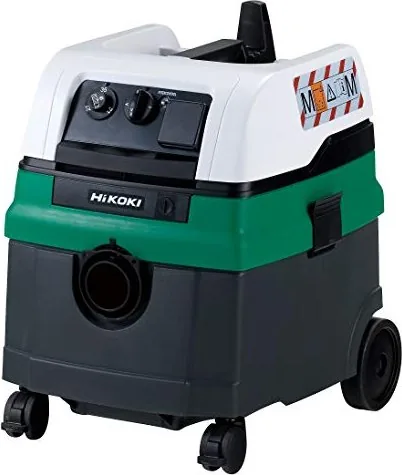
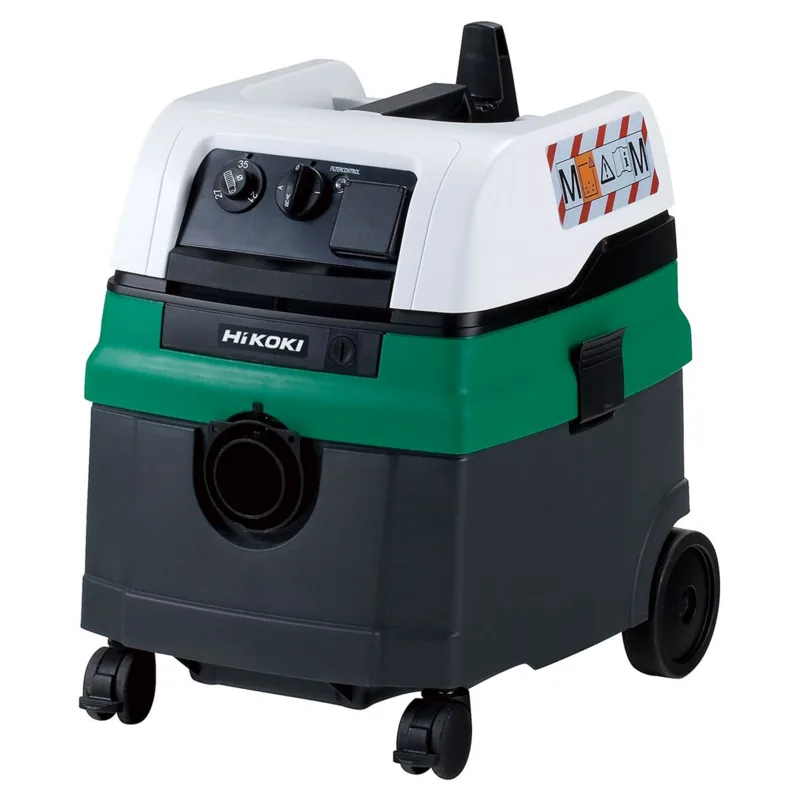
The HiKOKI RP250YDMWAZ Wet/Dry Vacuum Cleaner is designed for demanding cleanup tasks in workshops, construction areas, renovation spaces, and professional maintenance environments. Built to collect both dry debris and non-combustible liquids, it combines practical mobility with a filtration-focused design for users who need dependable extraction during everyday work.
With a 1,200 W rated motor and up to 1,400 W maximum power, this vacuum delivers strong airflow for collecting dust, dirt, wood debris, and liquid spills. Its listed airflow reaches 140 m3/h at the hose and 220 m3/h at the fan, while negative pressure reaches up to 248 hPa. These figures support efficient pickup when working across floors, benches, tools, and confined work zones.
Features for Connected Tool Use
An integrated power socket allows compatible electric tools to be connected directly to the vacuum. In automatic mode, the vacuum can start and stop with the connected tool, helping capture dust at its source during sanding, cutting, drilling, or similar tasks. The combined connected load for the vacuum and tool must not exceed 16 A.
The rotary control provides off, continuous running, automatic tool-operated, and automatic filter-cleaning modes. In RA mode, the electromagnetic filter-cleaning system shakes dust from the folding filter cassettes during the next work break after minimum airflow is reached. A volume-flow indicator warns of a full container or blocked hose, helping users act before suction performance drops too far.
Wet and Dry Cleaning Flexibility
For dry collection, fleece filter bags can be used with folding filter cassettes to help manage fine dust such as cement, plaster, soot, flour, and similar materials. For wet pickup, the vacuum is used without a fleece bag. A built-in water-level sensor stops the motor when the container reaches capacity, reducing the risk of overfilling. The container should still be emptied promptly after collection.
The RP250YDM format measures 45 x 39 x 53 cm and weighs approximately 12.7 kg, making it a compact choice for moving between work areas. Wheels and steering castors support maneuverability, while onboard storage and a hose arrangement help keep accessories organized for transport and storage.
Note: Use only suitable filters, bags, and accessories for the material being collected. Never vacuum flammable, explosive, or hot materials above 60 C. Switch off the unit immediately if foam or liquid escapes.
Note: Clean the container and accessories with water, wipe the top section with a damp cloth, and allow components to dry fully before storage or dry vacuuming.
Search for 67,732 Manuals online


Type-in Brand or Model