
HiKOKI DV18DBL2WPZ Manual
PDF manual · 280 Pages
English



Quick check
Incorrect answer, please try again.
Chat with your HiKOKI DV18DBL2WPZ manual using AI
Get instant AI answers from your HiKOKI DV18DBL2WPZ manual
Ask anything about the HiKOKI DV18DBL2WPZ. Answers come from this manual, with the pages they are based on.
DV18DBL2WPZ Maintenance Schedule
Check all mounting screws regularly and ensure they are properly tightened. Retighten immediately if loose.
Sharpen or replace the tool as soon as abrasion is noted to maintain efficiency and prevent motor malfunction.
Exercise care to ensure the motor unit winding does not become damaged or wet with oil or water.
Wipe the power tool with a soft dry cloth or a cloth moistened with soapy water when stained.
Ask a Question
Do you recommend DV18DBL2WPZ?
Yes NoFrequently Asked Questions
RFC detects reactive force when the bit is suddenly overburdened. It stops motor output before the whole tool jerks, helping to lessen the twisting force on your arms. When RFC activates, the LED warning light blinks while the trigger is pulled.
Is this answer helpful?
The tool uses LED light warning signals to indicate safeguard functions. For example, overburden protection, RFC activation, over-discharge protection, and temperature protection each have distinct blink patterns. If a safeguard triggers, release the switch and follow the corrective action for that mode.
Is this answer helpful?
The keyless chuck supports a stated bit/chucking diameter range of 1.5 mm to 13 mm. Using bits outside the range can cause poor retention or slipping.
Is this answer helpful?
Yes. The DV series is intended for drilling into brick and concrete block when used in the impact (hammer) mode. For safe operation, make sure the side handle is securely tightened and keep both hands on the handles during drilling.
Is this answer helpful?
Charging instructions include temperature guidance and status indicators. Pilot and charge indicator lamps show conditions such as before charging, charging in progress, charging complete, overheat standby, and malfunction. If the battery or charger is hot, allow cooling before restarting charging.
Is this answer helpful?
Over-discharge protection can stop the motor when battery capacity runs low. The remedy is to charge the battery as soon as possible. The protection function prevents damage from deep discharge, but it means you will need a recharge before continuing heavy work.
Is this answer helpful?
The text includes USB device connection precautions for a compatible HiKOKI USB accessory (UC18YSL3). If you use that system, it explains backing up data, checking USB cable condition, and how the charger pauses USB charging while switching between power sources.
Is this answer helpful?
Advantages and Disadvantages
Advantages

- Reactive Force Control (RFC) helps reduce sudden tool jerk and arm twisting during overburden.
- LED warning signals communicate safeguard modes like overburden, RFC, temperature, and over-discharge.
- Protection features help prevent battery overheat and overly deep discharge.
- Keyless chuck fits bits from 1.5 mm to 13 mm for convenient, flexible use.
- High/low speed and clutch dial improve driving depth control and material matching.
Disadvantages

- RFC is not guaranteed to activate in every overloading scenario, so technique still matters.
- When protection functions trigger, the motor may stop automatically until you correct the cause.
- Clockwise vs counterclockwise selection and proper hammer settings must be used to avoid damage or poor results.
- USB charging guidance applies if using a compatible HiKOKI USB charger/accessory, not as a universal feature.
- Battery performance can temporarily drop in cold conditions, then returns after warming.
Product Specification
Type
Impact drill driver
Battery
2x Battery (18V, 5.0Ah, Li-Ion)
No-load speed
0-500/0-2100/min
No-load impact rate
0-31500/min
Drilling capacity
Steel 0.51in, Aluminum 0.51in, Wood 2.99in
Torque
22 levels
Tool holder
0.06-0.51in Keyless chuck
Features
Right/Left rotation, Speed control, Impact rate control, Multi-speed, Torque preselection, Charge status indicator, LED work light, Softgrip, Auxiliary handle, Motor brake, Belt clip
Weight
2.50kg (5.51 lb)
Scope of delivery
Case (HSC), Charger, 2x Battery
Product Description
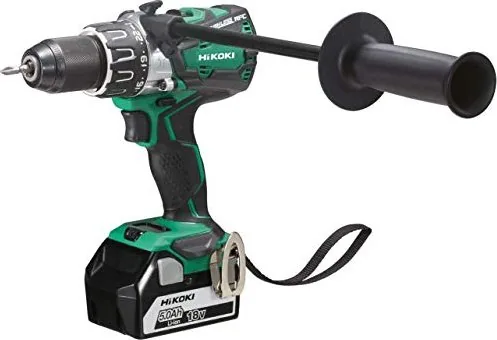
Hikoki DV18DBL2WPZ cordless hammer drill/driver incl. case + 2 batteries 5.0Ah Manual
Built for demanding day-to-day drilling and driving, the Hikoki DV18DBL2WPZ is a cordless hammer drill/driver kit designed to move between wood, metal, and masonry tasks without slowing down. The set comes with a carrying case and 2 x 5.0Ah batteries, making it easy to start work right away and keep productivity high across multiple jobs.
A key strength of this drill is its control and protection system. When the bit suddenly meets heavy resistance, the tool can trigger Reactive Force Control (RFC) to reduce the chance of the tool jerking and twisting your grip. You are also guided by LED light warning signals that indicate different safeguard modes such as overburden protection, reactive force activation, over-discharge protection, and temperature protection.
For versatility on site, the tool supports drill and impact drilling functions (combi capability), plus high/low speed selection for more control depending on the material. The clutch dial offers a wide adjustment range for repeatable driving depth, while the keyless chuck supports bit sizes from 1.5 mm to 13 mm for convenient bit changes.
Battery charging and runtime management are also covered in the included Hikoki DV18DBL2WPZ cordless hammer drill/driver incl. case + 2 batteries 5.0Ah Manual, with clear guidance on charging indicators, safe recharging temperatures, and how to maximize battery life. The charging process includes status signals for charging completion, overheat standby, and charging errors so you can react quickly when conditions are not ideal.
Top pros (key results)
- Reactive Force Control (RFC) helps minimize dangerous sudden twisting during overburden events.
- LED safeguard signals show when the drill is protecting itself, so you can correct the cause fast.
- Over-discharge and temperature protection reduce the risk of battery and motor stress.
- Keyless chuck supports 1.5 mm to 13 mm bits for broad drilling and driving use.
- Two-speed control and clutch adjustment improve accuracy across different materials.
Top considerations (key results)
- RFC may not activate in every situation, so avoid aggressive overloading of the bit.
- For best results, use the correct direction and settings (including impact direction for hammering).
- If the tool stops from protection, you should release the trigger and remove the overload before resuming.
Notes
- Always keep the side handle firmly secured and use both hands during drilling.
- Let the tool and battery cool if temperature protection stops operation.
- For long storage, store lithium-ion batteries fully charged to preserve performance.
Search for 67,635 Manuals online


Type-in Brand or Model