
Growatt SPH Manual
PDF manual · 35 Pages
English



Quick check
Incorrect answer, please try again.
Chat with your Growatt SPH manual using AI
Get instant AI answers from your Growatt SPH manual
Ask anything about the Growatt SPH. Answers come from this manual, with the pages they are based on.
Ask a Question
Do you recommend SPH?
Yes NoFrequently Asked Questions
Growatt SPH hybrid inverters manage energy from solar panels, batteries, household loads, and the grid. They can increase solar self-consumption, charge batteries, export surplus energy, and supply selected essential loads through the EPS output during a grid outage.
Is this answer helpful?
The main priorities are Load First, Battery First, and Grid First. Load First prioritizes household demand, Battery First prioritizes battery charging during chosen times, and Grid First prioritizes export. The best setting depends on local tariffs, solar production, battery goals, and regulations.
Is this answer helpful?
Yes, when backup operation is enabled and correctly wired, the EPS output can power selected loads from solar and battery energy. The EPS output is limited to 3000W, so the backup circuit should include only loads that remain within this limit.
Is this answer helpful?
The series supports compatible lithium and lead-acid battery systems within the specified 42V to 59V battery voltage range. Lithium systems may use CAN or RS485 communication, while lead-acid systems require the appropriate temperature sensing arrangement.
Is this answer helpful?
Yes. The inverter has two MPP trackers, allowing two solar strings to be managed independently within the stated electrical limits. This can be useful where arrays have different orientations, shading patterns, or panel groupings.
Is this answer helpful?
System status can be checked on the integrated LCD display and LEDs. Optional communication accessories can enable remote monitoring through Growatt ShineServer or ShinePhone platforms using Wi-Fi, GPRS, RS232, or ShineLink connectivity.
Is this answer helpful?
Advantages and Disadvantages
Advantages

- Hybrid design combines solar generation, battery storage, grid connection, and optional EPS backup in one inverter.
- Two MPP trackers support flexible PV array layouts and help optimize generation from separate solar strings.
- Selectable Load First, Battery First, and Grid First modes support different self-consumption and tariff strategies.
- IP65 enclosure, low normal noise level, LCD controls, and optional remote monitoring improve everyday usability.
- Models span 3000W to 6000W AC nominal output, offering options for varied residential energy needs.
Disadvantages

- EPS backup output is limited to 3000W, so it may not support all household circuits during an outage.
- Installation, commissioning, grounding, and country settings require trained and properly certified personnel.
- Meter and CT monitoring cannot be used together, requiring the installer to choose the suitable sensing method.
- Lithium battery communication must use either CAN or RS485, not both at the same time.
- Battery compatibility and available power models can vary by country and local grid rules.
Product Specification
Note
Prices include partial 0% VAT rates for Austria and Germany
Type
Transformerless, passive hybrid inverter
Input voltage
120-550 V direct current (DC)
Maximum input current
12 A
MPP voltage range
150-550 V direct current (DC)
Number of MPP trackers
2
Output phases
Single-phase
Input
MC4
Interfaces
1 x USB-A, 1 x RS-232
Protection rating
IP65
Ambient temperature
-13 to +140 degrees F
Dimensions
17.72 x 22.05 x 7.09 in (W x H x D)
Weight
59.52 lb
Product Description
Growatt SPH Manual: Hybrid Solar Storage for Smarter Energy Use
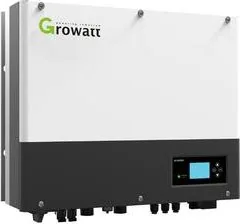
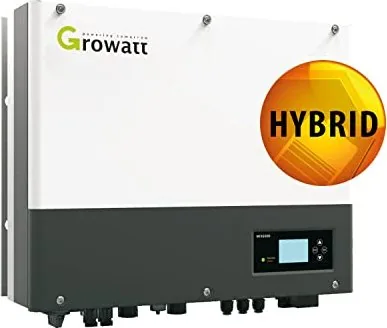
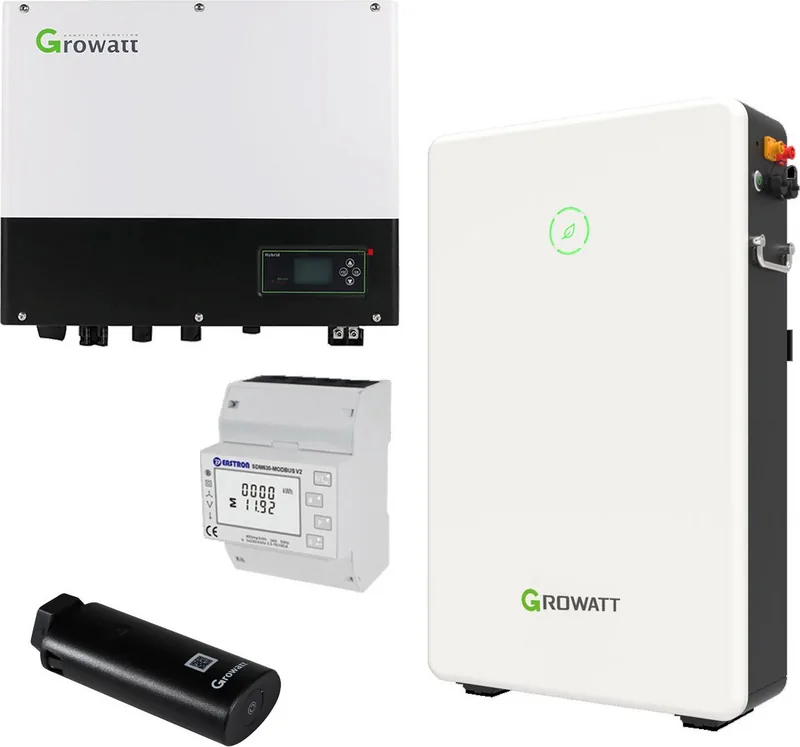
The Growatt SPH series is a single-phase hybrid inverter range designed to connect solar generation, battery storage, household loads, and the public grid in one coordinated energy system. This Growatt SPH Manual overview highlights the main capabilities of models from SPH3000 through SPH6000, helping homeowners understand how the range can support higher solar self-consumption and practical backup power planning.
The system uses photovoltaic energy first according to the selected operating priority. In Load First mode, solar power supplies household demand and charges the battery before surplus energy is exported. Battery First can prioritize charging during selected periods, while Grid First can prioritize solar export where local tariffs make that approach useful. These configurable modes allow the system to adapt to changing consumption patterns, electricity prices, and energy goals.
Flexible Solar and Battery Integration
Growatt SPH inverters include two MPP trackers, allowing compatible solar arrays with different orientations or conditions to be managed more effectively. The PV input range reaches 120V to 550V DC, while the battery connection supports a 42V to 59V range. The series is compatible with lithium and lead-acid battery configurations, but the correct battery type and communication method must be selected during setup.
Lithium batteries can communicate through CAN or RS485, depending on the battery management system. Lead-acid installations use a temperature sensor to support appropriate charging behavior. A current transformer, wireless sensor, or compatible meter can monitor site energy flow, although meter and CT sensing are alternatives rather than simultaneous connections.
Backup Capability and Everyday Monitoring
When grid supply is unavailable, the SPH can provide an EPS backup output for selected loads. Backup output is rated up to 3000W, so essential circuits should be planned within this limit. The on-grid and EPS connections must remain separate, with switching equipment used where required by the installation design.
An LCD display, status LEDs, and control buttons provide local visibility of solar input, battery condition, grid information, load behavior, and system status. Optional Wi-Fi, GPRS, RS232, and ShineLink communication accessories support remote monitoring through Growatt platforms. The inverter also includes protections for grid conditions, insulation issues, reverse polarity, temperature, and residual current.
Installation Considerations
The compact enclosure measures 450 x 565 x 180 mm and weighs 27 kg. Its IP65 rating supports protected indoor or outdoor installation, but the location needs sufficient ventilation, clearance, a solid non-flammable mounting surface, and compliance with local electrical regulations. Professional installation is essential because the system includes high DC voltage, AC grid connections, batteries, and country-specific safety settings.
Note: Confirm local grid approval, battery compatibility, cable sizing, grounding, export settings, and backup-load requirements before commissioning a Growatt SPH system.
Search for 67,706 Manuals online


Type-in Brand or Model