
Formfutura StoneFil Manual
PDF manual · 4 Pages
English



Quick check
Incorrect answer, please try again.
Chat with your Formfutura StoneFil manual using AI
Get instant AI answers from your Formfutura StoneFil manual
Ask anything about the Formfutura StoneFil. Answers come from this manual, with the pages they are based on.
Ask a Question
Do you recommend StoneFil?
Yes NoFrequently Asked Questions
It is a PLA-based polymer blend filled with about 50% stone powders, plus additives designed to improve 3D printing performance and the final stone-like look.
Is this answer helpful?
Under normal handling and proper printing conditions, it is not classified as hazardous. However, hot or molten material can cause burns, so basic protective care is still important.
Is this answer helpful?
It is intended for FFF/FDM 3D printers. That makes it suitable for many standard desktop machines used by hobbyists, designers, and prototype makers.
Is this answer helpful?
Printed parts have a natural, stone-inspired appearance with a more solid and mineral-like character than standard PLA. It is especially useful for decorative and presentation-focused models.
Is this answer helpful?
Keep it in a dry place, away from direct sunlight, moisture, and heat. When not in use, sealed packaging with desiccant is recommended to help maintain quality.
Is this answer helpful?
Use ventilation, avoid dust buildup, and do not touch heated or molten filament. Heat-resistant gloves and eye protection are recommended when working close to the printer or during cleanup.
Is this answer helpful?
Advantages and Disadvantages
Advantages

- Stone-like appearance gives prints a unique, premium visual style.
- PLA-based blend keeps it accessible for common FFF/FDM printers.
- 50% stone powder fill adds weight and a more solid feel.
- Not classified as hazardous under normal, proper handling.
Disadvantages

- Needs dry storage to avoid moisture-related print issues.
- Molten material can cause burns, so handling must be careful.
- Dust control and ventilation are recommended during use.
- Less suited to applications that need a pure plastic look or feel.
Product Specification
Suitability
universal
Print Temperature
374-464°F
Melting Temperature
170.6-307.4°F
Heatbed Recommendation
32-140°F
Melt Flow Index
3.32oz/10min
Impact Strength
0.26Btu/ft2
Elongation at Break
33%
Modulus of Elasticity
690,379,631 psi
Tensile Strength
5,511,434 psi
Dimensional Stability
134.6°F
Density
106.12lb/ft3
Base Color
mineral
Product Description
Formfutura StoneFil Stone, 3D Printing Filament Manual
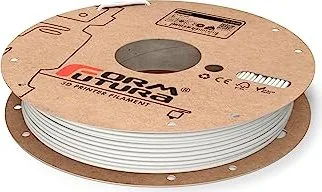
Formfutura StoneFil Stone is a PLA-based 3D printing filament created for makers who want a print that feels less like plastic and more like a mineral material. Its defining feature is the addition of 50% stone powders, which gives finished parts a distinctive, earthy appearance and a more substantial look. The natural color and almost odorless character make it a practical option for creative work where presentation matters just as much as function.
This filament is designed for FFF and FDM printing, so it fits naturally into many desktop 3D printing setups. With a melting range of about 120°C to 170°C and a density around 1.7 g/cc, it behaves differently from standard PLA, yet still stays within a familiar printing category. The result is a material that can produce decorative models, architectural concepts, display pieces, and artistic prototypes with a convincing stone-inspired finish.
One of the biggest strengths of StoneFil Stone is its balance between aesthetics and usability. It is not classified as hazardous under normal use, and the formulation avoids harmful substances. That makes it appealing for users who want a safer workshop material without giving up visual impact. At the same time, the material should still be handled with care when heated, because molten filament can cause burns and fine dust should not be allowed to build up around the printer.
Storage and handling are important if you want consistent results. The filament should be kept in a dry room, protected from moisture, sunlight, and heat, ideally in closed packaging with desiccant when not in use. Good ventilation is recommended, especially in environments where several printers are running at once. While the product is stable and insoluble in water, it should still be managed with normal industrial hygiene practices and a clean workspace.
Notes
- Best suited for decorative and presentation prints.
- Keep the filament dry for stable performance.
- Avoid contact with hot or molten material.
- Use ventilation and dust control during printing and cleanup.
Search for 67,706 Manuals online


Type-in Brand or Model