
Formfutura ReForm rPLA Manual
PDF manual · 4 Pages
English


Quick check
Incorrect answer, please try again.
Chat with your Formfutura ReForm rPLA manual using AI
Get instant AI answers from your Formfutura ReForm rPLA manual
Ask anything about the Formfutura ReForm rPLA. Answers come from this manual, with the pages they are based on.
Ask a Question
Do you recommend ReForm rPLA?
Yes NoFrequently Asked Questions
It is a recycled polymer filament blend optimized for FFF/FDM 3D printing, combining PET, PLA and ABS-derived chemistries to balance printability, toughness and reduced environmental impact.
Is this answer helpful?
PLA-dominant ReForm prints typically around 150–170°C for melting/softening; adjust nozzle and bed settings based on printer and blend. Avoid extreme temperatures above decomposition (>240°C). Use standard bed adhesion aids as needed.
Is this answer helpful?
Yes when handled properly: ensure good ventilation or local exhaust, avoid inhaling dust, and wear protective gear when handling hot extrusion. Multiple printers operating together benefit from enhanced ventilation.
Is this answer helpful?
Keep stored in a dry room, sealed in original packaging or airtight container with desiccant. Protect from moisture and direct sunlight to prevent degradation and printing issues.
Is this answer helpful?
For skin contact with molten polymer, immediately cool with cold running water and seek hospital treatment for burns. For eye contact, rinse thoroughly with water and seek medical attention if irritation persists.
Is this answer helpful?
Yes, recycling is encouraged where facilities exist. Packaging can be recycled if uncontaminated; waste filament can be minimized and disposed or incinerated per local regulations when recycling is not an option.
Is this answer helpful?
No. Formfutura indicates the ReForm filament is not classified as hazardous for transport and does not require EC hazard labeling under current directives.
Is this answer helpful?
Advantages and Disadvantages
Advantages

- Sustainable: uses recycled PET/PLA/ABS blends to reduce environmental impact.
- Good printability: designed for FFF/FDM printers with moderate extrusion temperatures.
- Balanced properties: improved toughness and layer adhesion versus pure PLA.
- Low regulatory burden: not classified as hazardous for transport or labeling.
- Easy storage: stable at ambient temperatures when kept dry and sealed.
Disadvantages

- Limited data: specific toxicological and ecological testing for the blend may be sparse.
- Dust/heat hazards: fine dust can ignite; molten polymer can cause burns.
- Variable properties: recycled feedstock may introduce batch-to-batch variation.
- Thermal limits: decomposition occurs above ~240°C; overheating releases CO/CO2.
- Post-processing: may require care to avoid moisture pickup and ensure adhesion.
Product Specification
Form
Filament Spool
Suitability
universal
Weight
2.20 lb
Product Description
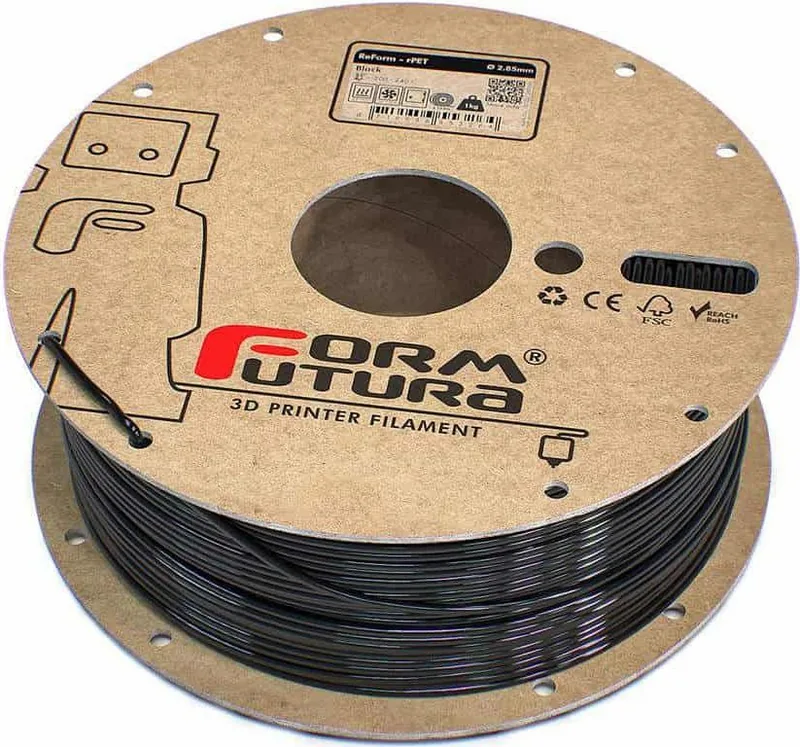
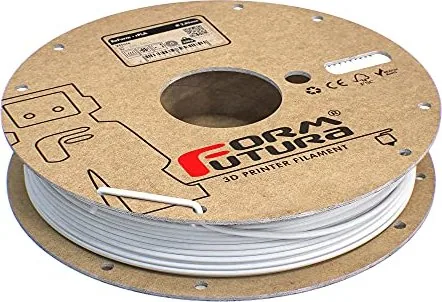
Formfutura ReForm PET / PLA / ABS recycled — 3D printing filament Manual
Formfutura ReForm PET / PLA / ABS recycled is a family of sustainable 3D printing filaments crafted from recycled polymer blends engineered for FFF/FDM printers. These filaments combine PET, PLA and ABS-derived chemistries to deliver balanced mechanical performance, good printability and reduced environmental impact. Designed for general-purpose prototyping and functional parts, ReForm aims to offer a dependable, earth-friendly alternative to virgin materials without sacrificing ease of use.
The blend’s PLA-based components make it printable at moderate temperatures (typical melting range ~150–170°C for PLA-dominant formulations) while PET and ABS influences enhance toughness, thermal stability and layer adhesion. The material is presented as granules or monofilament suitable for standard consumer and professional 3D printers. It’s formulated to minimize harmful additives and hazardous constituents and to meet common regulatory expectations for non-classified, low-risk printing filaments.
Handling and safety are straightforward: avoid inhaling dust, contact with molten material and accumulation of fine particles. Use good ventilation or local exhaust when operating multiple printers, and wear heat-resistant gloves and eye protection if interacting with hot extrusion or post-processing. In case of contact with molten polymer, cool immediately with water and seek medical care for burns. Standard waste management practices apply: recover and recycle where possible, or dispose in accordance with local regulations.
Performance highlights include decent dimensional stability, reduced odor, and lower environmental footprint thanks to recycled feedstock. The filament remains chemically stable under recommended storage—dry, away from direct sunlight and sealed with desiccant. At extreme temperatures (thermal decomposition >240°C) decomposition gases such as CO and CO2 may form, so avoid overheating and uncontrolled combustion.
ReForm is suitable for makers, educators, designers and small manufacturers who need an affordable, versatile filament with improved sustainability credentials. While detailed toxicological and ecotoxicological studies may be limited, manufacturer guidance and analogous-product data indicate low health risks under proper handling.
Notes
- Store sealed with desiccant in a dry environment; protect from moisture and direct sunlight.
- Provide exhaust ventilation where multiple printers operate to reduce dust and vapor accumulation.
- Not classified as hazardous for transport or under EC labeling directives.
Search for 67,706 Manuals online


Type-in Brand or Model