
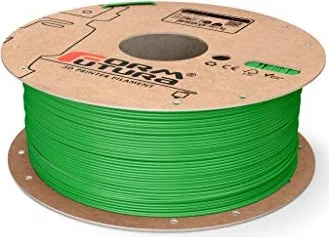
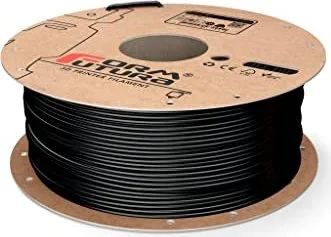
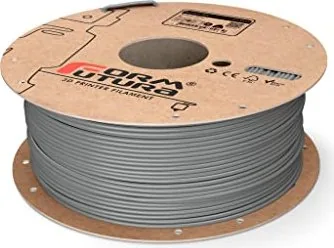
Formfutura Premium PLA Manual
PDF manual · 4 Pages
English



Quick check
Incorrect answer, please try again.
Chat with your Formfutura Premium PLA manual using AI
Get instant AI answers from your Formfutura Premium PLA manual
Ask anything about the Formfutura Premium PLA. Answers come from this manual, with the pages they are based on.
Ask a Question
Do you recommend Premium PLA?
Yes NoFrequently Asked Questions
Formfutura Premium PLA typically prints well between approximately 150°C and 170°C. Fine-tune temperatures in that range for your specific printer and filament color to optimize layer adhesion and surface finish.
Is this answer helpful?
No. When handled and processed correctly, Premium PLA is not classified as hazardous under relevant EU directives. Normal safety precautions for handling hot molten polymer and dust control should still be observed.
Is this answer helpful?
Store spools in a dry, ambient environment away from direct sunlight and ignition sources. Keep them in closed packaging with desiccant to prevent moisture uptake, which can cause printing defects like bubbling or poor extrusion.
Is this answer helpful?
Use adequate ventilation, especially when multiple printers run concurrently. Wear heat-resistant gloves when handling hot or recently printed parts, protective eyewear if there’s a risk of fragments, and avoid inhaling dust. Provide accessible eye wash and safety showers in industrial settings.
Is this answer helpful?
Minimize waste and check recycling options first. Packaging can be recycled if uncontaminated. Waste filament may be incinerated or disposed of with domestic waste according to local regulations and authority guidance.
Is this answer helpful?
The product is biodegradable under appropriate conditions and has low mobility in soil due to insolubility in water. No negative ecological effects are known at present, but disposal should still follow local environmental regulations.
Is this answer helpful?
Thermal decomposition can occur above roughly 240°C, potentially releasing carbon monoxide, carbon dioxide, and hydrocarbons. Avoid overheating and ensure good ventilation; in case of suspected exposure to decomposition products, move to fresh air and seek medical advice if needed.
Is this answer helpful?
Advantages and Disadvantages
Advantages

- Excellent printability with reduced warping and consistent extrusion.
- Almost odourless printing compared to many engineering plastics.
- Good dimensional stability and surface finish for prototyping.
- Biodegradable polymer base and low environmental mobility.
- Uses standard PLA settings and simple storage requirements.
Disadvantages

- Not suitable for high-temperature applications; decomposes above ~240°C.
- Molten material can cause burns; requires heat protection when handling.
- Dust or particles may irritate eyes, skin, or respiratory tract.
- Must be stored dry with desiccant to avoid moisture-related print defects.
- Lower chemical and thermal resistance than engineering filaments.
Product Specification
Type
PLA
Suitability
universal
Print Temperature
374-437 F
Melting Temperature
392-428 F
Heatbed Recommendation
32-140 F
Melt Flow Index
6.0g/10min
Impact Strength
6kJ/m²
Elongation at Break
175%
Modulus of Elasticity
456,143.69 psi (MD)
Tensile Strength
15,228.96 psi (MD)
Heat Deflection Temperature
143.6 F
Density
77.41 lb/ft3
Special Features
biodegradable
Product Description
Formfutura Premium PLA — Reliable 3D-Printing Filament
Formfutura Premium PLA is a high-quality Polylactic Acid based filament engineered for FFF/FDM 3D printing. Formulated as a PLA polymer blend, this monofilament balances printability, dimensional stability, and surface finish, making it suitable for hobbyists, educators, and professional prototypers. It prints at typical PLA temperatures (around 150–170°C) and offers an almost odourless experience compared with many other thermoplastics. The filament’s density of approximately 1.24 g/cc and its insolubility in water contribute to stable handling and predictable behavior during printing.
The material is designed to reduce common printing issues: it minimizes warping, provides consistent extrusion, and yields good layer adhesion for a wide range of part geometries. It performs well in well-ventilated setups and benefits from standard PLA settings. While thermally stable under recommended storage and use conditions, the material will thermally decompose at temperatures above roughly 240°C, releasing decomposition gases only under extreme heat. Avoid prolonged exposure to direct sunlight, moisture, and sources of ignition; store spools in dry conditions with desiccant to preserve print quality.
Safety-wise, Premium PLA is not classified as hazardous under relevant EU directives when used correctly. Users should exercise basic precautions: avoid contact with molten material to prevent burns, use heat-resistant gloves when handling hot parts, and wear eye protection if there’s a risk of filament fragments or dust. Ensure adequate ventilation where many printers run simultaneously to manage dust and any low levels of emissions. In the event of spills, sweep up dry material, avoid creating dust clouds, and keep material out of drains and watercourses.
Because the product is essentially insoluble and has low mobility in soil, it is not expected to bioaccumulate; it is biodegradable under appropriate conditions. Disposal can follow local regulations: recycling where feasible, or incineration/domestic waste disposal per local authority guidance. Packaging should be emptied and recycled if uncontaminated.
Notes
- Typical printing range: 150–170°C.
- Density: ~1.24 g/cc.
- Not self-igniting; handle away from ignition sources.
- Store dry with desiccant; avoid moisture and sunlight.
Pros and Cons
Pros:
- Excellent printability with reduced warping and consistent extrusion.
- Almost odourless printing compared to many engineering plastics.
- Good dimensional stability and surface finish for prototyping.
- Biodegradable polymer base and low environmental mobility.
- Simple storage and standard PLA printing settings.
Cons:
- Not suitable for high-temperature applications (decomposes >240°C).
- Molten material can cause burns; requires caution when handling.
- Dust or fine particles may irritate eyes or respiratory tract.
- Requires dry storage to avoid moisture-related print issues.
- Limited chemical resistance compared with engineering filaments.
Search for 67,706 Manuals online


Type-in Brand or Model