
Formfutura FlexiFil TPC Manual
PDF manual · 4 Pages
English



Quick check
Incorrect answer, please try again.
Chat with your Formfutura FlexiFil TPC manual using AI
Get instant AI answers from your Formfutura FlexiFil TPC manual
Ask anything about the Formfutura FlexiFil TPC. Answers come from this manual, with the pages they are based on.
Ask a Question
Do you recommend FlexiFil TPC?
Yes NoFrequently Asked Questions
It is a thermoplastic co-polyester elastomer-based filament intended for FFF/FDM 3D printing. The blend is designed for flexible printing use and standard workshop handling.
Is this answer helpful?
According to the cited EU classification, it is not classified as dangerous and does not require a hazard warning label. Still, normal safety precautions are recommended during printing and post-processing.
Is this answer helpful?
Keep it in a dry room, in closed packaging or a sealed container with desiccant. Avoid moisture, direct sunlight, and sources of ignition to maintain material quality.
Is this answer helpful?
Use good ventilation, avoid dust formation, and reduce static charge with grounding where needed. If many printers are running, local exhaust ventilation is recommended.
Is this answer helpful?
Wear heat-resistant gloves, protective glasses with side shields, and protective clothing when dealing with hot or molten material. This helps prevent burns and skin contact.
Is this answer helpful?
Cool the area immediately with plenty of cold running water. If the material sticks to the skin or a burn develops, seek medical treatment right away.
Is this answer helpful?
Waste should be minimized whenever possible. Clean packaging may be recycled, and the product should be disposed of according to local regulations and waste rules.
Is this answer helpful?
Advantages and Disadvantages
Advantages

- Not classified as hazardous under the cited EU regulations.
- Designed for FFF/FDM 3D printing as a flexible polymer blend.
- No harmful substances are used in the formulation.
- Stable in recommended dry storage with sealed packaging.
Disadvantages

- Hot or molten material can cause burns during handling.
- Dust, fumes, or mist may require ventilation control.
- Static electricity can build up during processing.
- Needs dry storage away from moisture, sunlight, and ignition sources.
Product Specification
Suitability
universal
Print Temperature
428-500°F
Melting Temperature
356°F
Heatbed Recommendation
194-230°F
Melt Flow Index
44.5g/10min
Elongation at Break
530%
Modulus of Elasticity
13,778.58psi
Tensile Strength
3,480.91psi
Dimensional Stability
194°F
Density
71.17lb/ft³
Special Features
Shore D45 Hardness, UV-resistant, flexible
Product Description
Formfutura FlexiFil TPC 3D Printing Filament Manual
Flexible material for practical FFF/FDM printing
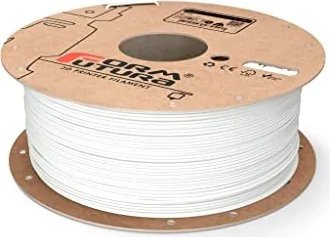
Formfutura FlexiFil TPC 3D Printing Filament is a thermoplastic co-polyester elastomer blend made for 3D printing workflows that need a balance of flexibility and dependable processing. It is designed as a monofilament for FFF/FDM printers, making it a useful choice for makers who want a material that behaves consistently during everyday production.
What stands out most is its safety-focused profile. The material is not classified as hazardous under the referenced EU regulations, and it does not require a hazard warning label. At the same time, the product still deserves careful handling, especially when it is heated or molten. Like many printing materials, it can cause burns if touched too early, and dust or fumes should not be ignored during processing.
The filament is based on a polymer blend with no harmful substances used in the formulation. It is intended for standard 3D printing use, and the technical guidance emphasizes proper storage and sensible workshop habits. Keeping the material dry, sealed, and away from moisture, sunlight, and ignition sources helps preserve quality and supports smooth printing results.
For creators working in shared studios or busy print farms, ventilation is an important detail. The guidance recommends good airflow, and in spaces with many printers operating at once, local exhaust is especially helpful. Grounding measures can also reduce electrostatic buildup during handling and processing. These practical steps make the material easier to integrate into a safe and organized workflow.
From a user perspective, Formfutura FlexiFil TPC 3D Printing Filament is best seen as a reliable flexible filament option for general additive manufacturing tasks. It suits projects where material handling, safe operation, and stable storage matter as much as the printed result. While it does not promise exotic chemistry or complicated upkeep, it offers a straightforward printing experience backed by clear safety guidance.
Notes
- Store in closed packaging with desiccant when not in use.
- Use ventilation and avoid dust formation during printing.
- Handle hot or molten filament with protective gloves and glasses.
- Keep the material away from heat, moisture, and direct sunlight.
Search for 67,706 Manuals online


Type-in Brand or Model