
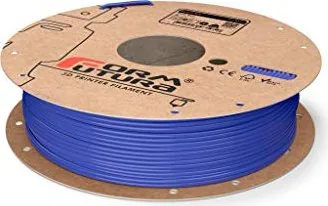
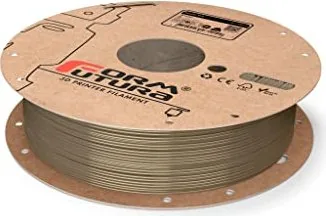
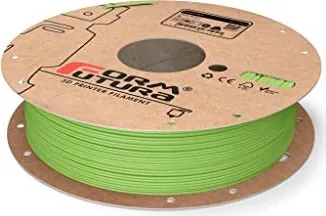
Formfutura EasyFil PLA Manual
PDF manual · 4 Pages
English


Quick check
Incorrect answer, please try again.
Chat with your Formfutura EasyFil PLA manual using AI
Get instant AI answers from your Formfutura EasyFil PLA manual
Ask anything about the Formfutura EasyFil PLA. Answers come from this manual, with the pages they are based on.
Ask a Question
Do you recommend EasyFil PLA?
Yes NoFrequently Asked Questions
It is a PLA-based filament made for FFF/FDM 3D printing. It suits general-purpose prints, prototyping, and workshop use where easy handling and stable output are important.
Is this answer helpful?
It is not classified as dangerous in the referenced safety information, but normal precautions still apply. The molten material can burn skin, and dust should not be inhaled.
Is this answer helpful?
Store it in a dry room, inside closed packaging or a sealed container with desiccant. Keep it away from moisture, direct sunlight, and ignition sources.
Is this answer helpful?
The stated melting range is about 150°C to 170°C. Avoid excessive heat, since thermal decomposition begins above 240°C.
Is this answer helpful?
It is described as almost odorless, which makes it a good choice for users who prefer a cleaner printing environment.
Is this answer helpful?
Yes. Waste should be minimized, and recycling should be considered first. Disposal must follow local regulations, and clean packaging may be recyclable.
Is this answer helpful?
Advantages and Disadvantages
Advantages

- PLA-based blend made for FFF/FDM 3D printing and everyday use.
- Nearly odorless and not classified as hazardous under the cited rules.
- Stable in proper storage, helping maintain print quality over time.
- Biodegradable and essentially insoluble in water, supporting cleaner disposal.
Disadvantages

- Hot or molten material can cause burns if handled carelessly.
- Dust and decomposition fumes may irritate eyes, skin, or breathing.
- Needs dry, protected storage to avoid moisture and sunlight damage.
- Overheating above recommended limits can trigger thermal decomposition.
Product Specification
Type
PLA
Suitability
universal
Print Temperature
356-428F
Melt Temperature
392-428F
Heatbed Recommendation
32-140F
Melt Flow Index
6.0g/10min
Impact Strength
7.5kJ/m²
Elongation at Break
160%
Modulus of Elasticity
3,310MPa
Tensile Strength
110MPa
Dimensional Stability
140F
Density
77.41lb/ft3
Product Description
Formfutura EasyFil PLA 3D Printing Filament Manual
Formfutura EasyFil PLA is a PLA-based 3D printing filament designed for FFF and FDM users who want a dependable, easy-to-handle material with a clean printing experience. Built from a polymer blend enhanced for additive manufacturing, it offers a practical balance of printability, stability, and everyday use. If you are looking for a filament that supports smooth workflow and straightforward handling, the Formfutura EasyFil PLA 3D Printing Filament Manual mindset is simple: print with care, store it well, and let the material do the rest.
One of the strongest points of this filament is its user-friendly nature. The material is described as nearly odorless and not classified as hazardous under the referenced regulations. It is also made without harmful substances, which makes it appealing for makers, workshops, and prototyping environments where consistency and cleanliness matter. With a melting range of about 150°C to 170°C and a density of 1.24 g/cc, it fits neatly into common desktop printing setups.
EasyFil PLA is also stable under recommended storage conditions, which helps preserve quality between print sessions. Keeping the filament dry, away from sunlight, moisture, and heat sources is important, especially when the spool is not in use. For best results, store it in closed packaging or containers with desiccant. In busy print spaces, especially those running multiple printers, ventilation and dust control are smart habits that support reliable performance.
Like many thermoplastics used in 3D printing, safety still matters during use. The molten material can cause burns, and dust or fumes from decomposition may irritate the eyes, skin, or respiratory system. This does not make the filament difficult to work with, but it does mean that good workshop practices are essential. Heat-resistant gloves, protective eyewear, and sensible ventilation are recommended during handling and post-processing.
Beyond performance, the material has a few reassuring environmental traits. It is essentially insoluble in water, has low mobility in soil, and is described as biodegradable. Disposal should still follow local rules, with recycling preferred whenever possible. Packaging can often be recycled if it is clean and uncontaminated.
Notes
- Best suited for standard 3D printing projects and prototyping.
- Avoid overheating; thermal decomposition begins above 240°C.
- Use dry storage and protect the filament from moisture.
- Handle molten material carefully to prevent burns.
Search for 67,706 Manuals online


Type-in Brand or Model