
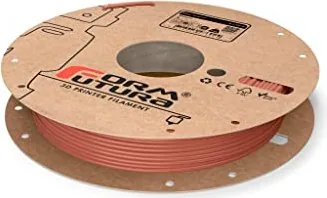
Formfutura Atlas Support PVA Manual
PDF manual · 5 Pages
English


Quick check
Incorrect answer, please try again.
Chat with your Formfutura Atlas Support PVA manual using AI
Get instant AI answers from your Formfutura Atlas Support PVA manual
Ask anything about the Formfutura Atlas Support PVA. Answers come from this manual, with the pages they are based on.
Ask a Question
Do you recommend Atlas Support PVA?
Yes NoFrequently Asked Questions
Formfutura Atlas Support PVA is a water-soluble support filament for FFF/FDM 3D printing, used to build removable supports for complex geometries, overhangs, and internal cavities that can be dissolved in water for clean part finishes.
Is this answer helpful?
Store Atlas Support PVA in a dry environment, sealed with desiccant in its packaging or an airtight container. Keep away from direct sunlight and moisture; at ambient temperatures. Proper storage prevents absorption of humidity which can cause poor extrusion and print defects.
Is this answer helpful?
Use good ventilation or local exhaust when operating multiple printers, avoid inhaling dust and vapors, wear protective gloves when handling molten filament, eye protection for dust, and ground equipment to reduce electrostatic charge. In case of burns or eye contact, rinse and seek medical attention if needed.
Is this answer helpful?
When used correctly in a dual-extrusion or dedicated support nozzle setup, Atlas Support PVA minimizes cross-contamination. Ensure nozzle priming and cleaning between material switches to prevent mixing and maintain surface quality of the build material.
Is this answer helpful?
PVA supports dissolve in water; remove the printed part and submerge in warm water or use a circulating bath to accelerate dissolution. Agitation and slightly warm temperatures help; avoid hot water that could deform temperature-sensitive prints.
Is this answer helpful?
No. Atlas Support PVA is not classified as hazardous for transport and does not require hazard labeling under applicable EU directives when handled and stored properly.
Is this answer helpful?
The product is readily biodegradable; waste should be minimized and recycling of uncontaminated packaging is recommended. Dispose of excess material and contaminated packaging per local regulations; incineration or municipal waste routes may apply depending on local rules.
Is this answer helpful?
Advantages and Disadvantages
Advantages

- Water-soluble supports allow clean removal and preserve fine details without mechanical cleanup.
- Optimized for FFF/FDM printers with a broad processing range (approx. 150–230 °C).
- Non-classified as hazardous under EU directives when used properly.
- Readily biodegradable and packaging can be recycled if uncontaminated.
- Formulated to feed smoothly as monofilament with recommended storage practices.
Disadvantages

- Hygroscopic—requires dry storage and desiccant to avoid moisture-related printing issues.
- Risk of burns from contact with heated or molten material during handling.
- May produce hazardous decomposition gases if burned; fire precautions required.
- Dust can irritate eyes, skin, and respiratory tract; control dust and use ventilation.
- Contains trace methanol (<0.5%); exposure limits warrant ventilation and monitoring.
Product Specification
Type
PVA
Suitability
universal
Print Temperature
356-401F
Melting Temperature
325.4F
Heatbed Recommendation
32-140F
Melt Flow Index
0.08oz/10min
Impact Strength
116.49ft-lbf/ft^2
Elongation at Break
9.9%
Modulus of Elasticity
507,632 psi
Tensile Strength
11,313 psi
Dimensional Stability
140.4F
Density
76.16 lb/ft^3
Base Color
colorless
Shade
natural
Special Features
soluble in water, biodegradable, carrier material
Product Description
Formfutura Atlas Support PVA — Reliable Water-Soluble Support for 3D Printing
Formfutura Atlas Support PVA is a PolyVinyl Alcohol (PVA) based filament formulated specifically for FFF/FDM 3D printing as a water-soluble support material. Optimized for compatibility with common printing plastics, Atlas Support PVA dissolves cleanly in water, allowing you to produce complex geometries, moving parts, and intricate overhangs without tedious post-processing. It comes as natural-colored monofilament granules designed to feed smoothly in desktop and professional printers when handled and stored properly.
Key characteristics and use
Atlas Support PVA offers a melting/processing range suitable for most hobbyist and industrial printers (typical processing window around 150–230 °C). The material is nearly odorless with a faint vinegar-like note and has a density between 1.19 and 1.31 g/cc. It is designed to be stable under normal storage conditions but should be protected from moisture, as PVA is hygroscopic. For best results, keep spools sealed with desiccant and print in a well-ventilated environment.
When used as support material, Atlas Support PVA prevents visible seam lines and mechanical cleanup, because supports dissolve in water, leaving clean surfaces and preserving delicate details. It is recommended to isolate printer enclosures from moisture sources and to use local exhaust ventilation when running multiple machines to limit dust and airborne particles.
Safety and handling
Atlas Support PVA is not classified as hazardous under EU directives when used as intended. Standard precautions include avoiding contact with heated molten material (risk of burns), preventing dust accumulation, and using grounding to reduce electrostatic risks. In the unlikely event of fire, combustion can produce hazardous gases; use appropriate extinguishing media and full protective gear. If exposed to dust, skin, or eyes, rinse with water and seek medical attention if irritation persists. Keep away from strong oxidizers and extreme heat.
Practical tips for printing
- Dry filament and store with desiccants to maintain printability.
- Use a dedicated PVA nozzle or dual-extrusion setup to minimize cross-contamination with build materials.
- Post-process supports by dissolving in warm water or a circulating bath for faster removal.
Notes:
- Contains trace methanol impurity (<0.5%) — standard exposure controls apply.
- Product is readily biodegradable; follow local regulations for disposal of waste and packaging.
- Not classified as hazardous for transport or under EU labeling rules.
Search for 67,706 Manuals online


Type-in Brand or Model