
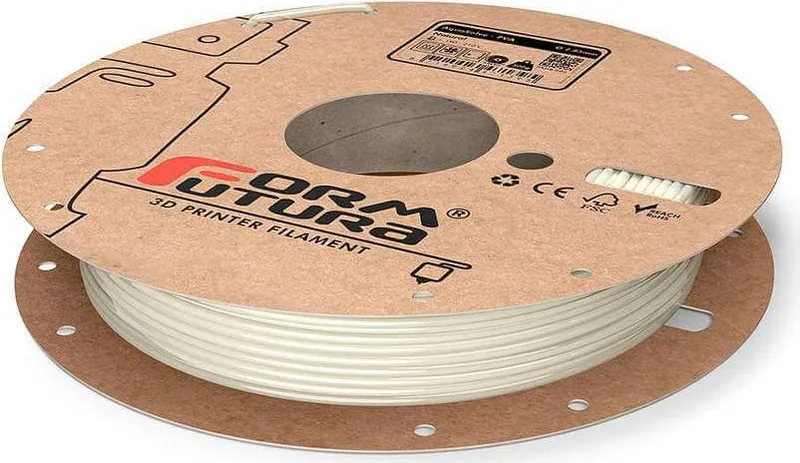
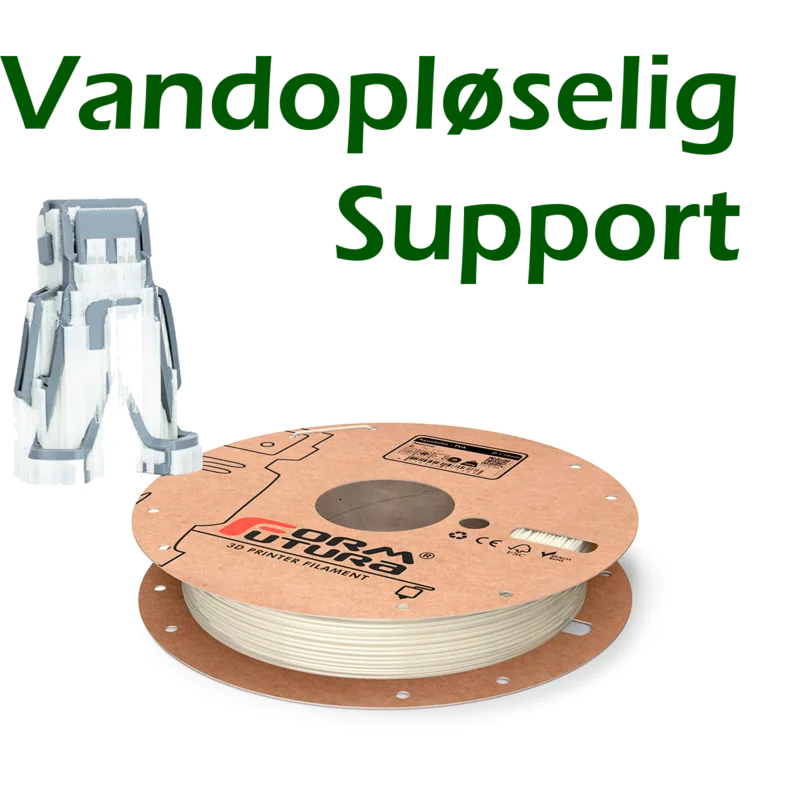
Formfutura AquaSolve PVA Manual
PDF manual · 5 Pages
English



Quick check
Incorrect answer, please try again.
Chat with your Formfutura AquaSolve PVA manual using AI
Get instant AI answers from your Formfutura AquaSolve PVA manual
Ask anything about the Formfutura AquaSolve PVA. Answers come from this manual, with the pages they are based on.
Ask a Question
Do you recommend AquaSolve PVA?
Yes NoFrequently Asked Questions
It is a support filament for FFF/FDM 3D printing, designed to help create temporary structures that can be removed more easily after printing. Its water-soluble behavior makes it especially useful for detailed models, overhangs, and internal features.
Is this answer helpful?
It is not classified as dangerous under the referenced regulations when handled properly. Even so, standard precautions still apply because hot material can burn skin and dust may irritate the eyes, skin, or airways.
Is this answer helpful?
Store it in a dry room at ambient temperature, away from moisture, direct sunlight, heat, and ignition sources. Keeping it sealed with desiccant helps maintain print quality and reduces the chance of moisture-related issues.
Is this answer helpful?
A well-ventilated workspace is recommended, especially if several printers are running at once. Good airflow helps manage dust and keeps the printing area safer and more comfortable.
Is this answer helpful?
Wear heat-resistant gloves when handling hot material, protective eyewear, and clothing that reduces direct skin exposure. Avoid inhaling dust, and keep eye wash and safety shower access available in the workspace.
Is this answer helpful?
Minimize waste where possible. Clean packaging can often be recycled, while product waste should be disposed of according to local rules. In some cases, disposal may be allowed with domestic waste or incineration, depending on regulations.
Is this answer helpful?
Advantages and Disadvantages
Advantages

- Water-soluble support material makes post-processing easier on complex prints.
- Suitable for FFF/FDM workflows and helpful in multi-material 3D printing.
- Not classified as hazardous under the referenced safety classification when used properly.
- Stable in recommended storage conditions and easy to keep ready in a dry setup.
Disadvantages

- Hot or molten filament can cause burns during loading, printing, or cleanup.
- Dust may irritate the eyes, skin, and respiratory system if mishandled.
- Sensitive to moisture, so it needs dry storage and sealed packaging.
- Static charge and dust buildup can create handling and ignition concerns in busy print areas.
Product Specification
Type
PVA
Suitability
universal
Print Temperature
356-401°F
Melting Temperature
325.40°F
Heatbed Recommendation
32-140°F
Melt Flow Index
14-20g/10min
Impact Strength
1.6kJ/m²
Elongation at Break
9.9%
Modulus of Elasticity
559,845.67 psi
Tensile Strength
11,312.94 psi
Dimensional Stability
140.36°F
Density
76.79 lb/ft^3
Base Color
colorless
Special Features
soluble in water, biodegradable, support material
Product Description
Formfutura AquaSolve PVA: a smart support filament for cleaner 3D printing
Formfutura AquaSolve PVA is a PolyVinyl Alcohol-based 3D printing filament designed for FFF/FDM users who want reliable support material with easier post-processing. As a water-soluble support filament, it is especially useful for complex models, internal cavities, overhangs, and detailed geometries where removing traditional supports can be difficult or risky. For makers who value precision, AquaSolve PVA helps turn challenging prints into more manageable projects.
Built for practical support work
This filament is a blend centered on PVA, enhanced with other ingredients to improve its usability in 3D printing. Its biggest advantage is simple: support structures can be removed much more cleanly once printing is done. That makes it a strong choice for multi-material workflows and for prints where surface quality matters. It is natural in color, nearly odorless, and produced as a monofilament intended for standard desktop and professional 3D printing environments.
Handling, safety, and storage
AquaSolve PVA is not classified as dangerous under the referenced European classifications when handled correctly, but good printing habits still matter. The heated or molten material can cause burns, and dust from handling may irritate the eyes, skin, or respiratory tract. Working in a ventilated area, avoiding dust buildup, and using basic protective equipment are sensible precautions. Gloves, eye protection, and protective clothing are recommended when dealing with hot material.
Storage is equally important. Because moisture can affect performance, the filament should be kept in a dry room, sealed in its packaging, and ideally stored with desiccant. It should also be protected from direct sunlight, high heat, and ignition sources. For shops running multiple printers, local exhaust ventilation and grounding procedures can help manage dust and static charge.
Why it stands out
AquaSolve PVA offers a balance of convenience and control. It is not flammable in normal use, is not treated as hazardous for transport, and can support a cleaner workflow from print to finish. For creators working on intricate prototypes, architectural models, or multi-part assemblies, this filament can save time and preserve detail where manual support removal would be more difficult.
Notes
- Best suited for support applications rather than standalone final parts.
- Keep the spool dry for consistent performance.
- Use care around molten filament and dust.
- Check local disposal rules for waste and packaging.
- Great for prints where clean removal and surface quality matter most.
Search for 67,706 Manuals online


Type-in Brand or Model