
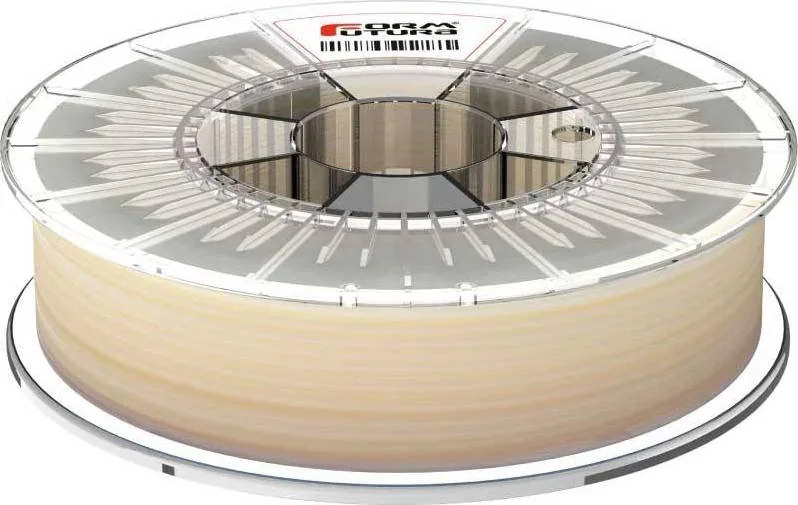
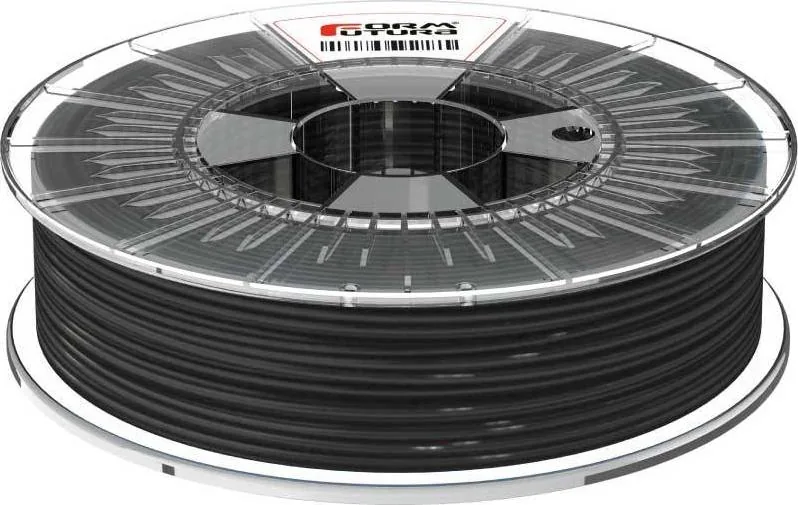
Formfutura ApolloX ASA Manual
PDF manual · 4 Pages
English



Quick check
Incorrect answer, please try again.
Chat with your Formfutura ApolloX ASA manual using AI
Get instant AI answers from your Formfutura ApolloX ASA manual
Ask anything about the Formfutura ApolloX ASA. Answers come from this manual, with the pages they are based on.
Ask a Question
Do you recommend ApolloX ASA?
Yes NoFrequently Asked Questions
It is best for functional 3D prints that need durability, including outdoor parts, technical prototypes, enclosures, and components exposed to sunlight or changing weather.
Is this answer helpful?
ApolloX is an ASA-based polymer blend made for FFF/FDM 3D printing. It is designed to combine reliable printability with stronger environmental resistance than many standard filaments.
Is this answer helpful?
The listed melting range is about 220–240 °C. In real printing, users should follow the printer setup and any recommended technical settings for best results.
Is this answer helpful?
It is not classified as hazardous under the referenced EU rules when handled properly. However, hot or molten filament can cause burns, so normal workshop safety precautions are important.
Is this answer helpful?
Keep it in a dry room, away from moisture, direct sunlight, and heat sources. Sealed packaging with desiccant is recommended when the filament is not in use.
Is this answer helpful?
Yes. ASA is widely valued for outdoor applications because it resists UV exposure and weathering better than many common general-purpose filaments.
Is this answer helpful?
Advantages and Disadvantages
Advantages

- ASA-based blend offers strong weather and UV resistance for outdoor use.
- Prints in a practical temperature range of 220–240 °C.
- Neutral odor and stable storage behavior make it workshop-friendly.
- Suitable for functional parts, prototypes, and technical applications.
Disadvantages

- Requires careful handling because hot or molten material can cause burns.
- Needs dry storage and protection from moisture to maintain performance.
- Ventilation is recommended, especially in enclosed or multi-printer environments.
Product Specification
Type
ASA
Suitability
universal
Print temperature
455-491°F
Melting temperature
428-464°F
Heatbed recommendation
176-194°F
Melt flow index
0.10lb/10min
Impact strength
18kJ/m²
Elongation at break
15%
Modulus of elasticity
292,976.23psi
Tensile strength
6,889.29psi
Dimensional stability
208.4°F
Density
69.26lb/ft³
Special features
UV-resistant, weather-resistant
Product Description
Formfutura ApolloX ASA 3D Printing Filament Manual-Style Overview
Formfutura ApolloX ASA 3D printing filament is designed for makers who want a material that balances outdoor durability, stable printing behavior, and a clean professional finish. If you are reading a Formfutura ApolloX ASA 3D printing filament Manual-style summary, the key idea is simple: this filament is built for functional parts that need to stand up to heat, sunlight, and everyday wear.
ApolloX is an ASA-based polymer blend made for FFF/FDM printing. In practice, that means it is a strong choice for technical parts, prototypes, and end-use objects that may be exposed to the elements. Compared with many standard filaments, ASA is known for better weather resistance and UV stability, making it especially attractive for outdoor projects, automotive-style parts, enclosures, and mechanical components.
Another advantage is its practical processing range. The material prints around 220–240 °C and is intended to be handled with good ventilation and sensible workshop habits. While it is not classified as hazardous under the referenced EU regulations, the usual safety rule still applies: avoid touching hot or molten filament, and use proper protection when working with heated parts. The product also benefits from dry storage, since moisture and direct sunlight can affect performance over time.
From a usability standpoint, ApolloX is positioned as a reliable filament for consistent printing. It has a neutral odor, a density of about 1.11 g/cc, and is insoluble in water. The material is stable under recommended storage conditions and is best kept in sealed packaging with desiccant when not in use. For busy print areas, local exhaust and good airflow are recommended, especially when multiple printers are running.
Overall, Formfutura ApolloX ASA filament is a smart option when your prints need more than just appearance. It is suited to makers who value durability, weather resistance, and a material profile that supports functional, real-world applications rather than purely decorative models.
Notes
- Store dry, sealed, and away from sunlight.
- Use ventilation when printing in enclosed or high-volume setups.
- Handle heated parts carefully to prevent burns.
- Best suited for durable indoor and outdoor functional prints.
Search for 67,706 Manuals online


Type-in Brand or Model