
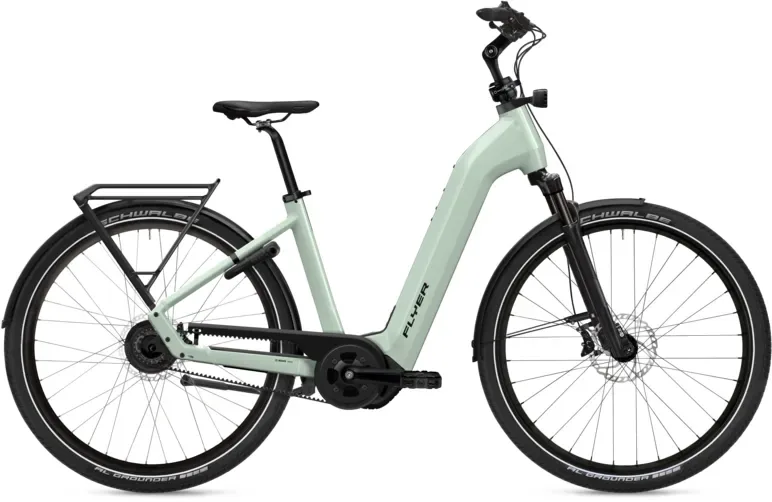
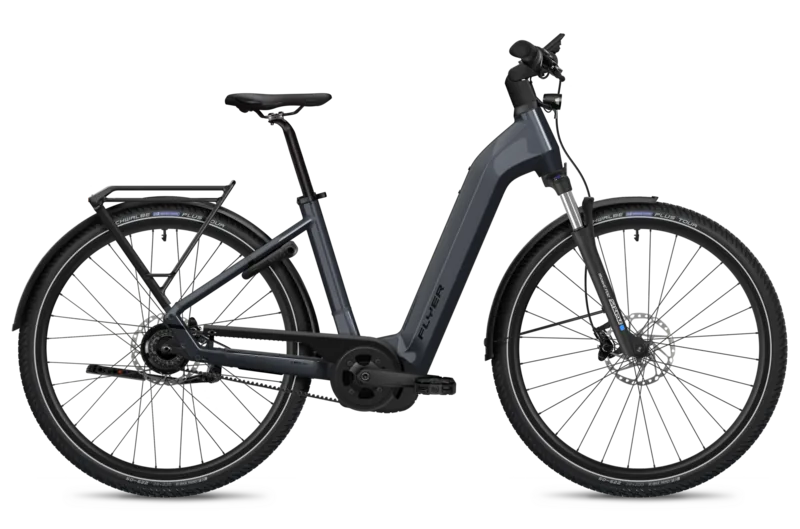
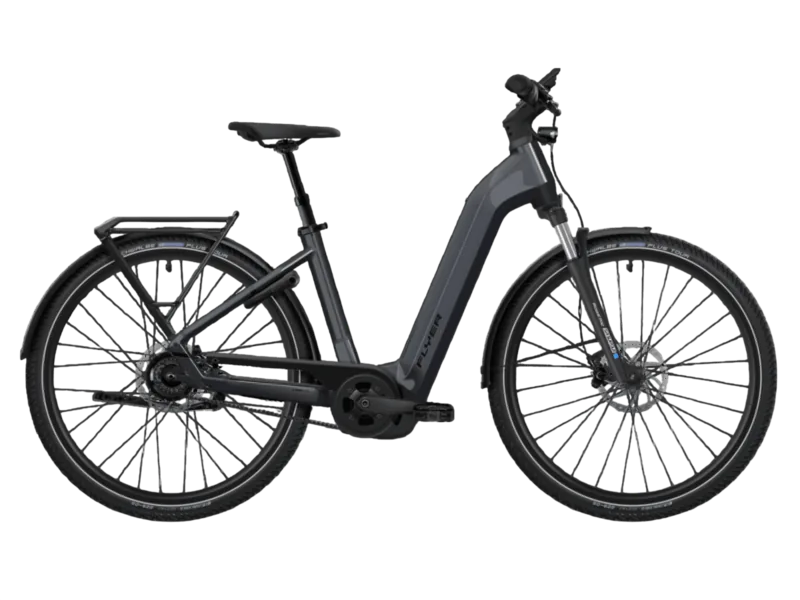
Flyer Gotour 5.43 Manual
PDF manual · 264 Pages
English



Quick check
Incorrect answer, please try again.
Chat with your Flyer Gotour 5.43 manual using AI
Get instant AI answers from your Flyer Gotour 5.43 manual
Ask anything about the Flyer Gotour 5.43. Answers come from this manual, with the pages they are based on.
Gotour 5.43 Maintenance Schedule
Check controls, bell, brakes, shifting, wheels, tire pressure, battery, stand, and all quick releases, axles, bolts, and nuts.
Check the frame, components, wheels, tires, rims, and spoke tension. Clean and care for the E-bike to prevent dirt-related malfunctions.
Inspect and maintain the E-bike and its components for wear as described in the maintenance chapter.
Have a dealer inspect, adjust, and replace components as needed, including lubrication, wear checks, wheels, brakes, gears, hubs, headset, and pedals.
Have a FLYER dealer perform an oil change for the hub gear once per year.
After rain, snow, or wet riding, clean and oil the chain, clean brake and shifting components, and check that all components are sufficiently lubricated.
Use universal oil regularly after about 15 hours of use. Also oil it after cleaning, rain rides, or when it becomes very wet.
Lubricate suspension elements with the original lubricant after every cleaning, rain ride, or other heavy wetting.
Lubricate quick releases, thru-axles, and other joints with an approved lubricant after cleaning, rain rides, or heavy wetting.
Free maintenance reminders
Timed to your purchase date. Always free, unsubscribe anytime.
Ask a Question
Do you recommend Gotour 5.43?
Yes NoFrequently Asked Questions
It is positioned as an electric bicycle for everyday travel and comfortable recreational riding. Electric pedal assistance can make hills, wind, and longer routes easier while the rider remains in control of pedaling and gear selection.
Is this answer helpful?
The motor assists when the rider pedals and a support level is selected. More pedal force and a higher support setting generally produce more assistance, but they also increase energy consumption and can reduce range.
Is this answer helpful?
Range depends on battery capacity, selected assistance level, terrain, surface, riding style, rider weight, tire pressure, mechanical condition, and ambient temperature. Plan trips conservatively because real-world range can be lower than ideal estimates.
Is this answer helpful?
Check brake function, tire pressure, wheel security, steering and saddle fastening, battery charge and retention, lights, controls, fasteners, and the stand. Do not ride if safety-related components are damaged, loose, or malfunctioning.
Is this answer helpful?
Use a soft damp cloth, clean water, and mild soap where needed. Avoid high-pressure washers, compressed air, and direct hose spraying. Keep cleaning products and lubricants away from brake pads, rotors, and rim braking surfaces.
Is this answer helpful?
The guidance recommends an initial inspection after four months or 200 km, whichever occurs first. Ongoing inspection is recommended once a year or after 1,000 km. A dealer should inspect the bike after a crash or unusual impact.
Is this answer helpful?
Advantages and Disadvantages
Advantages

- Electric pedal assistance can reduce effort on hills, headwinds, and longer daily routes.
- Selectable support levels let riders balance assistance, battery use, and expected range.
- The platform supports clear maintenance routines, including pre-ride checks and scheduled inspections.
- Compatible configurations may include practical features such as lighting, a stand, luggage support, and different drivetrain types.
Disadvantages

- Actual range varies substantially with terrain, support mode, rider weight, tire pressure, weather, and maintenance.
- E-bikes are heavier than non-assisted bicycles, making lifting, carrying, and pushing more demanding.
- Battery handling requires care: avoid heat, impacts, moisture, open flames, and metal objects.
- Some accessories, including child seats and trailers, are only permitted on specifically approved configurations.
Product Specification
Type
Trekking bike
Frame style
Low-step
Frame material
Aluminum
Wheel size
29"
Fork type
Suspension
Suspension fork
Suntour Mobie-A32
Suspension travel
2.95 in
Handlebar shape
Straight
Brake type
Hydraulic disc
Brakes
Shimano MT410
Rear derailleur
Shimano Nexus
Gears
5 (1x5)
Motor position
Mid-drive
Drive system
Bosch Performance Line
Display
Bosch Intuvia
Motor torque
55.32 lb-ft
Battery
Li-ion, 36 V, 750 Wh, 20.1 Ah
Max. pedal assist speed
15.53 mph
Max. permissible total weight
330.69 lb
Weight
70.55 lb
Features
Internal cable routing, 0.59 in through-axle system, internal gear hub, front fender, rear fender, rear rack, lighting, frame lock, chain guard, kickstand
Product Description
Flyer Gotour 5.43 - Read, Download & Print Free
The Flyer Gotour 5.43 is presented within FLYER's comprehensive E-bike range as a practical electric bicycle designed for everyday mobility and relaxed longer rides. Its design combines pedal-powered riding with electric assistance, helping riders manage climbs, headwinds, and extended routes with less effort. As with other models in the Gotour family, the bike is intended to support comfortable, controlled travel while retaining the familiar handling of a bicycle.
Built for confident everyday riding
The electric drive provides assistance when the rider pedals. Assistance level, pedaling force, terrain, rider weight, tire pressure, temperature, and the bicycle's condition can all affect battery range. Riders can select a support mode suited to the route, using lower assistance to conserve energy or higher assistance when extra help is needed.
The Gotour 5.43 may be equipped with a chain or belt drive, depending on its specific configuration. Chain systems transfer power through chainrings and rear sprockets, while belt systems use a belt and pulleys. Gear systems also vary by build, with derailleur and hub gear options covered for smooth adjustment of effort and speed. Lighter gears are useful for climbing, while higher gears support faster riding on level roads.
Safety and care matter
Reliable riding begins with checks before every trip. Confirm that the brakes, wheels, tires, handlebar, saddle, lights, battery, fasteners, and controls are secure and working correctly. Brake performance can be reduced on wet, dirty, icy, or slippery surfaces, so speed and braking force should always match the conditions. Riders should learn which brake lever controls each wheel before setting off.
The battery should be protected from impacts, excessive heat, moisture, open flames, and metal objects that could create a short circuit. Remove or secure it when parking or transporting the bicycle where possible. Regular cleaning with a soft cloth, water, and mild soap helps preserve the frame and components. High-pressure cleaners, compressed air, and direct hose spraying should be avoided because they may damage electrical parts.
Notes for owners
A first professional inspection is recommended after four months or 200 km, whichever comes first. Further inspections should be completed annually or after 1,000 km. After a crash, do not continue riding until a qualified FLYER dealer has checked the bicycle, battery, frame, brakes, and related components. Always follow local traffic rules, stay within the permitted total weight, and use only approved accessories for luggage, child seats, or trailers.
Search for 67,706 Manuals online


Type-in Brand or Model