
Enermax ESC001 Manual
PDF manual · 2 Pages
English


Quick check
Incorrect answer, please try again.
Chat with your Enermax ESC001 manual using AI
Get instant AI answers from your Enermax ESC001 manual
Ask anything about the Enermax ESC001. Answers come from this manual, with the pages they are based on.
ESC001 Maintenance Schedule
Use a soft brush to clean dust from the heatsink fins. Use thermal paste if needed.
Ensure fans rotate freely and are not obstructed by cables or debris.
Check thermal pads for wear or damage. Replace if necessary.
Free maintenance reminders
Timed to your purchase date. Always free, unsubscribe anytime.
Ask a Question
Do you recommend ESC001?
Yes NoFrequently Asked Questions
The ESC001 is an M.2 SSD heatsink that passively improves thermal dissipation for NVMe drives, reducing thermal throttling and helping maintain consistent performance during sustained workloads.
Is this answer helpful?
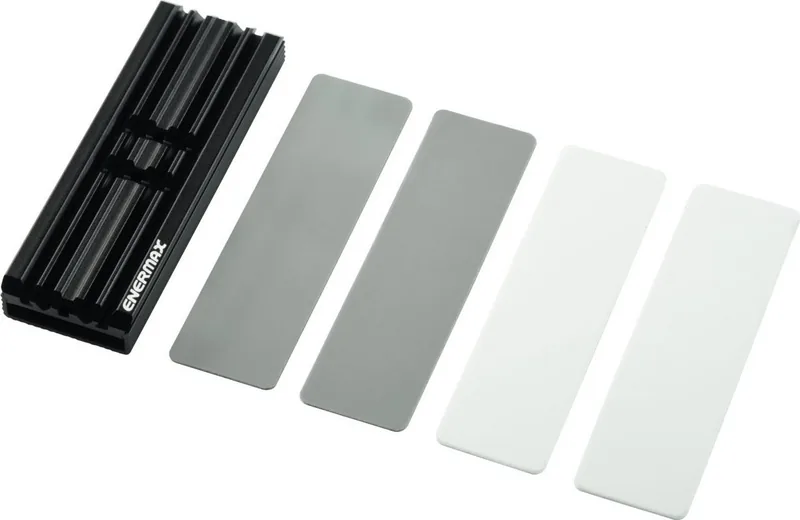
Use the pad thickness that matches your SSD component stack height: 0.5mm for lower-profile packages and 1.0mm for taller controller/NAND stacks. Proper contact is essential—inspect fit and switch pads if contact is uneven.
Is this answer helpful?
The ESC001 fits standard M.2 SSDs but may face clearance issues on motherboards with crowded components or unusual M.2 placements. Measure space around the slot for clearance with the heatsink and backplate before installing.
Is this answer helpful?
No. The ESC001 is a passive heatsink that requires no additional power or fans. Its cooling effectiveness depends on case airflow and thermal contact with the SSD surfaces.
Is this answer helpful?
Temperature drops vary by drive and system airflow; many setups see meaningful reductions in peak and sustained temperatures, lowering the chance of thermal throttling, but exact values depend on workload and case ventilation.
Is this answer helpful?
Improper installation—using the wrong pad thickness or uneven pressure—can reduce thermal contact or stress the SSD. Follow alignment guidance, use the recommended pad, and avoid overtightening to prevent damage.
Is this answer helpful?
Yes. Its low-profile, passive design suits compact systems where space is limited and silent operation is preferred, though ensure sufficient case airflow for best thermal performance.
Is this answer helpful?
Advantages and Disadvantages
Advantages

- Effective passive cooling reduces SSD thermal throttling and improves sustained performance.
- Multiple thermal pad thicknesses (0.5mm and 1.0mm) support varied SSD component heights.
- Low-profile design fits compact builds while maintaining airflow and adding no noise.
- Includes backplate and mounting hardware for secure installation and better heat transfer.
- Zero power draw and maintenance-free operation compared with active cooling solutions.
Disadvantages

- Passive design relies on case airflow and may underperform in poorly ventilated systems.
- May require trial-and-error to select optimal thermal pad thickness for full contact.
- Limited to M.2 form factor—cannot cool other SSD types or wider components.
- Compatibility issues possible with motherboards that have crowded M.2 layouts or tall VRM heatsinks.
- Performance gains vary by SSD model; some drives may see only modest temperature reductions.
Product Specification
Type
M.2 Cooler
Design
passive
Compatibility
M.2 2280
Fan
N/A
Connection
N/A
Dimensions (WxHxD)
2.87x0.96x0.38in
Weight
0.11lb
Features
incl. thermal pad, aluminum heatsink, PS5 compatible
Product Description
Enermax ESC001 Manual: Product Overview
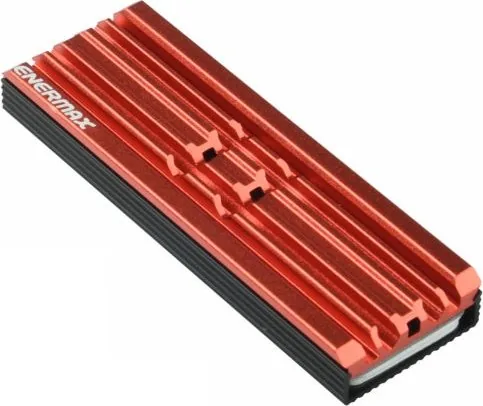
The Enermax ESC001 is a compact, thoughtfully engineered M.2 SSD heatsink solution designed to improve thermal performance and extend the lifespan of high-speed NVMe drives. With a focus on efficient heat dissipation and easy installation, the ESC001 blends practical cooling features with minimal visual impact, making it suitable for both compact builds and high-performance systems.
Key Features and Design
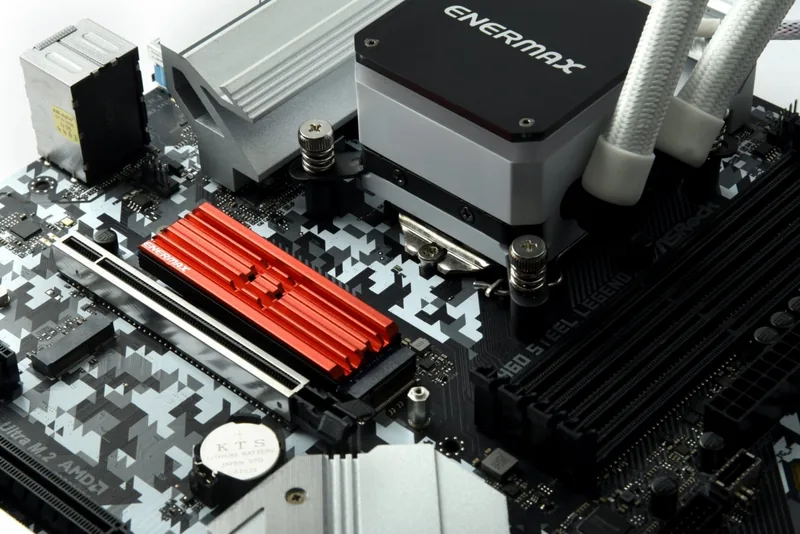
Built from thermally conductive materials and supplied with multiple thermal pads (0.5mm and 1.0mm), the ESC001 accommodates different M.2 drive heights and mounting scenarios. The package typically includes a backplate and an M.2 heatsink piece, enabling secure mounting and improved contact with SSD controller and NAND components. Its low-profile form factor helps maintain airflow in tight spaces while ensuring effective passive cooling without adding fan noise.
Installation and Compatibility
Installation is straightforward: align the M.2 SSD with the board, apply the appropriate thermal pad thickness based on component height, and secure the heatsink and backplate to ensure full surface contact. The ESC001 supports common single-sided and double-sided M.2 SSDs and is compatible with a range of motherboards and compact cases. The inclusion of multiple pads allows fine-tuning for optimal thermal transfer.
Performance and Practical Benefits
By lowering peak temperatures and improving heat spread across the SSD package, the Enermax ESC001 helps sustain peak performance during prolonged workloads like gaming, content creation, and large file transfers. Reduced thermal throttling means more consistent transfer rates and improved drive longevity. The passive design offers reliability with zero additional power draw or noise, making it ideal for silent or energy-conscious builds.
Who Should Consider the ESC001?
This heatsink is a good fit for users upgrading to NVMe SSDs who want to avoid thermal throttling without changing their system’s cooling setup. It’s especially useful for builders with small form-factor PCs, enthusiasts aiming for stable sustained performance, and anyone who prefers a low-maintenance passive cooling solution.
Notes
- Ensure you choose the correct thermal pad thickness for your specific SSD model to avoid poor contact or pressure.
- Verify motherboard clearance around the M.2 slot before installation in compact cases.
- Passive cooling benefits depend on case airflow; combine with good overall ventilation for best results.
Search for 67,706 Manuals online


Type-in Brand or Model