
Dynaudio Core 59 Manual
PDF manual · 55 Pages
English



Quick check
Incorrect answer, please try again.
Chat with your Dynaudio Core 59 manual using AI
Get instant AI answers from your Dynaudio Core 59 manual
Ask anything about the Dynaudio Core 59. Answers come from this manual, with the pages they are based on.
Ask a Question
Do you recommend Core 59?
Yes NoFrequently Asked Questions
It is designed for professional monitoring in studios, mix rooms, and immersive setups. It works well as a nearfield or midfield monitor and can also be used in surround configurations where accuracy and placement flexibility matter.
Is this answer helpful?
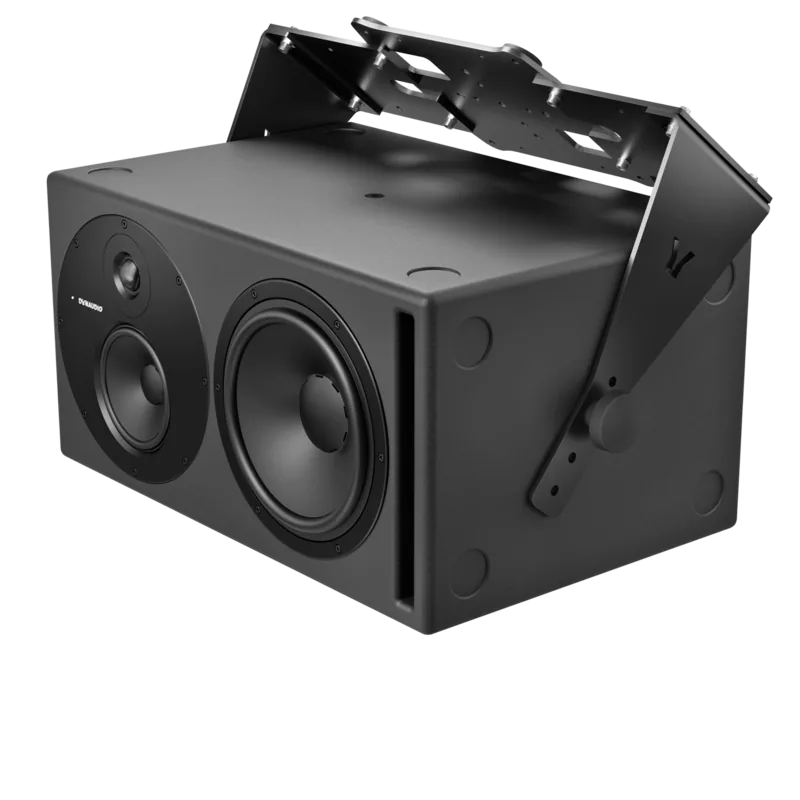
The Orbit Baffle lets the tweeter and midrange section rotate inside the cabinet. This makes it easier to install the monitor in different orientations while preserving time alignment and consistent imaging.
Is this answer helpful?
Yes. The Core 59 supports both vertical and horizontal placement. That flexibility is especially useful when room layout, screen height, or center-channel placement requires a different orientation.
Is this answer helpful?
Yes, it benefits a lot from it. The rear-panel DSP includes position and boundary settings, plus sound balance controls, so you can match the monitor to desks, walls, corners, or soffit mounting.
Is this answer helpful?
The Core 59 supports balanced analogue input and AES digital input. It also includes digital out and word clock options, which are helpful in synchronized studio systems.
Is this answer helpful?
Like any precision monitor, the Core 59 is affected by room reflections, wall proximity, and listening distance. Careful placement improves bass response, stereo imaging, and the accuracy of mix decisions.
Is this answer helpful?
Advantages and Disadvantages
Advantages

- Orbit Baffle allows flexible vertical or horizontal placement.
- Built-in DSP helps adapt the monitor to desks, walls, and soffits.
- Analogue, AES, and word clock options support pro studio workflows.
- Accurate tuning is designed to improve mix translation across systems.
Disadvantages

- Getting the best result requires careful setup and room measurement.
- Some settings and SPL labels can change after firmware updates.
- Large-format performance may be unnecessary for smaller casual spaces.
Product Specification
Principle
3-way
Tweeter
1x 1"/25.4mm
Mid-range
1x 5"/127mm
Woofer
1x 9.50"/241.3mm
Frequency range
42Hz-21kHz (+-3dB)
Power
150W/500W/500W RMS (HF/MF/LF)
SPL max.
112dB
Special features
AES/EBU In, DSP
Dimensions
11.02x21.65x14.96in (WxHxD)
Weight
54.23lb
Product Description
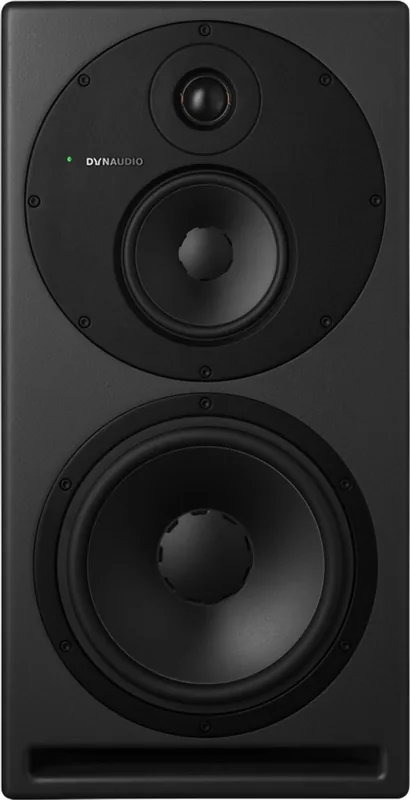
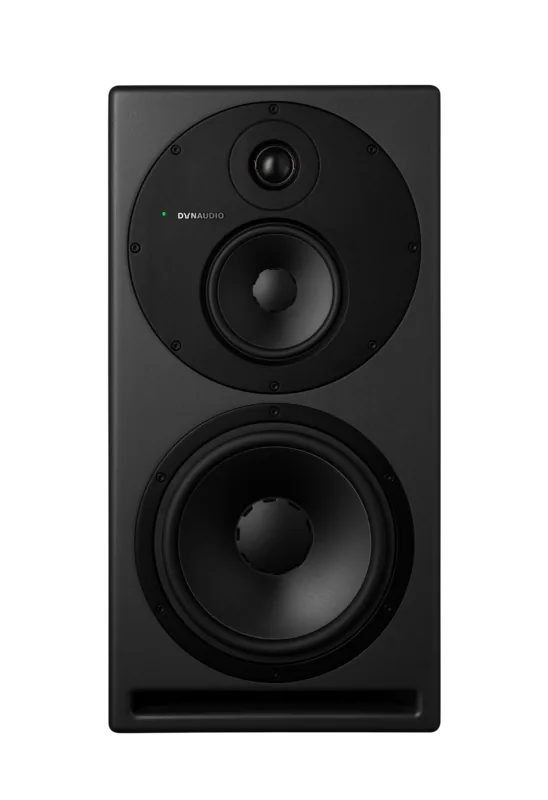
Dynaudio Core 59: Precision Monitoring with Flexible Setup
The Dynaudio Core 59 is built for creators who need confidence in every mix decision. Designed in Denmark and engineered for demanding studio environments, it combines serious output, refined clarity, and exceptional placement flexibility. Whether it lives in a nearfield setup, a midfield room, or part of a surround array, the Core 59 aims to deliver a sound that stays honest from first listen to final export.
What makes it stand out
One of the most interesting things about the Core 59 is its Orbit Baffle design. This rotating midrange and tweeter assembly gives the monitor unusual freedom in how it can be installed, making it easier to adapt to different rooms and speaker layouts without sacrificing time alignment. That is a big deal in real-world studios, where symmetry, desk space, and room shape rarely cooperate.
The monitor also includes integrated Class-D amplification and practical rear-panel controls for shaping its behavior to the room. Features like position filtering, boundary compensation, sound balance, and bass extension help the Core 59 respond better to desks, walls, soffits, and other acoustic challenges. Instead of forcing a one-size-fits-all sound, it offers tools to fine-tune the monitoring chain to match the space.
Why it appeals to professionals
The Core 59 is designed for accurate translation. That means mixes made on it are intended to hold up across headphones, car systems, home theaters, and larger playback environments. The manual emphasizes careful setup, but that effort pays off: correct distance, angle, and calibration can turn the Core 59 into a highly dependable reference point.
It also supports both analogue and AES digital connections, along with word clock integration for tighter synchronization in digital workflows. For engineers working with calibrated rooms or immersive formats, those details matter just as much as raw sound quality. The Core 59 is not only about listening loudly; it is about listening intelligently.
Notes
- Best results come from careful placement and calibration.
- Use the room controls to match the monitor to your environment.
- The Core 59 rewards proper setup with improved stereo imaging and translation.
- Firmware updates may change settings labels and SPL values, so staying current is useful.
Search for 67,706 Manuals online


Type-in Brand or Model