
DT Swiss ARC 1100 Dicut 48 Manual
PDF manual · 28 Pages
English



Quick check
Incorrect answer, please try again.
Chat with your DT Swiss ARC 1100 Dicut 48 manual using AI
Get instant AI answers from your DT Swiss ARC 1100 Dicut 48 manual
Ask anything about the DT Swiss ARC 1100 Dicut 48. Answers come from this manual, with the pages they are based on.
ARC 1100 Dicut 48 Maintenance Schedule
Perform hub maintenance annually or as needed according to the Technical Manual.
Check the wheel for damage before and after every ride to ensure safety.
Ensure the wheel is properly secured before every ride.
Clean brake surfaces of dirt and oil, check pad wear, remove debris, and inspect rim brake surface wear.
Regularly check spoke tension, wheel roundness, and wear every 10 operating hours.
Clean with a soft sponge and suitable cleaner. Do not use high-pressure washers or aggressive cleaners.
Free maintenance reminders
Timed to your purchase date. Always free, unsubscribe anytime.
Ask a Question
Do you recommend ARC 1100 Dicut 48?
Yes NoFrequently Asked Questions
The guidance recommends checking spoke tension, run-out, and wear regularly, including after about 10 hours of use, and again before and after each ride. It also specifies routine cleaning with a soft cloth and an appropriate cleaner, and checking for damage throughout the riding cycle.
Is this answer helpful?
The manual allows experienced users to carry out small maintenance works. If you have any doubts about your skills, contact a DT Swiss service center. It also emphasizes doing steps in the shown order and repeating run-out and tension checks after stress relieving.
Is this answer helpful?
Stress relieving is critical. The instructions state that DICUT wheels must be stress relieved four times during the truing process, starting when 50 percent of maximum spoke tension is reached, and once again at the end. The goal is that truing values do not change after the last stress relieve.
Is this answer helpful?
For spokes on the drive side of the rear wheel, the instructions describe replacing without dismounting the rotor or end cap. For other positions, you may need additional steps such as careful end-cap handling. In all cases, use the correct spoke holders and nipple wrenches to avoid damage.
Is this answer helpful?
Remove the end cap and rotor using an axle holder in a vice, then remove the ratchets and springs. Clean and inspect star ratchets and rotor surfaces, remove damaged notches, and remove metal filings. Lubricate only with the specified thin, even red DT Swiss special grease to ensure proper freewheel engagement.
Is this answer helpful?
Yes. The manual warns of reduced brake performance and risk of injury if braking is handled incorrectly. It advises braking with both brakes, avoiding sliding and permanent braking to prevent overheating, and noting that braking power can be reduced in wet conditions especially with new wheels or brake pads. It also limits transport or storage temperatures to 90 C.
Is this answer helpful?
Do not use metal tire levers because they can damage the rim, tire, or inner tube. The manual also specifies correct valve size and length (6.5 mm diameter), staying within maximum tire pressure, and ensuring compatible rim tape, inner tube, and tire dimensions. It includes cautions for carbon rims with tubeless kits, tubeless tires, and latex tubes.
Is this answer helpful?
Advantages and Disadvantages
Advantages

- Clear, step-by-step procedures that emphasize correct order and repeat checking during truing
- Includes safety guidance on correct wheel handling, compatible parts, and the risks of incorrect service
- Detailed spoke replacement and rebuilding instructions for multiple DICUT configurations
- Freewheel service notes cover wear checks and precise, thin lubrication to maintain reliable engagement
Disadvantages

- Some maintenance tasks are recommended for skilled professionals, limiting DIY confidence for new users
- Requires using specific tools and original spare parts, increasing the need for correct accessories
- Safety warnings are strict for rim-brake use, including overheating and wet braking power considerations
- Maintenance accuracy depends on proper cleaning products and avoiding harsh cleaners or high-pressure washing
Product Specification
Type
Rear Wheel
Colors
black
Wheel Size
29"
Tire Type
Wire/Folding Tire (Clincher)
Material
Carbon
Rim Height
1.89 in
Rim Width
0.67 in inner, 0.98 in outer
Brake Type
Rim Brake (Metal)
Spoke Type
Straight-pull
Freehub
Ratchet Freehub (36T)
Freehub Body
Shimano (Road)
Weight
1.82 lb
Features
Aero spokes, tubeless ready
Product Description
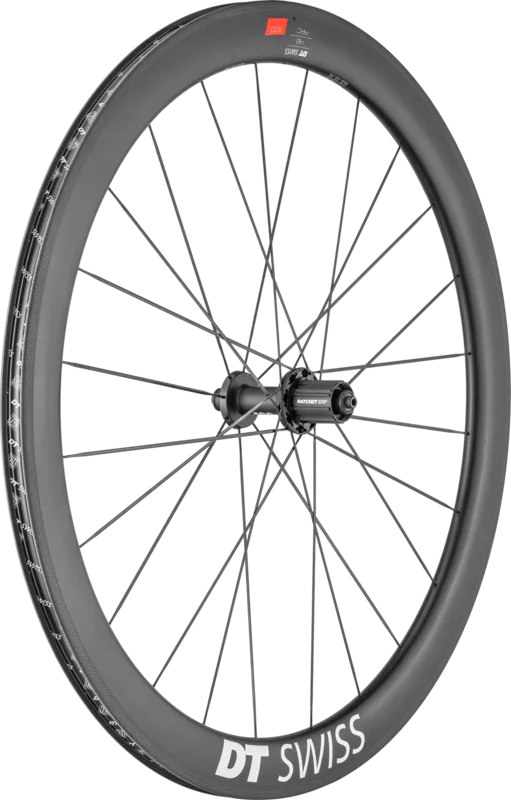
DT Swiss ARC 1100 Dicut 48 Rear Wheel Manual
A rear wheel designed to stay in shape
The DT Swiss ARC 1100 Dicut 48 Rear Wheel is built for riders who want confident handling backed by serviceable engineering. The DICUT technical guidance focuses on keeping wheel geometry true, spoke tension consistent, and the drive-side system running smoothly over time. With 48-spoke lacing, the wheel relies on careful setup, correct parts, and proper maintenance routines to deliver predictable performance.
Maintenance that emphasizes accuracy
Rather than treating maintenance as a guessing game, the manual lays out safety and workflow rules for end users and dealers. It stresses doing steps in order, greasing moving parts and sealing elements before assembly, and using the right tools to avoid damaging nipples and bladed spokes. For everyday upkeep, it recommends cleaning with mild products and avoiding harsh cleaners or high-pressure jets that can harm sensitive components.
Truing is described with clear checks for axial and radial run-out. The process is tied to usable tolerances, and it includes repeated stress relieving so values settle correctly. That means small adjustments are followed by re-checking run-out and spoke tension until the wheel meets the specified targets.
Spoke service for different DICUT variants
If a spoke needs replacement, the approach depends on the wheel configuration. The instructions cover loosening nipples, removing and inserting spokes, and maintaining correct spoke crossing. There are also targeted procedures for DICUT nondisc, DICUT Aero, and DICUT disc brake setups, including how to handle washers, greased contact surfaces, and correct nipple engagement.
Freewheel reliability through correct lubrication
On the drive system side, the manual explains servicing the freewheel/ratchet components. It highlights wear behavior at the star ratchet outer diameter, calls for cleaning and thorough removal of metal filings, and warns that over-greasing can cause limited freewheel function. The solution is precise lubrication: a thin, even layer using the specified red DT Swiss special grease, followed by functional checks to confirm smooth anti-clockwise rotation and defined clockwise blocking.
Key results
- True the wheel with confirmed axial and radial run-out checks, guided by published tolerances
- Replace single spokes using correct holders and nipple wrenches to protect bladed spokes
- Stress relieve repeatedly during truing so final tension and shape do not drift
- Service the freewheel by cleaning, checking ratchet wear, and applying a thin even grease layer
- Maintain braking safety by cleaning brake surfaces and avoiding overheating with rim brakes
Notes
- When in doubt about skill or safety, use a DT Swiss service center
- Use only original spare parts and do not modify components
- Rim brake users: brake with both brakes, avoid permanent braking, and do not exceed 90 C during transport/storage
- Clean with mild cleaners; avoid aggressive chemistry and high-pressure cleaning
Search for 67,706 Manuals online


Type-in Brand or Model