
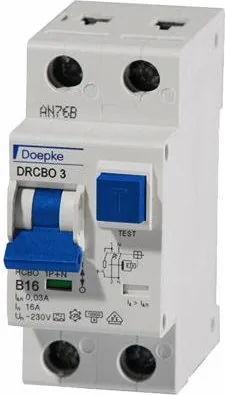
Doepke DRCBO 3 B16/0,03/1N-A KV Manual
PDF manual · 2 Pages
English



Quick check
Incorrect answer, please try again.
Chat with your Doepke DRCBO 3 B16/0,03/1N-A KV manual using AI
Get instant AI answers from your Doepke DRCBO 3 B16/0,03/1N-A KV manual
Ask anything about the Doepke DRCBO 3 B16/0,03/1N-A KV. Answers come from this manual, with the pages they are based on.
DRCBO 3 B16/0,03/1N-A KV Maintenance Schedule
Under normal operating conditions, press test button T and verify that the RCBO trips. The toggle must move to zero and the tripped display must appear blue.
For non-stationary systems, press test button T each working day and verify that the RCBO trips.
Free maintenance reminders
Timed to your purchase date. Always free, unsubscribe anytime.
Ask a Question
Do you recommend DRCBO 3 B16/0,03/1N-A KV?
Yes NoFrequently Asked Questions
It is a combined residual-current device and miniature circuit breaker (DRCBO) with 16 A B-curve overcurrent protection and 30 mA residual-current sensitivity, designed to protect circuits against earth-faults and overloads in one compact unit.
Is this answer helpful?
The DRCBO 3 family offers Type A, Type AC and Type F residual-current characteristics to accommodate a variety of connected equipment and nonlinear loads requiring different detection behaviours.
Is this answer helpful?
No. The manual emphasises professional installation by a qualified electrician to ensure correct wiring, torque settings and compliance with local electrical standards; improper installation risks ineffective protection or hazards.
Is this answer helpful?
Perform the built-in test-button check periodically as recommended by the manufacturer or local regulations. Keep the device clean, avoid corrosive atmospheres, and verify connections and torque during inspections to ensure continued reliable operation.
Is this answer helpful?
It is suitable for general-purpose circuits, lighting and socket circuits in residences and small commercial installations where 30 mA protection and 16 A rated current match the circuit requirements.
Is this answer helpful?
No integrated surge protection is provided; surge mitigation or selective coordination may require additional devices or system design to achieve selective tripping and handle transient overvoltages.
Is this answer helpful?
Store and operate the unit within specified temperature ranges and avoid corrosive gases which can impair tripping performance. Follow the manual’s storage and ambient guidance to preserve long-term reliability.
Is this answer helpful?
Advantages and Disadvantages
Advantages

- Space-saving combination of RCD and MCB reduces panel complexity.
- 30 mA sensitivity protects people while limiting nuisance tripping.
- Available residual-current types (A/AC/F) for varied load compatibility.
- DIN-rail mounting and clear terminals speed professional installation.
- Built-in test function enables easy periodic verification.
Disadvantages

- Requires qualified electrician for correct installation and testing.
- May need additional selective protection for complex systems.
- Performance can degrade in corrosive atmospheres if not protected.
- Fixed 16 A B-characteristic limits current applications without alternatives.
- Surge or special fault conditions may require external measures.
Product Specification
Type
RCBO
Number of poles
1 + N
Rated voltage
230V
Rated current
16A
Rated residual current
30mA
Residual current type
A
Tripping characteristic
B
Degree of protection
IP20
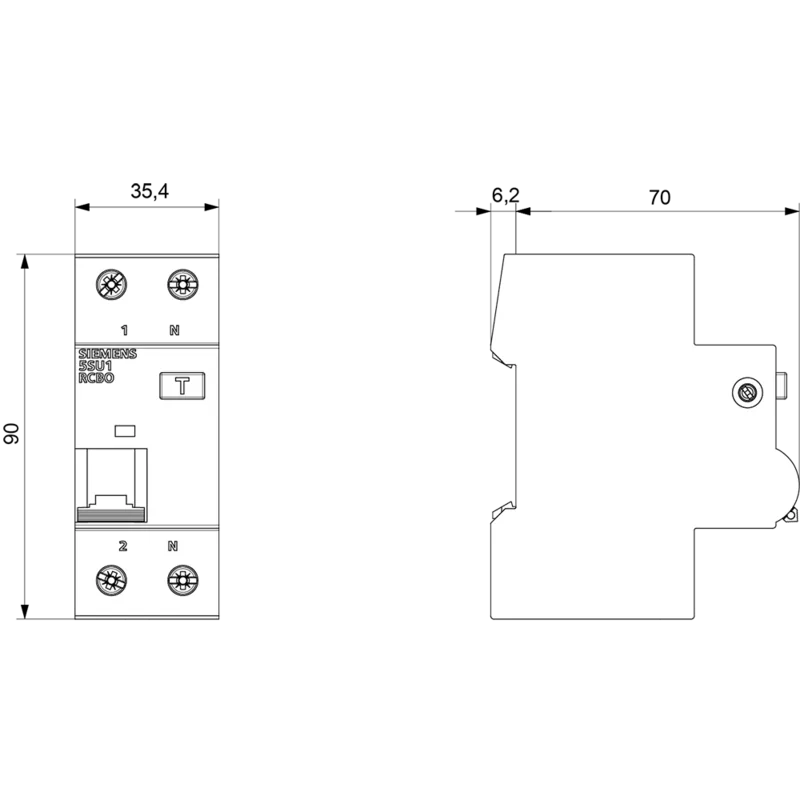
Width
1.42 in
Number of modules
2
Special features
short-time delayed
Product Description
Doepke FI-/LS-Kombinationen DRCBO 3 B16/0,03/1N-A KV Manual
The Doepke DRCBO 3 B16/0,03/1N-A KV is a compact residual-current circuit breaker with integrated overcurrent protection designed for modern electrical installations. Combining earth-leakage detection (RCD) and short-circuit/overcurrent protection (MCB) in one unit, it simplifies distribution boards while ensuring reliable protection for circuits in homes, small commercial spaces and specialized installations.
This model features a 16 A B-type overcurrent tripping characteristic and a 30 mA residual current sensitivity, tailored to provide good nuisance-resistance while protecting people from electric shock and reducing fire risk from earth-fault currents. The DRCBO 3 family includes variants with Type A, Type AC and Type F residual-current characteristics, making them adaptable to circuits with different appliance profiles and electronic loads.
Key practical features include DIN-rail mounting for fast installation, clearly marked terminals for safe wiring, and mechanical test functions to regularly verify the tripping mechanism. The device supports rated frequency and surge conditions common in distribution systems and is compatible with appropriate short-circuit protection fuses (SCPD gG) and wiring practices. Compact dimensions and standardised mounting make the unit easy to fit into existing consumer units or new panels during upgrades.
Safety and correct operation depend on professional installation and adherence to the specified wiring diagrams and torque settings. The manual emphasises that the device is not for layman installation, outlines testing and functional checks, and includes environmental guidance such as recommended storage temperature and avoidance of corrosive atmospheres to preserve long-term trip performance. Periodic testing after installation ensures continued protection and compliance with local regulations.
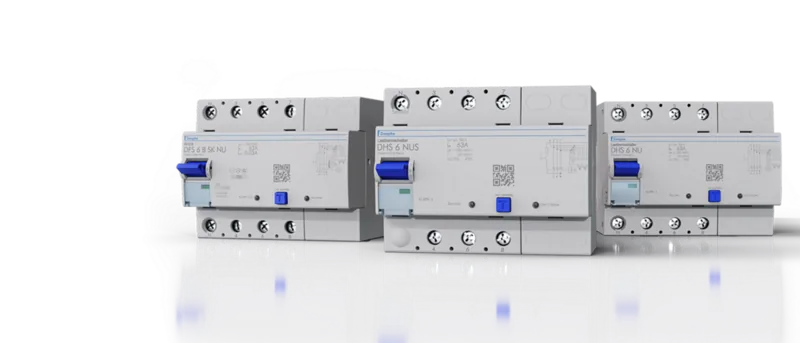
For installers and specifiers, the DRCBO 3 B16/0,03/1N-A KV presents a cost-effective way to combine two protective functions into one compact module, reducing wiring complexity and saving panel space. It is suited for general circuits, lighting, and many socket circuits where 30 mA protection is required. Variants with short-time delay or different residual-current types allow tailoring to selective or sensitive loads.
Notes:
- Always follow manufacturer torque values and wiring diagrams when connecting.
- Perform regular test-button checks to confirm residual-current operation.
- Choose the appropriate residual type (A/AC/F) for connected appliances.
- Keep units away from corrosive gases and within storage/operating temperature ranges.
Pros and Cons Summary
Pros:
- Space-saving RCD+MCB combination for simplified distribution boards.
- 30 mA sensitivity balances human protection and nuisance immunity.
- DIN-rail mounting and clear terminal markers speed installation.
- Multiple residual-current types (A/AC/F) for diverse applications.
- Integrated test function supports periodic verification.
Cons:
- Requires a qualified electrician for correct installation and testing.
- May not suit highly selective coordination needs without system design.
- Corrosive environments can shorten reliable service life.
- Limited to rated current and characteristic (16 A, B) — needs correct selection.
- External measures may be needed for surge or complex fault scenarios.
3–5 Most Important Results
- Combines RCD and MCB in a single compact module for panel space savings and simpler wiring.
- 16 A B-curve with 30 mA residual sensitivity offers balanced protection against overloads and earth faults.
- Available in Type A/AC/F variants to match different equipment and nonlinear loads.
- DIN-rail mounting and clear terminals enable fast, standardised installation in consumer units.
- Manual stresses professional installation, periodic testing, and environmental care for reliable operation.
Search for 67,706 Manuals online


Type-in Brand or Model