
BYD Battery-Box Premium LVS Manual
PDF manual · 47 Pages
English


Quick check
Incorrect answer, please try again.
Chat with your BYD Battery-Box Premium LVS manual using AI
Get instant AI answers from your BYD Battery-Box Premium LVS manual
Ask anything about the BYD Battery-Box Premium LVS. Answers come from this manual, with the pages they are based on.
Battery-Box Premium LVS Maintenance Schedule
Use a soft dry brush or dust collector to remove dust. Do not use liquids, solvents, abrasives, or corrosive liquids.
Store at -10C to +50C and charge regularly according to temperature table with no more than 0.5 C rate to 40% SOC after long storage.
Free maintenance reminders
Timed to your purchase date. Always free, unsubscribe anytime.
Ask a Question
Do you recommend Battery-Box Premium LVS?
Yes NoFrequently Asked Questions
The LVS series includes LVS 4.0, 8.0, 12.0, 16.0, 20.0 and 24.0, built from 4 kWh modules (51.2 V each). System usable energy ranges from 4 kWh to 24 kWh depending on module count; modules can be stacked into towers with defined parallel limits.
Is this answer helpful?
Use BYD’s Be Connect mobile app or Be Connect Plus for PC. Connect to the BMU WLAN or Ethernet, download the latest firmware to your device, then update and configure model, module count per tower, grid and phase options following the app prompts.
Is this answer helpful?
The manual details hazard levels (DANGER, WARNING, CAUTION, NOTICE), procedures for leakage, firefighting (ABC/CO2 recommended), handling/storage limits, weight precautions, surge protection guidance, and requirements that qualified personnel perform installation and commissioning.
Is this answer helpful?
BMU supports WLAN and Ethernet. Be Connect (mobile), Be Connect Plus (PC) and BYD Be Connect Monitoring enable firmware updates, configuration, remote diagnostics and service. Ethernet connection is recommended for remote monitoring but not mandatory.
Is this answer helpful?
DC cables use 35/50/70 mm² conductors per application and must be balanced across towers. Data cables require shielded Cat5/Cat5e or better (metal RJ45), max 10 m runs, UV resistance for outdoor routing, and proper gland sealing at BMU/PDU.
Is this answer helpful?
Yes, parallel connection is supported but constrained: up to four modules per tower when parallelized and a maximum of 16 towers in parallel under specific configuration rules. LVS 20.0 and 24.0 are single-tower only.
Is this answer helpful?
Store between -10 °C and +50 °C with SOC 25–60% for long-term storage; recharge periodically with ≤0.5C to 40% SOC. Clean with a dry brush or dust collector and avoid solvents. Follow specified storage duration limits by temperature band and charge over-discharged systems within the recommended timeframes.
Is this answer helpful?
Advantages and Disadvantages
Advantages

- High round-trip efficiency (≥95%) with scalable modular design from 4–24 kWh per system.
- Robust LFP chemistry (cobalt-free) and IP55-rated enclosure for indoor/outdoor installations.
- Integrated BMU with Ethernet/Wi‑Fi, remote monitoring and firmware updates via Be Connect.
- Clear installation and commissioning procedures with defined cable, grounding and safety specs.
- Comprehensive safety guidance, certifications (VDE/IEC/CE/UN38.3) and a 10-year warranty (conditions apply).
Disadvantages

- Heavy modules (≈45 kg each) require proper handling and mounting; lifting risk noted.
- Complex parallel-tower limits and inverter compatibility requirements may constrain expansion.
- Some region-specific parts (e.g., PDU with air switch for Australia) complicate ordering.
- Data and DC cabling have strict shielding, length and cross-section requirements for reliable operation.
- Certain safety and warranty conditions require installation by qualified personnel only.
Product Specification
Note
Prices partly include 0% VAT tax rates for AT and DE
Battery type
LiFePO4
Nominal voltage
51.2V
Operating temperature
14 F to 122 F
Display
no
Interfaces
Wi-Fi (WLAN), RS-485
Mounting type
freestanding (stackable)
IP rating
IP55
Product Description
BYD Battery-Box Premium LVS — BYD Battery-Box Premium LVS Manual
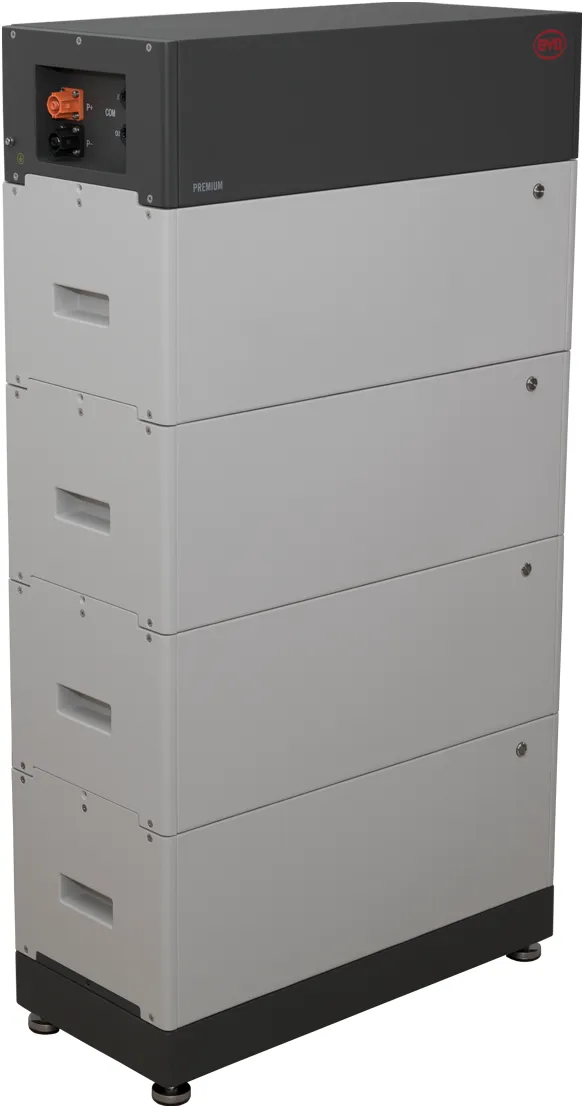
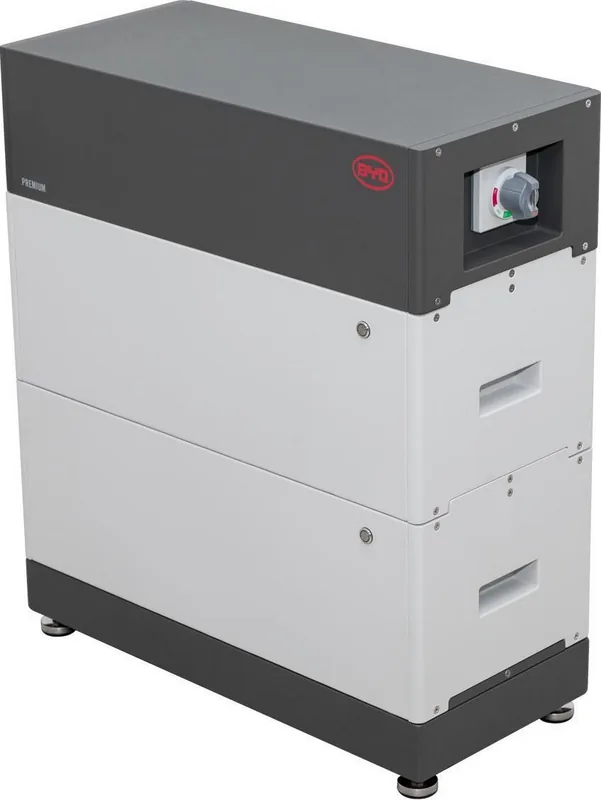
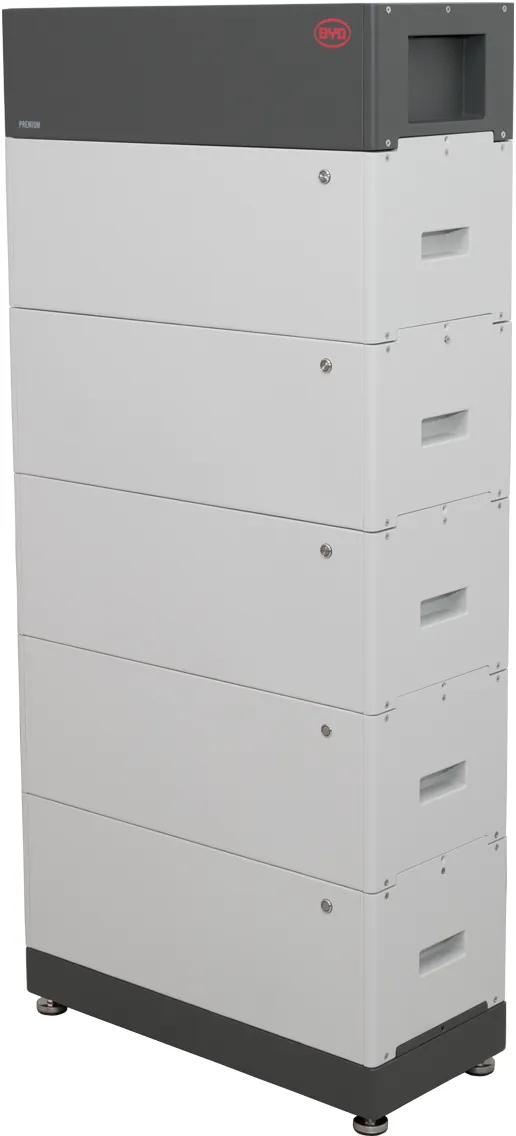
The BYD Battery-Box Premium LVS is a modular 48 V lithium iron phosphate battery system designed for residential energy storage and PV integration. Available in configurations from 4.0 kWh to 24.0 kWh (LVS 4.0–24.0), it supports single- and three-phase inverters, backup operation and both on-grid and off-grid modes. The system is built from 4 kWh battery modules (51.2 V, 45 kg each) that stack into towers; a tower can contain 1–6 modules (with parallel tower constraints) and up to 16 towers can be paralleled under specific limits. The BMU (Battery Management Unit) with IP55 protection coordinates monitoring, communication and safety functions.
Key features and operation
The LVS emphasizes safety and scalability: LFP (cobalt-free) cells, CAN/RS485 communication, and an IP55-rated enclosure yield robust indoor or outdoor performance between -10 °C and +50 °C. Typical round-trip efficiency is ≥95%, with continuous and peak current limits specified per model and derating at low temperatures. The system includes a PDU, BMU, and optional region-specific components (e.g., air switch for Australia). It supports firmware updates, monitoring and configuration through BYD’s Be Connect mobile app, Be Connect Plus for PC, and Ethernet-based remote services.
Installation and commissioning follow clear mechanical, electrical and data-cable procedures: secure mounting to solid surfaces, correct DC and PE connections with specified cable cross-sections (35/50/70 mm² options), shielded Cat5/Cat5e or higher for data links, and careful balancing of cable lengths when multiple towers are used. Commissioning uses the Be Connect app to set model, module count per tower, grid/phase options and to update firmware. The BMU LED indicates states (idle, charging, discharging, low SOC) and error codes, aiding troubleshooting.
Safety and maintenance are central: the manual details hazard levels (DANGER, WARNING, CAUTION, NOTICE), battery leakage and firefighting measures (ABC/CO2 recommended; water discouraged), handling/storage limits, and required qualified personnel for installation. Storage guidance prescribes SOC ranges and temperature/humidity limits, and disposal must follow local e-waste and battery regulations. BYD provides certifications (VDE/IEC/CE/UN38.3) and a 10-year warranty subject to terms.
Notes
- Compatible inverters are listed in BYD’s Minimum Configuration List; compliance is required for warranty.
- Parallel-tower and module limits differ by model; LVS 20.0 and LVS 24.0 are single-tower only.
- Connect the BMU to the Internet for remote diagnostics and firmware updates via Be Connect Monitoring.
Search for 67,706 Manuals online


Type-in Brand or Model