
Broadcom CacheVault CVPM05 Manual
PDF manual · 19 Pages
English



Quick check
Incorrect answer, please try again.
Chat with your Broadcom CacheVault CVPM05 manual using AI
Get instant AI answers from your Broadcom CacheVault CVPM05 manual
Ask anything about the Broadcom CacheVault CVPM05. Answers come from this manual, with the pages they are based on.
Ask a Question
Do you recommend CacheVault CVPM05?
Yes NoFrequently Asked Questions
The CVPM05 module provides energy backup for MegaRAID controllers. It uses ultracapacitors to supply power during outages, allowing the system to flush cached data to nonvolatile flash memory to prevent loss.
Is this answer helpful?
No, hot plugging this device is strictly prohibited. You must fully power down the system before attaching or removing the module to prevent damage to the board and the supercapacitor functionality.
Is this answer helpful?
CacheVault technology offloads data from the cache to flash memory during a power failure. This ensures that data written to a controller cache is not lost if the system loses AC power unexpectedly.
Is this answer helpful?
Administrators can use the StorCLI command line tool or the HII Configuration Utility to monitor CacheVault module information. These tools display charge levels and ensure proper operation status.
Is this answer helpful?
Disposal must follow international environmental standards for electronic waste. Check local regulations regarding chemical waste as supercapacitors contain an organic electrolyte that requires proper handling.
Is this answer helpful?
It provides an alternative to a UPS or a second level of fault tolerance. While it handles short outages for cache protection, full system protection usually still requires a power supply solution.
Is this answer helpful?
The modules are designed to operate within an ambient temperature range of 0°C to 55°C. Storage temperatures can range from -40°C to 70°C to ensure proper functionality and longevity.
Is this answer helpful?
Advantages and Disadvantages
Advantages

- Eliminates data loss risk during power failure by offloading to flash
- No battery maintenance required reducing long-term total cost of ownership
- Ultra-capacitors provide higher current output than standard batteries safely
- Environmentally friendly as it avoids toxic chemical waste from batteries
- Supports write-back caching policies to maximize system storage performance
Disadvantages

- Installation requires full system power down to prevent board damage
- Supercapacitors degrade over time and may need replacement after years
- Specific airflow requirements make thermal management critical for operation
- Limited compatibility requires verification with specific MegaRAID adapter models
- Additional hardware cost for the remote mount board is not included
Product Specification
Type
Cache Expansion
Compatibility
Broadcom MegaRAID 9460-16i, Broadcom MegaRAID 9460-8i, Broadcom MegaRAID 9460-8i8e, Broadcom MegaRAID 9365-28i
Product Description
Enhancing Storage Resilience with Advanced Data Protection
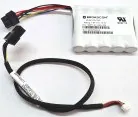
In today's demanding enterprise environments, data integrity remains the top priority for storage administrators. Write-back caching accelerates system performance significantly but poses a risk if power fails before data reaches the physical hard disks. The Broadcom CacheVault Power Module 05 CVPM05 resolves this issue through superior energy backup capabilities. This hardware solution ensures that cached data survives sudden power interruptions without corruption or loss.
Core technology relies on ultracapacitor packs rather than traditional lithium batteries found in older systems. During an AC power failure, the module continues to supply electricity to the adapter components for a short time. This brief energy duration allows the MegaRAID controller to complete its task of flushing cached data to nonvolatile flash memory. Once main power returns, the data is safely restored to the storage devices automatically. This process operates transparently to the end user and application layer without interruption.
Setting up this protection requires specific hardware configurations and careful attention to safety standards. The power module connects via cable to the Flash Module or directly to the controller depending on the adapter model. The CVFM04 module acts as the nonvolatile storage destination for the backed up data. For optimal installation steps and compatibility checks, users typically reference the Broadcom CacheVault Power Module 05 CVPM05 Manual. It is critical to shut down the host system completely before attaching any components to the PCIe slot. Hot plugging this device will damage the board and void the warranty coverage provided by vendors.
Maintenance costs are significantly lower compared to conventional battery backups over the long term. Supercapacitors have a much longer lifespan and maintain performance over time without degradation. This reduces the need for frequent replacement cycles and lowers overall operational expenses for the organization. Additionally, the technology is environmentally friendly as it avoids toxic waste management issues associated with old chemical batteries.
Monitoring system health is straightforward using the provided integrated utility software tools. Administrators can check detailed status information through specific StorCLI commands or the HII Configuration Utility interface. These tools display charge levels and module status clearly. Ensuring the controller write policy remains in write-through mode until the module finishes its charging cycle is important for data safety. Proper deployment guarantees high availability and protects valuable business information from hardware failures.
Temperature control is vital for the longevity of these modules. They must operate within specific ambient ranges to prevent heat damage to internal components. Improper cooling can lead to reduced efficiency or potential failure during extended operations. Proper airflow designs are recommended when installing boards in server chassis to ensure adequate ventilation.
Safe disposal of these units follows international standards regarding electronic waste. Supercapacitors do not contain heavy metals but require specific handling as chemical waste products. Municipal regulations may vary, so consulting local guidelines for disposal is necessary to avoid fines. Following safety protocols ensures that the hardware is recycled responsibly at the end of its lifecycle.
Search for 67,706 Manuals online


Type-in Brand or Model