
Bresser National Geographic 76/700 AZ Manual
PDF manual · 40 Pages
English



Quick check
Incorrect answer, please try again.
Chat with your Bresser National Geographic 76/700 AZ manual using AI
Get instant AI answers from your Bresser National Geographic 76/700 AZ manual
Ask anything about the Bresser National Geographic 76/700 AZ. Answers come from this manual, with the pages they are based on.
National Geographic 76/700 AZ Maintenance Schedule
Clean eyepieces and objectives only with a soft, lint-free cloth using gentle pressure. Use eyeglass cleaning solution for stubborn dirt.
Let the device acclimatize at room temperature after use, especially in high humidity, to allow residual moisture to dissipate.
Put dust-protection caps on the tube opening and eyepiece connection before storing the telescope.
Ask a Question
Do you recommend National Geographic 76/700 AZ?
Yes NoFrequently Asked Questions
It is best for beginners who want an easy introduction to stargazing. It works well for viewing the Moon, bright nebulae, and other easy targets, and it can also be used for daytime nature observation with the right accessory setup.
Is this answer helpful?
No, the assembly is designed to be straightforward. The manual walks you through the tripod, mount, tube, finder scope, and eyepiece installation step by step. Careful alignment matters more than technical skill.
Is this answer helpful?
A 20 mm eyepiece gives lower magnification and a wider field of view. That makes it easier to locate objects, center them, and achieve a sharper image before switching to stronger magnification.
Is this answer helpful?
No. The telescope should never be used to observe the Sun directly or near the Sun. Doing so can cause severe eye damage or blindness. Always keep solar observing strictly off-limits unless using proper solar equipment.
Is this answer helpful?
Common causes include poor focus, a missing dust cap removal, viewing through glass, or not waiting for the telescope to reach outdoor temperature. Adjust the focus wheel and allow time for acclimatization.
Is this answer helpful?
The finder scope helps with target acquisition, the zenith mirror improves comfort for sky observing, and the Barlow lens increases magnification. For natural viewing, the erecting lens helps produce an upright image.
Is this answer helpful?
Advantages and Disadvantages
Advantages

- Easy-to-use alt-azimuth mount for simple horizontal and vertical movement.
- Suitable for beginners with clear setup, alignment, and observing instructions.
- Includes useful accessories like eyepieces, finder, and optional image-correcting parts.
- Works for both lunar/astronomical viewing and some daytime nature observation.
Disadvantages

- Manual setup and alignment may take time for complete beginners.
- Higher magnification requires careful handling and stable observing conditions.
- Image orientation can be inverted unless the right accessories are used.
- Performance depends heavily on dark skies and proper temperature acclimatization.
Product Specification
Type
Reflector (Mirror Telescope)
Design
Newton
Magnification
35-525x
Aperture
3.00 in
Focal Length
27.56 in, f/9.2
Mount
azimuthal
Eyepieces included
0.16 in, 0.49 in, 0.79 in
Manufacturer's Warranty
5 Years
Product Description
Bresser National Geographic 76/700 AZ Manual
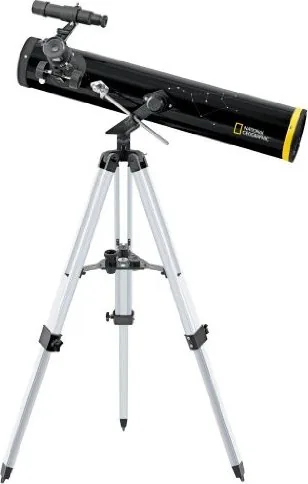
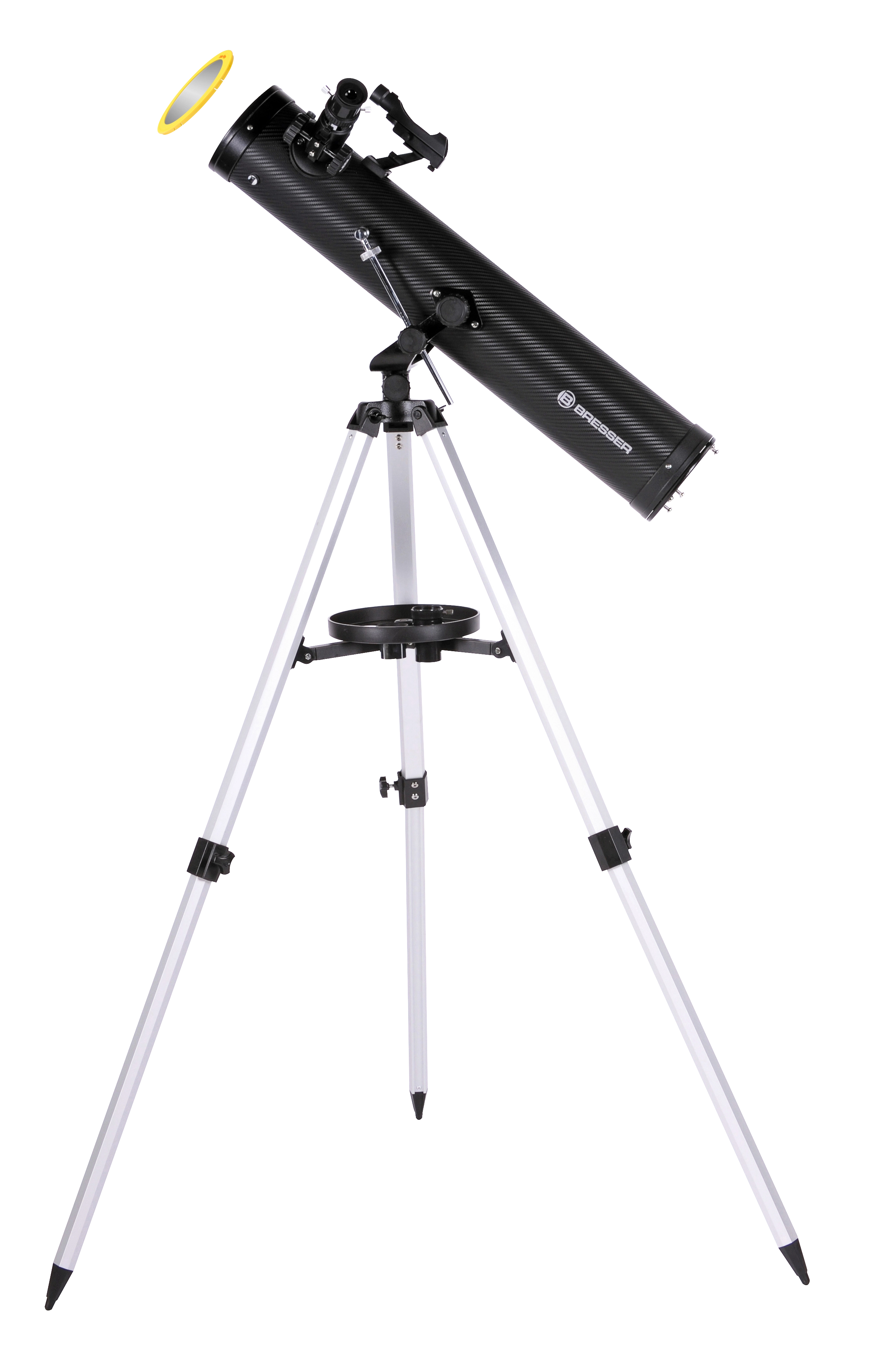
The Bresser National Geographic 76/700 AZ is a beginner-friendly telescope designed for simple, rewarding observing sessions. With its 76 mm aperture and 700 mm focal length, it offers a practical balance between light gathering and magnification, making it a solid choice for lunar detail, bright deep-sky targets, and introductory nature viewing. The AZ mount keeps operation intuitive: move left, right, up, or down without wrestling with complicated controls.
What makes this model appealing is its focus on accessibility. The included finder scope or LED finder helps you locate objects more easily, while the supplied eyepieces let you switch between wider views and closer inspection. The manual also explains how to use extras such as the zenith mirror, erecting lens, and Barlow lens, so you can adapt the telescope for both astronomy and daytime landscape observation. For new users, that flexibility is a major advantage.
Setup is straightforward, but the instructions emphasize patience and care. A stable surface, enough open space, and a dark observing location will significantly improve results. The telescope also benefits from temperature acclimatization before use, which helps reduce blurry views. Once aligned, the focusing wheel gives you control over sharpness, and the mount makes tracking objects manageable for casual stargazing.
The manual’s guidance is especially useful for learning the basics of observation. It explains magnification in a simple formula, recommends starting with the lowest-power eyepiece, and highlights the importance of aligning the finder scope correctly. It also includes troubleshooting tips, cleaning advice, and storage instructions, which are all valuable for protecting the optics over time.
This telescope is best seen as an entry point into visual astronomy rather than an advanced instrument. It invites users to explore the Moon, the Orion Nebula, the Ring Nebula, and other bright targets while building confidence with manual telescope handling. If you want an affordable, hands-on way to learn the sky, the Bresser National Geographic 76/700 AZ delivers a balanced and educational experience.
Notes
- Never observe the Sun through the telescope.
- Start with low magnification for easier target finding.
- Keep lenses clean, dry, and protected from dust.
- Store the telescope in a ventilated place after use.
Search for 67,706 Manuals online


Type-in Brand or Model
Lena Weber
10 months ago
Is this telescope a good beginner model, and how fast is shipping?
Manual.ly
10 months ago
Yes, it is well suited for first-time users. Multiple reviewers mention it as an excellent starter telescope with good image results, including clear views of Jupiter and its moons, and even visible belt details. Ordering and delivery are also described as very smooth: one reviewer reports receiving it in about 2 days, and others highlight fast processing and quick shipping overall. So if you want an easy introduction to observing without complicated setup, and you value fast delivery, this model appears to fit well.