
Boya BY-MM1 Manual
PDF manual · 1 Pages
English


Quick check
Incorrect answer, please try again.
Chat with your Boya BY-MM1 manual using AI
Get instant AI answers from your Boya BY-MM1 manual
Ask anything about the Boya BY-MM1. Answers come from this manual, with the pages they are based on.
Ask a Question
Do you recommend BY-MM1?
Yes NoFrequently Asked Questions
The BY-MM1 works with smartphones, tablets, Macs (via 3.5 mm TRRS), DSLR and mirrorless cameras, camcorders, audio recorders and PCs (via 3.5 mm TRS). Use the included TRRS cable for phones and the TRS cable for cameras/recorders.
Is this answer helpful?
No. The BY-MM1 is an electret condenser microphone designed to operate without an internal battery. It draws any required bias from compatible devices or relies on the device preamp, enabling true plug-and-play operation.
Is this answer helpful?
Place the microphone as close to the sound source as practical and use the cardioid pickup to aim at the subject. Use the included furry windshield outdoors and mount the mic on the anti-shock mount to reduce handling and wind noise.
Is this answer helpful?
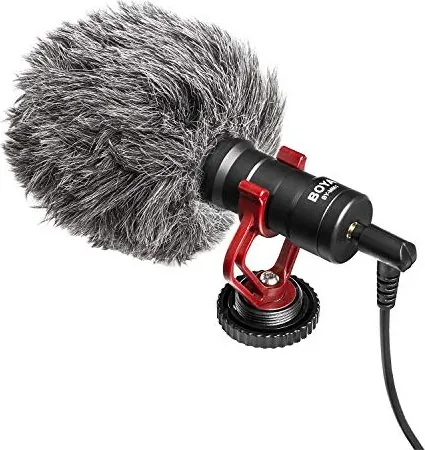
The package includes a 3.5 mm TRS cable for cameras, a 3.5 mm TRRS cable for smartphones, a shock mount, a furry windscreen, and relevant adapter cables to ensure compatibility with a wide range of devices.
Is this answer helpful?
Confirm you are using the correct cable type for your device (TRRS for phones, TRS for cameras/recorders), ensure the connector is fully seated, and check the recording app or device input settings. If problems persist, consult support at [email protected].
Is this answer helpful?
The BY-MM1 is optimized for on-camera and mobile field recording—vlogs, interviews, and run-and-gun setups. While it improves on built-in mics, studio applications typically require higher-end condenser microphones and dedicated preamps for critical audio work.
Is this answer helpful?
Advantages and Disadvantages
Advantages

- Compact, lightweight metal construction (86 g) for easy portability and durability.
- Cardioid polar pattern reduces off-axis noise for clearer dialogue and focused recordings.
- Includes TRS and TRRS cables plus shock mount and furry windshield for broad compatibility and outdoor use.
- Plug-and-play design with no battery required simplifies setup and use across devices.
- Frequency response (35–18 kHz) and 76 dB SPL handling provide usable fidelity for speech and general-purpose recording.
Disadvantages

- Relies on device input quality; audio quality can be limited by smartphone or camera preamps.
- No onboard gain control or battery means limited signal boost for very quiet sources.
- Compact size and cardioid pattern limit versatility for wide ambient or multi-source recording.
- 3.5 mm jack dependency may require adapters for newer devices without headphone/mic ports.
- Windshield and shock mount mitigate but do not fully eliminate wind or severe handling noise.
Product Specification
Type
Camera microphone
Design
analog
Transducer principle
Condenser
Polar pattern
Cardioid
Connector
Jack plug (0.14 in jack)
Frequency range
35Hz-18kHz (+-3dB)
Signal-to-noise ratio (SNR)
76dB
Included accessories
Microphone shock mount, Windshield
Dimensions
3.19x0.87x0.87 in
Weight
0.19 lb
Product Description
Boya BY-MM1 — Compact Cardioid Microphone
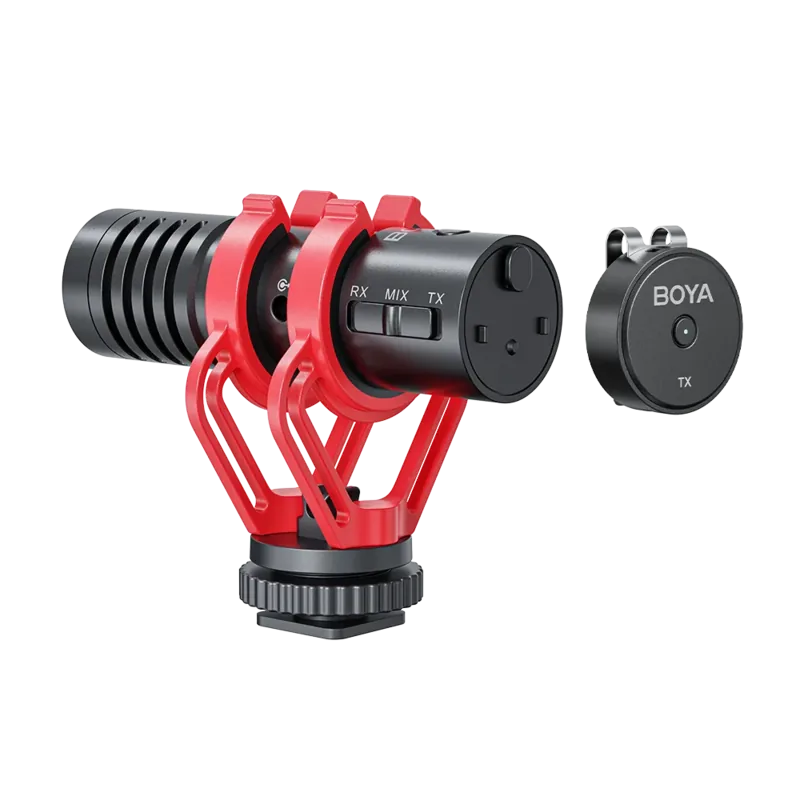
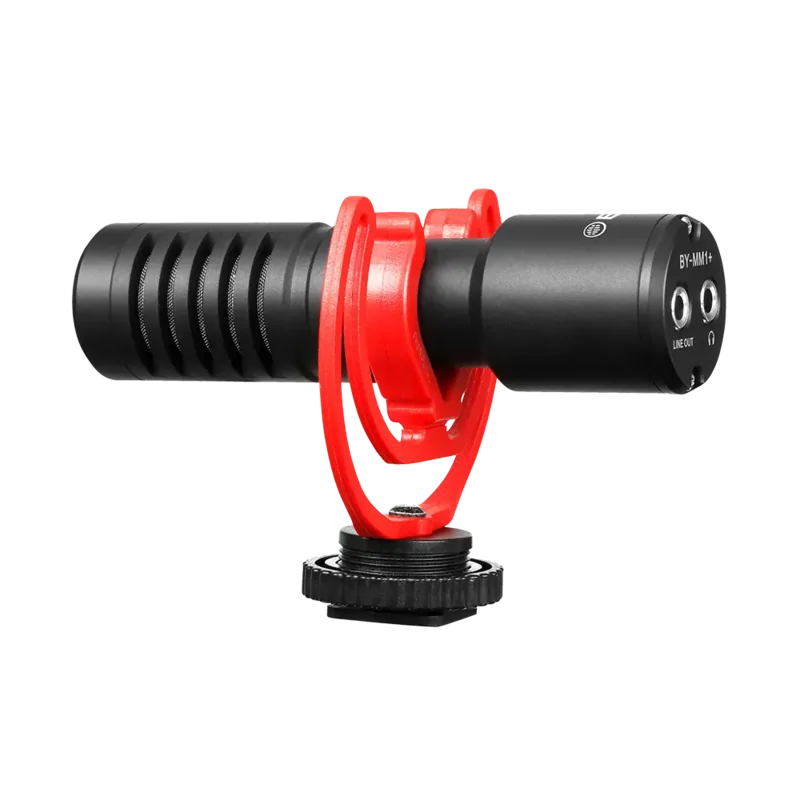
The Boya BY-MM1 is a compact, on-camera cardioid condenser microphone built for creators who need clear, focused audio without bulky gear. Designed to work out of the box with smartphones, DSLRs, camcorders, audio recorders and computers, the BY-MM1 delivers improved vocal clarity compared with built-in device microphones while staying lightweight and portable.
Key Features and Build
Constructed with a rugged metal housing and weighing just 86 grams, the BY-MM1 balances durability with mobility. Its cardioid polar pattern reduces off-axis noise and captures sound primarily from the front, making it ideal for vlogging, interviews, run-and-gun shooting, and content creation in varied environments. The microphone requires no battery and connects via included 3.5 mm TRS and TRRS cables, ensuring compatibility across cameras and smartphones.
Performance and Accessories
Frequency response spans approximately 35 Hz to 18 kHz (±3 dB), and the microphone offers a sensitivity around -42 dB (±1 dB). The kit includes an anti-shock mount to minimize handling noise and vibrations, plus a furry windshield to suppress wind and environmental noise during outdoor recording. Its plug-and-play design simplifies setup: mount to a camera hot shoe or plug directly into a smartphone or recorder.
Practical Use
For camera or audio recorder use, attach the microphone to the hot shoe and connect via the 3.5 mm TRS cable to the device’s audio input. For smartphones, plug the TRRS cable into the headphone/mic jack and record through your preferred app. Keep the mic close to the subject to minimize ambient noise; positioning and environment remain important factors for best results.
Final Thoughts
The BY-MM1 is a versatile, affordable solution for creators seeking better on-camera sound without complex setups or extra power requirements. Its solid accessory bundle and broad device compatibility make it a reliable tool for improving production value on a budget.
Notes
- Works with most cameras, camcorders, audio recorders, smartphones, tablets, and PCs when using the correct cable (TRS for cameras/recorders, TRRS for smartphones).
- No battery needed—plug-and-play operation.
- Use the included windshield outdoors and the shock mount to reduce handling noise.
Search for 67,732 Manuals online


Type-in Brand or Model
EiusFuga14
10 months ago
Does this microphone have noticeable background noise, and is it suitable for video production or only for simple voice recordings?
Manual.ly
10 months ago
Some users report a relatively audible background noise, especially when recording at normal room volume or with fully amplified input. If you are doing video production, this may be noticeable in quiet scenes. For best results, record in a quieter environment, speak closer to the mic, and avoid excessive gain. Use appropriate audio settings in your recorder/software and consider noise reduction or a basic high-pass filter if needed. For everyday speech, casual voice notes, or less demanding recordings, it can still be acceptable, depending on your environment and settings.