
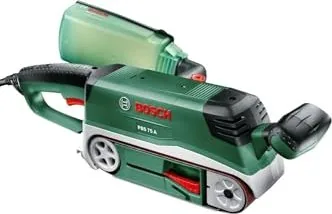
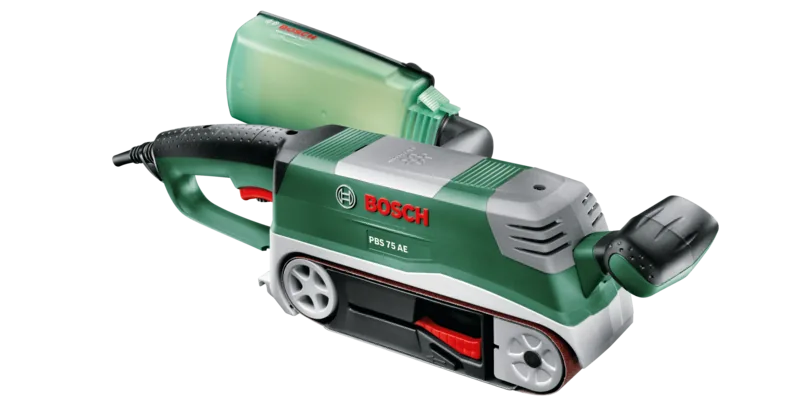
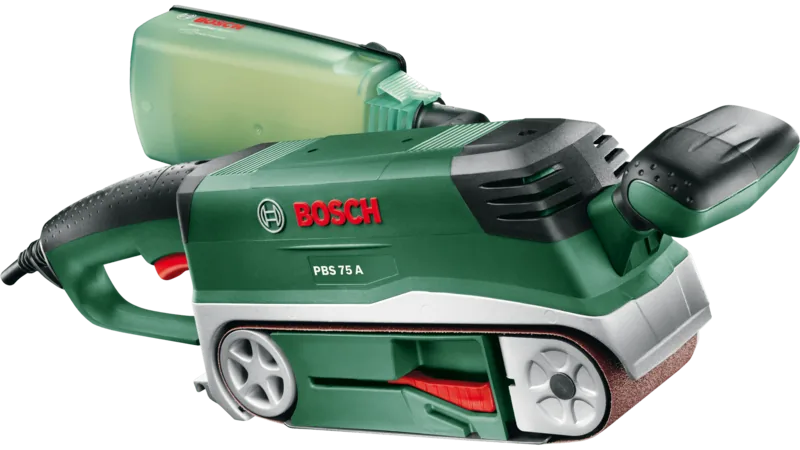
Bosch DIY PBS 75 A Manual
PDF manual · 72 Pages
English


Quick check
Incorrect answer, please try again.
Chat with your Bosch DIY PBS 75 A manual using AI
Get instant AI answers from your Bosch DIY PBS 75 A manual
Ask anything about the Bosch DIY PBS 75 A. Answers come from this manual, with the pages they are based on.
PBS 75 A Maintenance Schedule
Empty the dust box after 5 minutes of operation and clean the filter element with a soft brush to ensure optimal suction.
Regularly clean the power tool's air vents with a brush to remove adherent sanding dust and prevent electrical hazards.
Remove the protection cover from time to time and clean the dust passage to maintain optimum suction capacity.
Ask a Question
Do you recommend PBS 75 A?
Yes NoFrequently Asked Questions
The PBS 75A is intended for dry sanding of wood, plastics, metal, filler compounds and varnished surfaces. For hazardous materials or asbestos-containing items, only qualified specialists should perform the work and appropriate extraction must be used.
Is this answer helpful?
Pivot the clamping lever fully out to release the belt, fit the new belt ensuring arrow directions match, pivot the lever back, lift and switch on the sander to auto-center. If needed, use the front adjustment screw to set a 2–3 mm clearance from the aluminum housing.
Is this answer helpful?
Use the integrated Microfilter dust box for normal use and connect an appropriate external vacuum for finer or hazardous dusts. Empty the dust box regularly (recommended after about 5 minutes under heavy load) and clean the filter element to maintain suction. For carcinogenic dusts, use a specialist vacuum and a P2 respirator.
Is this answer helpful?
Choose grit by task: coarse 40–60 for heavy stock removal, medium 80–120 for leveling and planing, fine 180–240 for finishing. For the PBS 75 AE model, select belt speed (200–350 m/min) with the thumbwheel: higher speed increases removal and can improve finish depending on material.
Is this answer helpful?
Always wear eye protection, hearing protection (noise ~93 dB(A)), and a dust mask (P2 recommended). Avoid loose clothing and jewelry, keep bystanders away, and use residual-current device protection outdoors or in damp conditions.
Is this answer helpful?
Disconnect power before maintenance, keep ventilation slots and dust passages clean, brush off adhered dust, inspect moving parts and belts regularly, replace damaged belts, and have repairs or cord replacements performed by authorized Bosch service centers with original parts.
Is this answer helpful?
Advantages and Disadvantages
Advantages

- High removal capacity with compact 710–750 W motor for fast sanding.
- AE model offers adjustable belt speed (200–350 m/min) for material-specific control.
- Integrated Microfilter dust box plus external extraction compatibility for cleaner work.
- Lightweight (around 3.4–3.5 kg) and dual insulated grips enable stable two-hand operation.
- Straightforward belt change with automatic centering and manual tracking adjustment.
Disadvantages

- High noise level (approx. 93 dB(A)) requires mandatory hearing protection.
- Dust box requires frequent emptying (about every 5 minutes under heavy use).
- Not intended for wet sanding; water ingress risks electric shock.
- Sanding belts used on metal cannot be repurposed for other materials.
- Vibration level (ah ≈ 3.5 m/s²) may require exposure-management measures for long sessions.
Product Specification
Type
Belt Sander
Power
710W (230V)
Belt Speed
984.25ft/min
Sanding Surface
6.50x2.99in (LxW)
Belt Length
20.98in
Special Features
Softgrip, Auxiliary Handle, Dust Extraction
Weight
7.50lb
Package Contents
Dust Collection Box
Product Description
Bosch DIY PBS 75A Electric Belt Sander Manual
The Bosch DIY PBS 75A electric belt sander is a compact, high-removal machine designed for dry sanding of wood, plastics, metal, fillers and painted surfaces. With a 75 mm wide, 533 mm long sanding belt and a robust 710–750 W motor (depending on model), it delivers strong material removal while remaining easy to handle for DIYers and pros alike. The tool’s form factor emphasizes two insulated gripping surfaces and a secure two-hand operation to maximize control and safety during extended use.
Key features and usage
The PBS 75A family includes models with fixed belt speed (350 m/min) and an AE variant offering belt-speed preselection (200–350 m/min) via a thumbwheel, enabling adaptable performance across coarse and fine sanding tasks. The unit incorporates a Microfilter dust box for integrated extraction and supports external vacuum connection for cleaner operation when sanding hazardous or fine dusts. Changing belts is straightforward using the pivoting clamping lever; automatic centering assists on power-up, and a front adjustment screw provides manual tracking correction if needed.
Practical operation advice recommends light, even pressure—letting the sander’s weight do the work—working with overlapping strokes in the wood grain direction, and choosing grit according to task: coarse (40–60) for heavy stock removal, medium (80–120) for leveling and planing, and fine (180–240) for finishing. Regularly empty the dust box (recommended after about 5 minutes of continuous use) and clean the filter to maintain extraction efficiency.
Safety and maintenance highlights
Extensive safety guidance covers electrical precautions (proper plugs, dry conditions, residual-current protection outdoors), personal protective equipment (eye, hearing and dust protection), and dust handling (use suitable extraction, P2 respirators for wood dust, and special vacuum systems for carcinogenic or toxic dusts). The manual stresses routine maintenance: keep vents clean, brush off adhered dust, inspect moving parts, and have repairs performed only by qualified Bosch service centers using original parts. Noise levels are high—sound pressure about 93 dB(A)—so hearing protection is mandatory.
Notes
- Use only Bosch original sanding belts and accessories for best performance and safety.
- Avoid using a belt that has been used on metal for wood or other materials.
- Store sanding belts hanging and uncreased to prevent damage.
- For heavy-duty or carcinogenic dusts, use a dedicated certified vacuum.
Search for 67,706 Manuals online


Type-in Brand or Model
Garth Miller
10 months ago
Was the ordering process and handling of my purchase smooth?
Manual.ly
10 months ago
Based on customer feedback, the ordering process and purchase handling are straightforward and were completed to buyers' satisfaction. After you place your order, keep an eye on your confirmation and any follow-up communication related to fulfillment. If anything is unclear or delayed, our support team can help you check the status and resolve issues quickly.