
Benning PV 3 Manual
PDF manual · 26 Pages
English



Quick check
Incorrect answer, please try again.
Chat with your Benning PV 3 manual using AI
Get instant AI answers from your Benning PV 3 manual
Ask anything about the Benning PV 3. Answers come from this manual, with the pages they are based on.
Ask a Question
Do you recommend PV 3?
Yes NoFrequently Asked Questions
It measures PV open-circuit voltage from 5.0 V to 1500 V DC and short-circuit current from 0.50 A to 40.00 A DC. With an optional BENNING SUN 2, it can also capture solar irradiance, PV module temperature, and ambient temperature.
Is this answer helpful?
The connected PV generator must not exceed 1500 V DC open-circuit voltage, 40 A short-circuit current, or 45 kW DC power. Exceeding these limits can stop the measurement and may damage the tester.
Is this answer helpful?
Yes. The internal memory holds up to 999 records, including voltage, current, and date and time information. Data can be transferred to a computer through USB and exported in CSV or TXT format using compatible BENNING data logging software.
Is this answer helpful?
Yes. The display provides a visual polarity warning if the DC connections are reversed. Automatic measurement remains blocked until the correct polarity is restored, helping prevent incorrect test procedures.
Is this answer helpful?
It is designed for PV measurements in dry conditions. With the cover closed, it has IP64 protection against dust and splashing water, including precipitation. Users must still follow the specified environmental limits and electrical safety procedures.
Is this answer helpful?
The BENNING SUN 2 adds irradiance, module temperature, and ambient temperature readings to PV electrical test results. These values provide useful operating context when assessing system performance and can be stored with the electrical measurements.
Is this answer helpful?
Advantages and Disadvantages
Advantages

- Measures open-circuit voltage up to 1500 V DC for high-voltage photovoltaic systems.
- Measures short-circuit current up to 40 A DC with a maximum DC power limit of 45 kW.
- Stores up to 999 timestamped measurement records and transfers results by USB.
- Optional BENNING SUN 2 pairing adds irradiance, module temperature, and ambient temperature data.
- Automatic polarity detection, voltage alerts, and thermal monitoring support safer testing.
Disadvantages

- Designed for qualified electrical personnel and requires strict use of personal protective equipment.
- Not intended for continuous operation while connected to a PV generator.
- The BENNING SUN 2 irradiance and temperature functions require optional accessories.
- Wireless range is about 30 meters in open areas and can be reduced by obstacles or interference.
- Operation is limited to specified voltage, current, power, temperature, and dry-environment conditions.
Product Description
Benning PV 3 Photovoltaic Installation Tester - Read, Download & Print Free
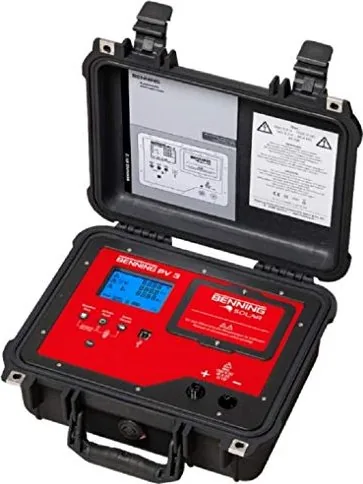
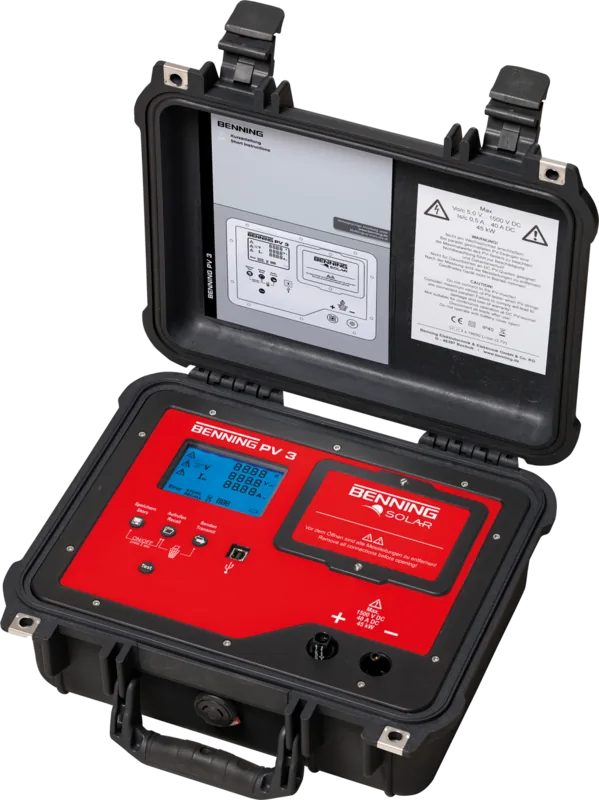
The Benning PV 3 Photovoltaic Installation Tester is a professional battery-powered instrument designed for commissioning and periodic inspection of grid-connected photovoltaic systems. Built for qualified electrical personnel, it helps verify essential PV generator values quickly and clearly across modules, strings, and PV fields. Its measurement capabilities support testing practices aligned with VDE 0126-23 and DIN EN 62446 requirements.
High-Voltage PV Testing Performance
The tester measures open-circuit voltage up to 1500 V DC and short-circuit current up to 40 A DC, with a maximum DC power rating of 45 kW. This makes it suitable for modern high-voltage solar installations, including parallel-connected PV strings within the stated limits. Open-circuit voltage is measured automatically when the tester is connected, while the short-circuit current test starts through the automatic test control.
A clear, backlit LCD presents test progress, readings, warnings, memory status, and battery condition. Automatic polarity detection provides a visual warning when connections are reversed, preventing the automatic test from continuing until polarity is corrected. A dangerous-voltage indication also alerts the user when more than 30 V is detected at the leads.
Data Storage and Transfer
For organized inspection work, the Benning PV 3 can store up to 999 measurement records. Each stored result includes open-circuit voltage, short-circuit current, and a date and time stamp. Results can be recalled directly on the device or transferred to a PC through the USB Type B interface. Compatible data logging software supports export in CSV or TXT formats, making results easier to review and incorporate into maintenance workflows.
The optional BENNING SUN 2 expands the testing setup through wireless measurement of solar irradiance, PV module temperature, and ambient temperature. When paired, these environmental readings can be stored alongside the electrical test values. The typical outdoor wireless range is approximately 30 meters, although metal structures and interference may reduce it.
Built for Field Work
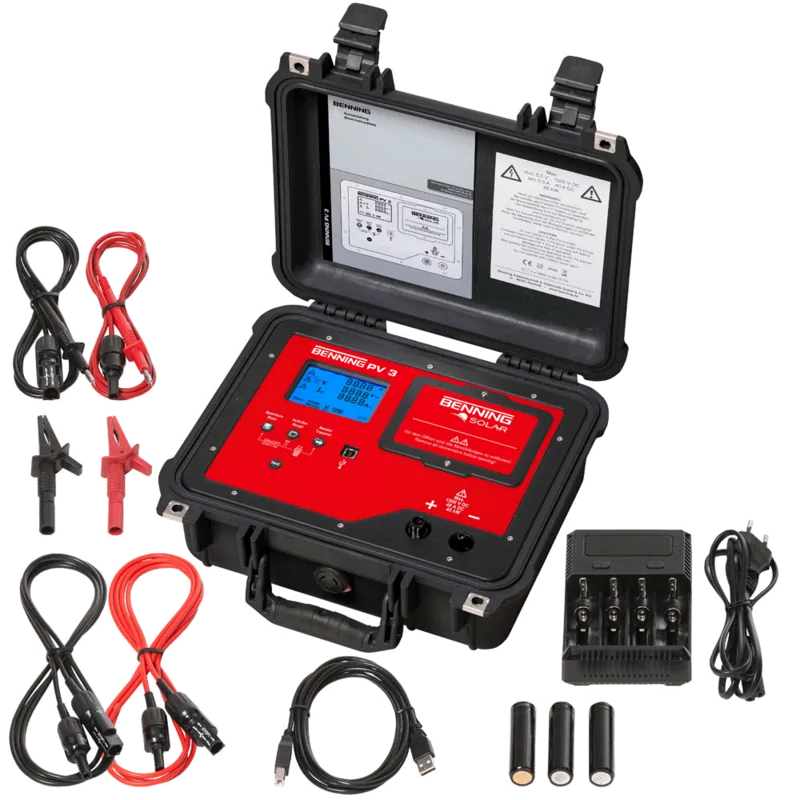
The unit operates on three protected 3.7 V 18650 lithium-ion rechargeable batteries and includes a charger. Supplied accessories include test leads, crocodile clips, MC4-compatible PV leads, a USB cable, and a calibration certificate. With the cover closed, its IP64 protection supports use in splashing water and dusty working conditions.
Note: The PV generator must be isolated from the inverter before testing. Never disconnect test leads during an active test, and always use appropriate personal protective equipment.
Note: The tester is intended for short-duration measurements, not continuous connection to a PV generator. Disconnect it immediately after testing and allow it to cool if a temperature warning appears.
Search for 67,706 Manuals online


Type-in Brand or Model