
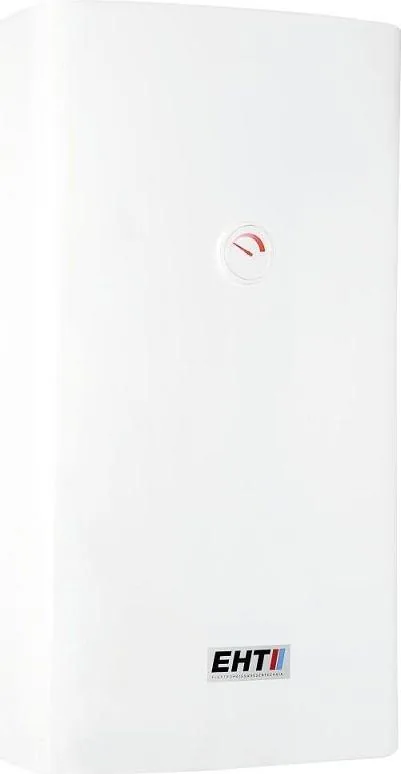
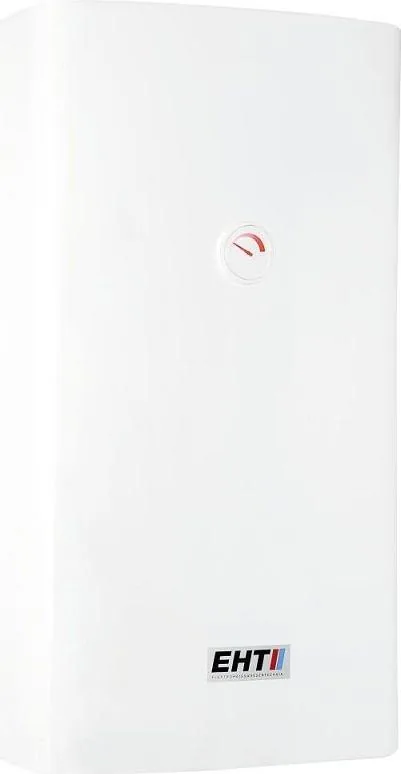
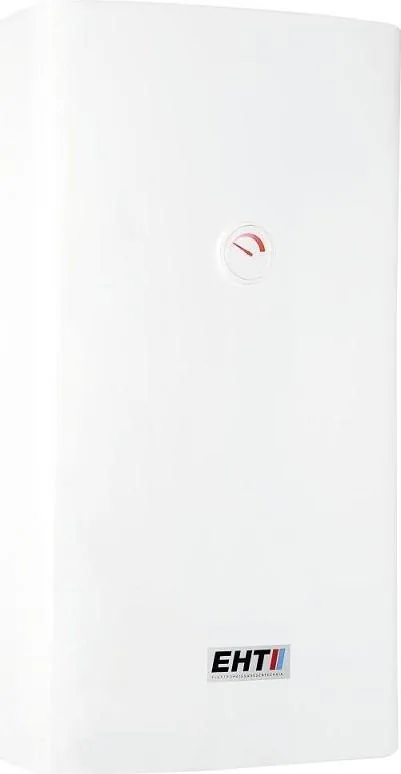
Austria Email EHT Manual
PDF manual · 44 Pages
English



Quick check
Incorrect answer, please try again.
Chat with your Austria Email EHT manual using AI
Get instant AI answers from your Austria Email EHT manual
Ask anything about the Austria Email EHT. Answers come from this manual, with the pages they are based on.
EHT Maintenance Schedule
Operate the safety valve test knob to ensure water flows freely into the drain funnel. Check if the valve reseats properly after release.
Check for leaks or failure to open during heating. Replace the complete valve if damaged or leaking permanently.
In hard water areas, have a professional remove limescale via the flange opening using wood tools; do not use chemical descalers.
An expert must check the installed reactive anode to maintain warranty validity; do not damage the shunt resistor below the heating screw.
Free maintenance reminders
Timed to your purchase date. Always free, unsubscribe anytime.
Ask a Question
Do you recommend EHT?
Yes NoFrequently Asked Questions
The Austria Enamel EHT range covers electric storage water heaters from 50 to 150 litres (50, 80, 100, 120, and 150 L), allowing you to match capacity to household usage.
Is this answer helpful?
The heater warms the stored service water and the temperature controller automatically switches heating on and off to hold the selected tank temperature. If water temperature drops due to hot water withdrawal or cooling, the heating resumes until the target temperature is reached.
Is this answer helpful?
The knob provides four main positions: frost protection (up to about 30 C), about 40 C for warm use, an economical setting around 60 C, and about 80 C for hotter storage. Notes: the left end stop is not a full off position, and day-current use should not exceed the economical setting.
Is this answer helpful?
For tanks marked nominal pressure 6 bar, pressure-proof connection is allowed with line pressures up to 5.5 bar, typically with a pressure reducing valve if needed. The system must be fitted only with a tested membrane safety valve or a safety valve combination and installed with correct discharge routing.
Is this answer helpful?
The safety valve venting facility should be operated periodically, with a suggested interval of every 6 months to avoid blockages from limescale. If malfunctions occur (leaks or no response during heating), a licensed professional should repair or replace the safety valve.
Is this answer helpful?
For strongly calciferous water, descaling is recommended by a specialist after about 1 to 2 years of operation. Cleaning is performed through the flange opening, using a new seal when reassembled, and the enamelled interior should not be treated with unsuitable descaling chemicals.
Is this answer helpful?
First check the circuit breaker or fuse and confirm the temperature controller setting. Do not attempt further internal troubleshooting. Contact a licensed installer or customer service, and provide the model designation and manufacturing number from the rating plate.
Is this answer helpful?
Advantages and Disadvantages
Advantages

- Efficient operation with thermostat-controlled heating that cycles on and off to maintain the selected tank temperature.
- Low standby energy use supported by high-quality CFC-free PU foam insulation and measured 24-hour consumption.
- Durable enamelled internal boiler designed for long-term storage of service water.
- Practical temperature settings (frost protection, about 40 C, about 60 C eco, about 80 C) to match daily needs.
- Safety temperature limiter that stops further heating at a maximum water temperature of 110 C.
Disadvantages

- Installation and first commissioning must be carried out by a licensed professional in accordance with the requirements.
- Requires frost-free operation and correct access for maintenance, repair, or replacement.
- Left stop on the temperature knob does not provide a true off/shutdown position for heating.
- Proper pressure-proof plumbing depends on correctly installed, tested membrane safety valves and correct line pressures.
- Ongoing upkeep is required, including safety valve checks and descaling for hard water.
Product Specification
Energy efficiency class
C
Temperature control
95-176°F
Construction type
closed (pressure-resistant)
Mounting type
Wall mounting
Special features
Frost protection
Noise level
15dB(A)
Product Description
Austria Enamel EHT Manual: Austria Enamel EHT Electric Storage Water Heaters (50-150 L)
Austria Enamel EHT brings efficient electric hot water storage to everyday life with a durable, enamelled internal boiler and an automatic heating cycle. A heating unit warms the service water, while the built-in temperature controller turns operation on and off to maintain your selected tank temperature. If the water cools between draws, heating resumes until the setpoint is reached.
Designed for real-world hot water use, the EHT range is offered in sizes from 50 to 150 litres. Typical daily demand varies with household size, fixtures, insulation, pipe runs, and personal habits, so choosing the right tank volume helps avoid unnecessary standby losses. The control knob offers four main positions, including frost protection (up to about 30 C), practical comfort around 40 C, an economical setting around 60 C, and higher heat around 80 C. This makes it easier to match usage patterns while supporting energy savings.
Energy efficiency is a core feature: CFC-free PU foam insulation helps reduce heat loss, and standby energy consumption is measured at about 0.72 to 1.455 kWh per 24 hours depending on tank size. Lower set temperatures are especially economical, and keeping the temperature only as high as needed can also reduce limescale formation inside the tank.
For pressure-proof installation, tanks marked with a nominal pressure of 6 bar can be connected using a maximum line pressure up to 5.5 bar. The system must include a tested membrane safety valve or safety valve combination, installed correctly to protect the tank during expansion and to prevent damage from overpressure. A safety temperature limiter also shuts down further heating if the water temperature reaches a maximum of 110 C, adding an extra layer of protection.
Key results
- Stable hot water temperatures thanks to automatic on/off control of the heating cycle.
- Low standby energy thanks to CFC-free PU foam insulation.
- Efficient daily performance through selectable temperature positions matched to demand.
- Safer pressure-proof operation when paired with the correct safety valve arrangement.
Notes
- Installation and first commissioning should be performed by a licensed professional.
- The room must be frost-free; the water heater must be accessible for maintenance.
- For service life: ventilate the safety valve periodically (every 6 months), and plan regular checks and descaling for hard water; have the protective anode checked every max 2 years.
Search for 67,706 Manuals online


Type-in Brand or Model