
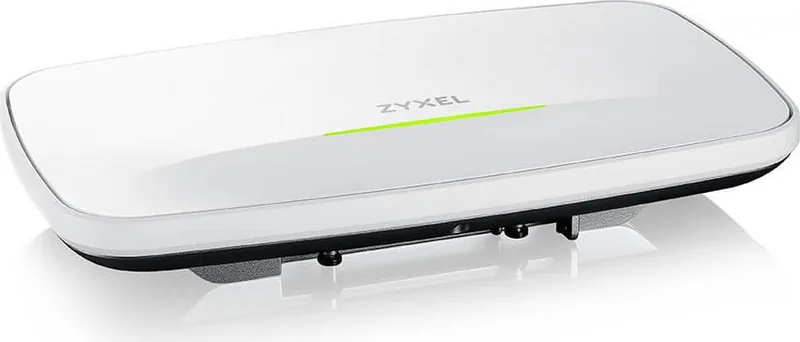
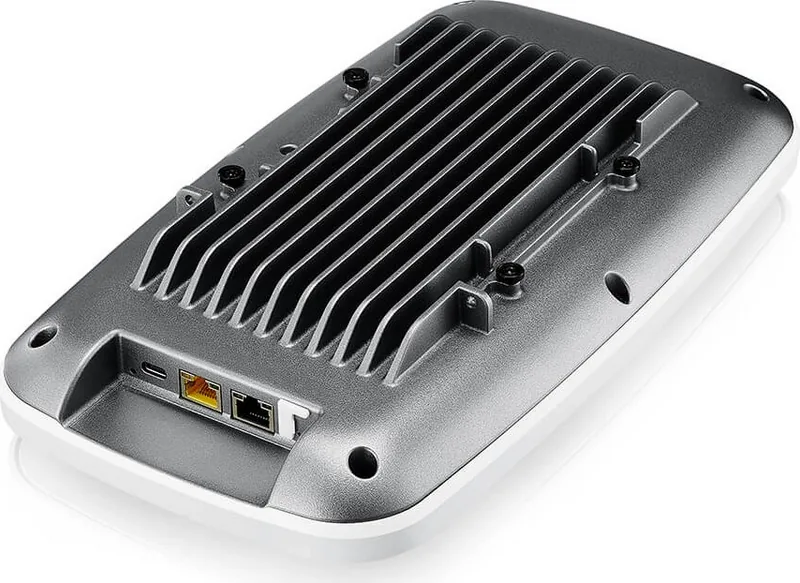
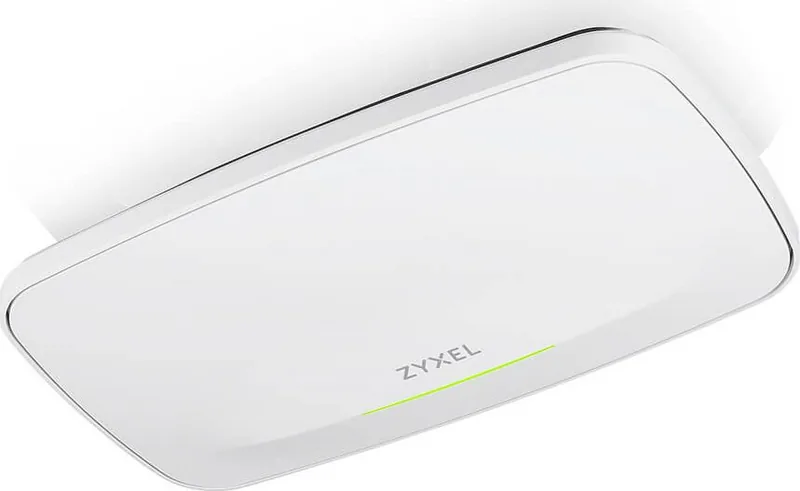
Zyxel WBE660S Manual
PDF manual · 324 Pages
English



Quick check
Incorrect answer, please try again.
Chat with your Zyxel WBE660S manual using AI
Get instant AI answers from your Zyxel WBE660S manual
Ask anything about the Zyxel WBE660S. Answers come from this manual, with the pages they are based on.
Ask a Question
Do you recommend WBE660S?
Yes NoFrequently Asked Questions
The WBE660S is a tri-radio access point supporting 2.4 GHz, 5 GHz and 6 GHz bands with WiFi 7 (IEEE 802.11be) capabilities, enabling high throughput and low-latency operation where client devices and regulations allow.
Is this answer helpful?
You can manage it in standalone mode via the built-in Web Configurator, centrally using Zyxel Nebula Control Center (cloud), or via an AP Controller (AC) such as ZyWALL/NXC using CAPWAP. Management mode affects local access and available features.
Is this answer helpful?
Yes. It supports WPA3 (personal and enterprise), RADIUS authentication for enterprise networks, certificate import/management, and comprehensive security profiles for segmented SSIDs and guest policies.
Is this answer helpful?
Yes. It supports WDS root and repeater modes, wireless bridging to extend wired networks via a repeater, and requires consistent WDS SSIDs and pre-shared keys for standalone WDS links; note DFS and band restrictions may apply.
Is this answer helpful?
The AP supports PoE standards including IEEE 802.3at and 802.3bt with power detection. Some high-power modes or full feature operation may require an 802.3bt-capable switch or injector to provide sufficient power.
Is this answer helpful?
Yes. 6 GHz availability, channel sets and transmission rules vary by country. Always confirm local regulations before enabling 6 GHz operation or high-width channels to ensure legal compliance.
Is this answer helpful?
The WBE660S supports up to 64 SSID profiles and three radios, enabling multiple virtual APs (MBSSID), traffic segmentation, and the ability to assign differing security, QoS, and VLAN settings per SSID.
Is this answer helpful?
Advantages and Disadvantages
Advantages

- Tri-radio WiFi 7 (2.4/5/6 GHz) with BandFlex for flexible band assignment
- High throughput via wide channel support (6 GHz up to 320 MHz) and advanced roaming
- Multiple management modes: standalone, Nebula cloud, or AP Controller
- Enterprise security: WPA3, RADIUS, and comprehensive certificate handling
- WDS, wireless bridging, MBSSID, load balancing and DCS for complex deployments
Disadvantages

- 6 GHz features and channels limited by country-specific regulations
- Advanced features may require Nebula or AC for full functionality
- Complex configuration can demand experienced administrators
- Full power/feature sets may need 802.3bt PoE infrastructure
- Repeater mode and some frequencies have operational restrictions (e.g., DFS)
Product Specification
LAN
1x 10GBase-T, 1x 1000Base-T (PoE++ PD)
Wireless
WLAN 802.11a/b/g/n/ac/ax/be (Wi-Fi 7), simultaneous
Transfer Rate
1376Mbps (2.4GHz), 8640Mbps (5GHz), 11520Mbps (6GHz)
Security
WEP, WPA, WPA2, WPA3
Antennas
internal
Ports
1x USB-C (Power connection)
Power Consumption
not specified (consumption, operation), not specified (max. power supply output), 41W (consumption, max. PoE), 15V/3A/45W (consumption, max. USB-C)
Dimensions
12.20x7.01x2.20in
Special Features
IPv6, VLAN, MU-MIMO, Roaming, Mesh (shared band)
Band Capability
Tri Band (simultaneous), Mesh (shared band)
Manufacturer's Warranty
two years
Transfer Rate 802.11be (Wi-Fi 7) 2.4GHz
1376Mbps (Spatial Streams: 4x4, Bandwidth: 40MHz, Modulation: 4096-QAM)
Transfer Rate 802.11be (Wi-Fi 7) 5GHz
8640Mbps (Spatial Streams: 4x4, Bandwidth: 240MHz, Modulation: 4096-QAM)
Transfer Rate 802.11be (Wi-Fi 7) 6GHz
11520Mbps (Spatial Streams: 4x4, Bandwidth: 320MHz, Modulation: 4096-QAM)
Note
In some cases, the manufacturer's maximum consumption specification only corresponds to the maximum output power of the power supply unit and is therefore not meaningful information for everyday power consumption.
Product Description
ZyXEL WBE660S, BE22000 Manual — Product Overview
The ZyXEL WBE660S represents Zyxel’s next step into WiFi 7 access points, delivering tri-radio performance across 2.4 GHz, 5 GHz and 6 GHz bands with support for IEEE 802.11be. Designed for high-density and low-latency environments, the WBE660S targets enterprise and service-provider deployments that require wide channel widths (up to 320 MHz in 6 GHz) and BandFlex capabilities to optimize traffic across available bands. With three radios and advanced features like MBSSID, WDS (root/repeater), wireless bridging, and comprehensive security profiles (WPA3 support, RADIUS), the WBE660S is built to handle numerous SSIDs, heavy concurrent users, and diverse service classes such as guest, VoIP, and prioritized media traffic.
Key Product Highlights
The WBE660S supports flexible management modes — standalone, Nebula Control Center (cloud), or AP Controller (AC) — allowing centralized orchestration or local configuration depending on deployment needs. It integrates modern management tools, including a Web Configurator, CLI, SNMP, and utilities like Zyxel One Network (ZON) for discovery and batch operations. Power options include IEEE 802.3bt and 802.3at PoE with power detection, while robust firmware (6.60–6.65 range at time of the manual) and certificate handling enable secure operations.
Performance-focused features include multi-radio BandFlex to distribute client loads across 2.4/5/6 GHz, support for large numbers of SSID profiles (up to 64), advanced roaming (802.11k/v/r), rogue AP detection with RF monitoring, load balancing and dynamic channel selection (DCS). Hardware and operational conveniences such as LED locator/suppression, grounding instructions, console access, and USB-C power options facilitate installation and onsite maintenance.
The WBE660S is intended for scenarios requiring high throughput and low latency — enterprise office floors, dense public venues, and campus or multi-site deployments. It supports Wireless Distribution System (WDS) for extending networks with repeaters and bridges, and provides extensive VLAN, QoS and security controls to segment and prioritize traffic.
Notes
- Band availability and regulatory channel support vary by country; verify local regulations before enabling 6 GHz channels.
- When managed by Nebula or an AP Controller, local Web Configurator access may be restricted; plan management mode carefully.
- Use matching WDS SSID and repeater pre-shared keys when creating WDS links in standalone mode.
Pros and Cons
Pros:
- Tri-radio WiFi 7 support with 2.4/5/6 GHz and BandFlex for flexible band allocation
- High throughput with wide channel support (6 GHz up to 320 MHz) and advanced roaming (k/v/r)
- Multiple management modes: Nebula cloud, AP Controller, or standalone
- Strong security: WPA3 support, RADIUS integration, certificate management
- Enterprise features: MBSSID, WDS root/repeater, wireless bridging, load balancing
Cons:
- 6 GHz operation subject to country-specific regulations and channel restrictions
- Some advanced features require Nebula or AC management to unlock full capabilities
- Complex feature set may require experienced network admins for optimal tuning
- Power requirements may need 802.3bt PoE in certain configurations
- Repeater mode has restrictions (e.g., specific DFS/channel limitations)
Most Important Results — WBE660S
- Tri-radio WiFi 7 support (2.4/5/6 GHz) enabling higher capacity and lower latency for dense deployments.
- BandFlex and wide channel operation (up to 320 MHz in 6 GHz) to maximize throughput where client support exists.
- Advanced security including WPA3, RADIUS, and certificate management for enterprise-grade authentication and encryption.
- Flexible management: standalone Web GUI, Nebula Control Center cloud management, or AP Controller (CAPWAP).
- WDS, wireless bridge and MBSSID support for network extension and multi-service segmentation.
Most Important Results — BE22000 (Contextual/Related)
- BE22000 refers to the WiFi 7/802.11be class capability (extremely high throughput class) enabling multi-gigabit aggregated rates.
- Supports wider channel widths and multi-link operation concepts for improved latency and throughput aggregation.
- Designed for high-density and low-latency applications such as enterprise, stadiums, and service-provider deployments.
- Requires compatible client devices and regulatory support for full 6 GHz and 320 MHz channel advantages.
- Often paired with modern PoE infrastructure (802.3bt) and centralized management for scale and policy control.
FAQ
{ "question": "What radios and bands does the ZyXEL WBE660S support?", "answer": "The WBE660S is a tri-radio AP supporting 2.4 GHz, 5 GHz and 6 GHz bands with WiFi 7 (IEEE 802.11be) capabilities, including wide channel widths in 6 GHz for high throughput." },
{ "question": "Which management modes are available for the WBE660S?", "answer": "You can manage the device in standalone mode via its Web Configurator, through Zyxel Nebula Control Center (cloud), or by an AP Controller (AC) such as ZyWALL/NXC, each offering different centralized features and restrictions." },
{ "question": "Does the WBE660S support WPA3 and enterprise authentication?", "answer": "Yes. The device supports modern security including WPA3 (personal and enterprise), RADIUS-based enterprise authentication, and certificate management for secure deployments." },
{ "question": "Can I use the WBE660S as a repeater or wireless bridge?", "answer": "Yes. The WBE660S supports WDS root and repeater modes and can be configured as a wireless bridge to extend wired networks via a repeater; matching WDS SSID and pre-shared keys are required in standalone WDS setups." },
{ "question": "What power options does the WBE660S require?", "answer": "The AP supports PoE with IEEE 802.3bt and 802.3at standards, and includes power detection; certain high-power modes and full feature sets may require 802.3bt-capable switches or injectors." },
{ "question": "Are there regional limitations for 6 GHz operation?", "answer": "Yes. 6 GHz band availability and permissible channels differ by country. Always verify local regulatory restrictions before enabling 6 GHz or DFS channels to ensure compliance." },
{ "question": "How many SSIDs and radios are supported?", "answer": "The WBE660S supports up to 64 SSID profiles and three radios, allowing multiple virtual APs (MBSSID) and service segmentation across bands." }
]
Search for 67,732 Manuals online


Type-in Brand or Model