
Zendure SuperBase V6400 Manual
PDF manual · 8 Pages
English



Quick check
Incorrect answer, please try again.
Chat with your Zendure SuperBase V6400 manual using AI
Get instant AI answers from your Zendure SuperBase V6400 manual
Ask anything about the Zendure SuperBase V6400. Answers come from this manual, with the pages they are based on.
Ask a Question
Do you recommend SuperBase V6400?
Yes NoFrequently Asked Questions
No, they are incompatible due to differences in battery types used within each system.
Is this answer helpful?
You can connect up to four Satellite Battery units to each SuperBase V for expansion.
Is this answer helpful?
Yes, the system supports pass-through charging for simultaneous input and output operations.
Is this answer helpful?
Yes, it accepts solar panels with voltage between 12V and 150V for charging input.
Is this answer helpful?
Charge and discharge to 30 percent then recharge to 60 percent every three months.
Is this answer helpful?
Place it in a safe open area, let it dry completely, and dispose of it properly.
Is this answer helpful?
No, the XT90 port is an input by default and can be switched to output via the app.
Is this answer helpful?
Advantages and Disadvantages
Advantages

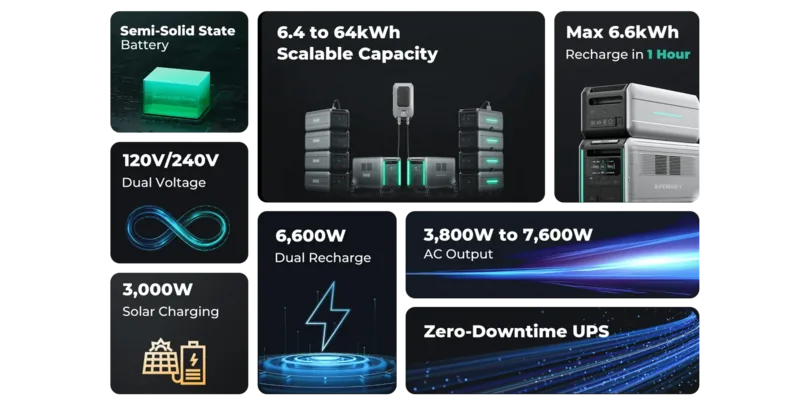
- Semi-solid state battery chemistry ensures over 6000 cycles for long lifespan
- Supports stacking of up to four satellite batteries for massive capacity expansion
- Versatile output ports including Anderson, XT90, and Anderson outlet for diverse needs
- Remote monitoring and control available through the Zendure mobile application interface
- Pass-through charging capability allows simultaneous charging and discharging of connected loads
Disadvantages

- Weight is substantial at approximately 99 to 101 pounds making transport difficult
- Satellite battery connects only to SuperBase V units not compatible with older models
- XT90 port defaults to input mode and requires app switching to output capability
- Long-term storage requires specific charge cycles every three months to prevent damage
- Temperature sensitivity demands operation within strict ranges to avoid performance issues
Product Specification
Type
Solar Generator
Battery
Semi-Solid State, 6438Wh
AC Output
4x European Outlets (Type C), 1x UK Outlets (Type G), 1x US Outlets (TT-30)
AC Output Power
1800W
AC Peak Output Power
3600W
DC Output
1x Cigarette Lighter (12.60V/10A), 2x DC 5521 (12.60V/3A), 1x DC (12.60V/30A)
USB Output
2x USB-C (100W), 2x USB-C (20W), 2x USB-A (12W)
Charging Methods
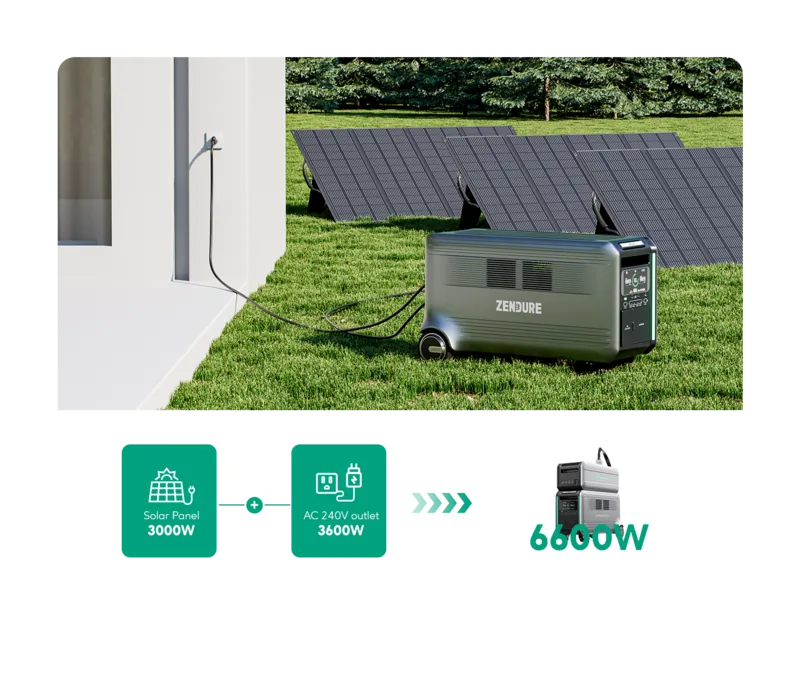
Power Adapter (3600W), Solar (3000W), Vehicle
Charging Inputs
3
DC Charging Inputs
1
Solar Charging Inputs
1
Number of Power Adapters
1x
Solar Charging Voltage
10-150V
Charging Time 1x Adapter
2.5-4h
Charging Time Solar
3h (3kW Panel)
Charging Time Solar + Adapter
2.2h (3kW Panel)
Battery Expansion Connections
10
Battery Expansion Compatibility
2x Zendure SuperBase V6400 Solar Generator, 8x Zendure SuperBase B6400 Expansion Battery
Operating Temperature
-4°F to 113°F
Storage Temperature
-4°F to 113°F
Weight
130.07 lbs
Dimensions
17.60x12.60x28.74 inches
Special Features
Transport Handles, Transport Wheels, App Control, UPS Function
Note
Prices may include 0% VAT rates for AT and DE
Product Description
Maximizing Power with Zendure SuperBase V6400
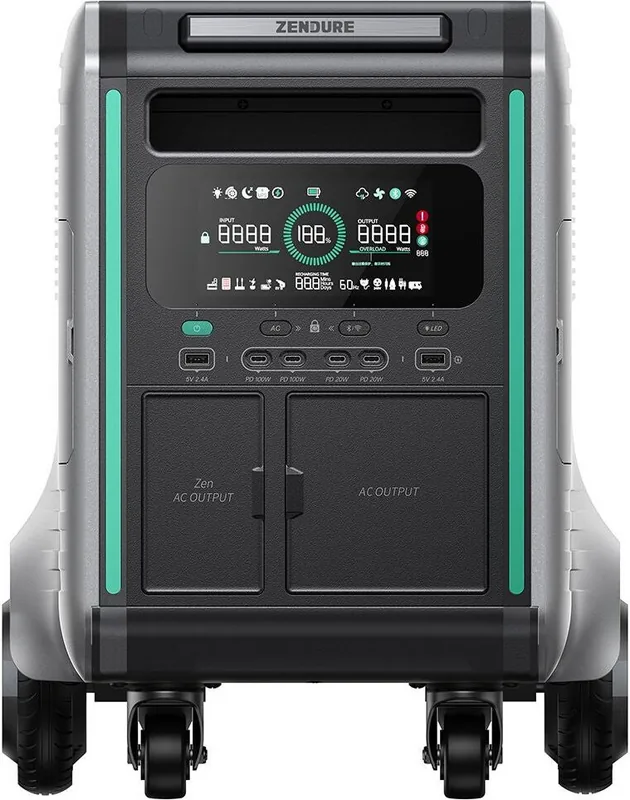
When venturing off-grid or needing reliable backup power, the Zendure SuperBase V6400 Solargenerator proves to be a powerhouse for modern energy demands. Understanding its full potential often requires specific guidance found in the Zendure SuperBase V6400 Solargenerator Manual which accompanies the product. This device serves as a premium energy solution capable of supporting various essential loads during power outages or outdoor adventures. The system allows for significant capacity expansion through dedicated satellite batteries, enabling users to scale power storage as needed. This manual details how to connect these units safely and efficiently to maximize output capabilities without compromising safety protocols.
Proper installation and storage are crucial for the longevity of the unit. Users must familiarize themselves with strict safety guidelines regarding operating temperature and environmental storage conditions. Operating within specified temperature ranges ensures optimal performance and prevents potential hazards. The battery chemistry utilizes advanced Semi-solid State Technology for a long lifespan, reaching over 6000 cycles for one model type. This longevity makes it ideal for daily charging routines without significant degradation over time, offering cost-effective energy storage.
Connectivity options are robust, featuring Bluetooth and Wi-Fi integration for seamless control. This allows users to monitor status and manage settings via the Zendure app remotely from anywhere. Recharging is highly flexible, supporting inputs from solar panels or vehicle power sources through XT90 ports. Firmware updates can be managed digitally to keep features current and efficient. The system includes multiple output types, including Anderson connectors and DC outlets for diverse device compatibility.
Disposal and maintenance require attention to local environmental laws and regulations. If the battery fails to discharge completely before disposal, professional recycling is necessary. Stacking satellite units requires specific alignment steps to ensure secure connections between layers. Proper alignment and screw tightening prevent dangerous electrical faults during operation. Always ensure all units are powered down before linking them together to avoid damage to the ports. Security features protect against overload and thermal issues automatically. The status indicators provide visual feedback on battery health in real time. In case of damage, immediate power off is recommended to ensure safety. Clear communication between devices ensures safety during operation. Whether for camping or home backup, this system offers versatility and reliability. Regular maintenance through the app helps prevent unexpected failures during critical times. Refer to the official documentation for detailed troubleshooting steps if issues arise.
The physical dimensions are designed for portability despite the weight. Weighing around ninety-nine to one hundred one pounds, the unit remains sturdy. Height and depth allow for stacking multiple units vertically. The handle covers protect the ports during storage and transport phases. Rubber strips prevent slipping when stacking additional satellite batteries on top. The unit sits flat on the ground to prevent accidental falling over during use.
Search for 67,706 Manuals online


Type-in Brand or Model