
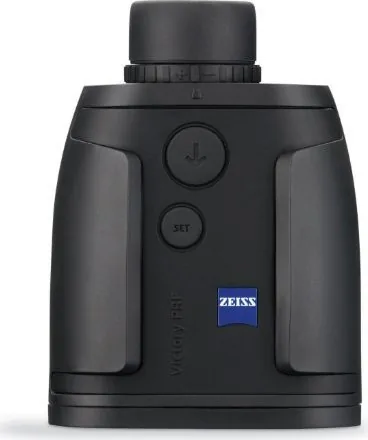
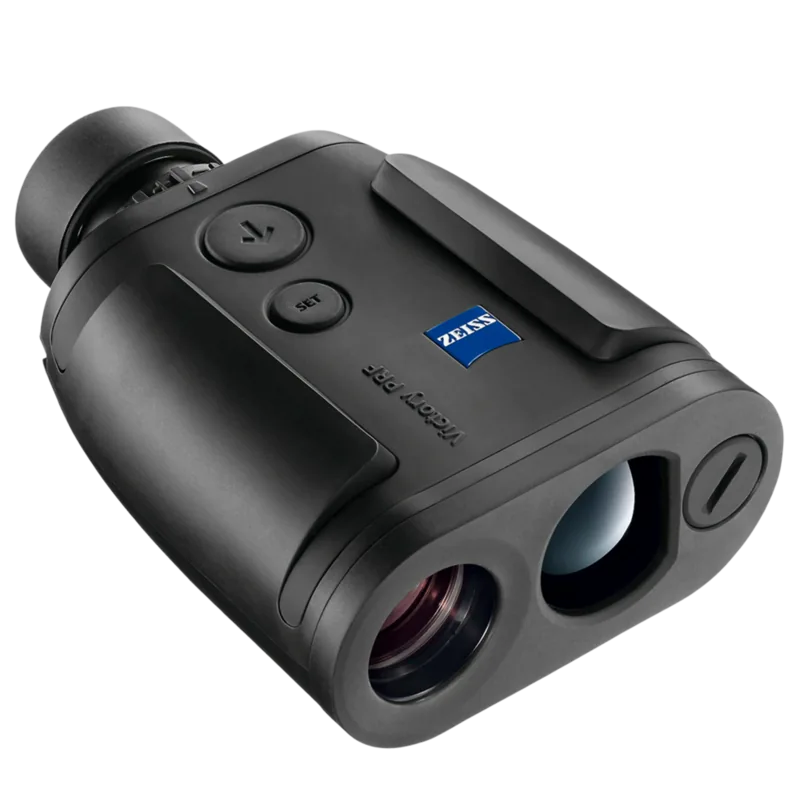
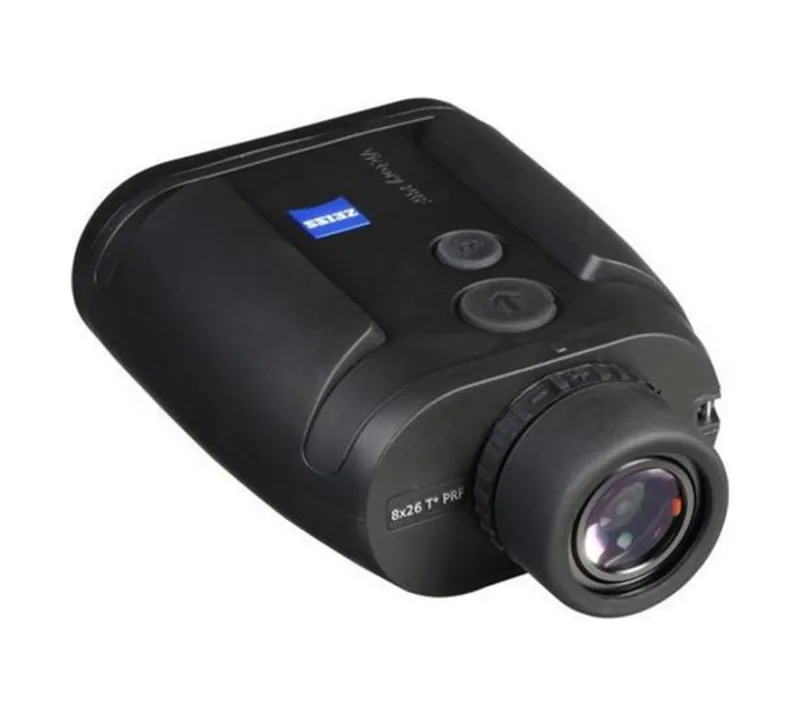
Zeiss Victory 8x26 T* PRF Manual
PDF manual · 58 Pages
English



Quick check
Incorrect answer, please try again.
Chat with your Zeiss Victory 8x26 T* PRF manual using AI
Get instant AI answers from your Zeiss Victory 8x26 T* PRF manual
Ask anything about the Zeiss Victory 8x26 T* PRF. Answers come from this manual, with the pages they are based on.
Victory 8x26 T* PRF Maintenance Schedule
Blow off coarse dust like sand or remove with a fine brush. Breathe on lenses and wipe with a clean optic cloth for fingerprints.
Take out the battery if the device will be unused for a long period to prevent damage from leakage.
Ask a Question
Do you recommend Victory 8x26 T* PRF?
Yes NoFrequently Asked Questions
The rangefinder measures from 10 to 1200 meters (10–1300 yards). Accuracy is ±1 meter up to 600 meters and ±0.5% for distances over 600 meters, subject to target reflectivity and environmental conditions.
Is this answer helpful?
BIS™ stores six ballistic curves and selectable sight‑in profiles (EU: 100 m or GEE; US: 100 yd or 200 yd). After a distance measurement it shows a holdover correction (preceded by H or L) in cm for EU or inches for US, for ranges up to 500 m.
Is this answer helpful?
It uses one 3V CR2 lithium cell. At +20 °C a new battery typically provides over 2000 measurements; heavy scan use or cold temperatures can reduce life. Remove the battery for long-term storage.
Is this answer helpful?
Yes. The eyecup has four detent positions; retract it for users wearing glasses and extend for those without. Diopter compensation adjusts the display and aiming mark sharpness for comfortable viewing.
Is this answer helpful?
Range and accuracy are degraded by haze, fog, bright direct sunlight, low target reflectivity (dark targets), oblique viewing angles, and inhomogeneous targets like bushes or trees.
Is this answer helpful?
Use the device tables and your ammunition’s bullet‑drop data to match the closest curve (EU/US and sight‑in distance). Save the selection via the SET button and verify in live-fire practice to ensure correct holdover.
Is this answer helpful?
Yes. The binoculars are designed to be water-resistant (up to approximately 1 meter/100 mbar) and built for outdoor durability, but avoid prolonged sun exposure without a cap or pouch to protect internal components.
Is this answer helpful?
Advantages and Disadvantages
Advantages

- Compact, lightweight 8x26 design with high-quality T* optics for bright, sharp views.
- Integrated laser rangefinder: 10–1200 m (10–1300 yd) range with ±1 m accuracy up to 600 m.
- Ballistic Information System (BIS™) with six trajectory curves and selectable sight‑in profiles.
- Long battery life using one CR2 lithium cell (>2000 measurements at +20 °C) and easy battery access.
- Rugged, water-resistant construction, automatic display brightness and user-friendly controls.
Disadvantages

- Ballistic corrections limited to ranges up to 500 m; displays “HIGH” beyond that.
- Performance and maximum range strongly affected by atmospheric conditions and target reflectivity.
- Scan mode auto-shuts after ~40 seconds which may interrupt extended continuous measurements.
- Requires manual selection of ballistic curve and matching to ammunition—needs ballistic data and testing.
- Single CR2 battery may be inconvenient to replace in remote areas compared to more common cell formats.
Product Specification
Magnification
8x
Measuring range
32.81-3937.01ft
Measurement accuracy
±1.64ft
Weight
0.68lb
Product Description
Zeiss Victory 8x26 T* PRF Manual
The Zeiss Victory 8x26 T* PRF is a precision laser rangefinding binocular built for hunters and outdoor enthusiasts who demand compact optics paired with advanced range and ballistics support. Combining an 8x magnification with a 26 mm objective, this unit offers a bright, detailed view and a built-in laser rangefinder that measures distances from 10 to 1200 meters (10–1300 yards), with typical accuracy of ±1 m up to 600 m and ±0.5% beyond. Ruggedly constructed and weather-resistant, the Victory 8x26 T* PRF pairs Zeiss optical coatings and ergonomic controls with a Ballistic Information System (BIS™) to help translate measured range into holdover corrections for field use.
Key features and how they help you
-
Optical performance: 8x magnification, T* coated lenses, 3.25 mm exit pupil and a 110 m field of view at 1000 m—delivering crisp images and good light transmission in varied conditions. Diopter adjustment and a multi-position eyecup ensure comfortable viewing with or without glasses.
-
Laser rangefinding: Rapid range readings (display updates in about 4 seconds, scan mode refreshes ~1.5 s) and a laser wavelength of 904 nm with ~4 x 2 mrad divergence. The device indicates out-of-range or weak reflections with dashes and adapts display brightness automatically.
-
Ballistics support (BIS™): Six stored ballistic curves (EU and US variants) and selectable sight‑in profiles (100 m / GEE or 100 yd / 200 yd) let you match typical ammo trajectories and receive recommended holdover values (H or L) displayed in cm or inches for ranges up to 500 m.
-
Practical design: Lightweight (~310 g with battery), powered by a single CR2 lithium cell (>2000 measurements at 20 °C), waterproof to approximately 1 meter, and built for straightforward maintenance—cleaning guidelines, spare-part support, and clear battery-disposal instructions included.
Usage highlights
Operate the rangefinder by pressing and releasing the RANGE FINDER button to measure; hold for ~3 seconds to enter scan mode. Switch between meters and yards and select ballistic programs via the SET button. Focus the LED aiming mark using the diopter compensation. Choose the BIS curve matching your cartridge using provided tables to obtain holdover corrections that support safer, more accurate shooting.
Notes
- The BIS™ aids but does not replace shooter judgment; verify with live-fire practice.
- Environmental factors (fog, target color, angle, and structure) strongly affect maximum range and accuracy.
- Remove battery if storing long-term to prevent leakage damage.
- Dispose of batteries and electronic waste per local regulations.
Search for 67,706 Manuals online


Type-in Brand or Model