

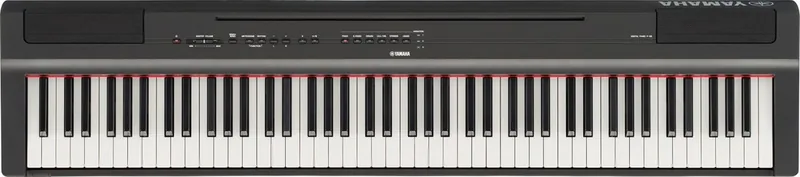

Yamaha P-125 Manual
PDF manual · 36 Pages
English



Quick check
Incorrect answer, please try again.
Chat with your Yamaha P-125 manual using AI
Get instant AI answers from your Yamaha P-125 manual
Ask anything about the Yamaha P-125. Answers come from this manual, with the pages they are based on.
Ask a Question
Do you recommend P-125?
Yes NoFrequently Asked Questions
Its Graded Hammer Standard keyboard gives the lower keys a heavier feel and the upper keys a lighter feel, helping mimic the response of an acoustic piano. The sound engine and resonance effects also add realism.
Is this answer helpful?
Yes. It is well suited to home practice because it has a realistic key feel, a metronome, headphone outputs, and simple recording tools. It also fits comfortably in smaller spaces.
Is this answer helpful?
Yes. It includes 24 preset voices, such as piano, electric piano, organ, strings, and bass. You can also use dual, split, and duo modes to expand how those sounds are combined.
Is this answer helpful?
Yes. The rhythm feature adds drum and bass accompaniment in several styles. It is useful for practice, timing, and making solo playing feel more like a full performance.
Is this answer helpful?
Yes. You can record a user song, record left and right parts separately, and even adjust some settings after recording. You can also transfer data to a computer.
Is this answer helpful?
Yes. The USB TO HOST connection supports computer and smart-device use, and Yamaha also supports app-based control through tools like Smart Pianist.
Is this answer helpful?
Advantages and Disadvantages
Advantages

- Weighted GHS keys deliver a realistic acoustic-style touch for practice and performance.
- Pure CF sound, resonance details, and touch response create a musical piano tone.
- Dual, split, duo, metronome, and rhythm modes add real versatility.
- USB and headphone connectivity make it easy to use at home or with apps.
Disadvantages

- Built-in speakers are useful, but larger rooms may need external speakers.
- Some accessories, including stand and pedal unit, are sold separately.
- Only one user song can be stored internally, which limits onboard recording.
- Feature set is practical, but not as deep as higher-end stage pianos.
Product Specification
Type
Stage Piano
Stand
no (wooden stand optional)
Keys
88
Polyphony
192-voice
Tones
24
Styles
no
Pedals
1
Speakers
2x 7W (4 speakers)
Display
no
Functions
Metronome, Transposition, Fine Tuning, Dual/Layer, Split, Duet
Audio Connections
Stereo Line Out (0.25in Jack), 2x Headphones (0.25in Jack)
Other Connections
USB-B (USB to Host), Sustain Pedal
Dimensions
1326x154x295mm (WxHxD)
Weight
25.36 lbs
Product Description
Yamaha P-125: A Compact Digital Piano with Realistic Feel
If you're searching for a digital piano that combines a convincing acoustic touch with everyday practicality, the Yamaha P-125 has a lot to offer. The Yamaha P-125 Manual points to an instrument built for players who want authentic response, straightforward controls, and enough flexibility to cover practice, performance, and simple home recording. It is compact enough for smaller spaces, yet capable enough to feel like a serious musical tool.
At the center of the experience is Yamaha's Graded Hammer Standard keyboard, designed to feel heavier in the lower register and lighter in the upper range. That detail matters because it supports proper technique while keeping the instrument responsive and musical. Yamaha's Pure CF sound engine adds a clear, polished piano tone, while damper resonance, key-off samples, and string resonance help the sound breathe in a more natural way. The result is a piano voice that feels expressive without being complicated.
The P-125 also gives players room to explore. With 24 preset voices, dual mode, split mode, and duo mode, it can shift from elegant solo piano to layered textures, bass-and-piano setups, or side-by-side lesson playing. Features like reverb, sound boost, table EQ, and intelligent acoustic control make it easier to adapt the instrument to different rooms and playing styles. A built-in metronome and rhythm section add even more value, especially for practice sessions that need timing support or a bit of groove.
For players who like to capture ideas, the recorder is another strong point. You can store a user song, work with left and right parts separately, and even connect to a computer or smart device through USB. That opens the door to music apps, MIDI work, and audio playback or recording. Headphone jacks, optional external speakers, and support for accessories such as pedal units make the P-125 easy to build into a home setup that grows with your needs.
Its compact cabinet and modest power demand make it better suited to personal rooms than large stages, but that is part of its appeal. It focuses on musical expression, not excess, and that makes it a reliable everyday piano for practice, songwriting, and family use.
Notes
- A strong choice for learners, returning pianists, and players who want a portable weighted keyboard.
- Best appreciated with a stand, pedals, or headphones for a fuller playing experience.
- Smart device integration adds convenience for practice and creative work.
Search for 67,706 Manuals online


Type-in Brand or Model