
Yakiniku Kamado Manual
PDF manual · 142 Pages
English



Quick check
Incorrect answer, please try again.
Chat with your Yakiniku Kamado manual using AI
Get instant AI answers from your Yakiniku Kamado manual
Ask anything about the Yakiniku Kamado. Answers come from this manual, with the pages they are based on.
Kamado Maintenance Schedule
Purchase a new stainless steel grill brush at the beginning of each spring.
Replace the felt gasket as needed; the manual states it may need replacement every two or three years.
Remove accumulated ash and old charcoal from the kettle bottom and ash collector. Ensure charcoal is extinguished and grill is cool first.
While the grill is warm but not hot, wipe the lid interior with a paper towel to minimize carbonized grease buildup.
Free maintenance reminders
Timed to your purchase date. Always free, unsubscribe anytime.
Ask a Question
Do you recommend Kamado?
Yes NoFrequently Asked Questions
Open the lid, remove the grill, fill charcoal to the round air vents (not above the coal basket), open bottom vent and daisy wheel fully, place 3–4 fire lighters among the coals, close the lid and let it heat. Wait until 150°C before adding the grate; then adjust vents to reach desired temperature.
Is this answer helpful?
Use 100% natural lump charcoal (avoid briquettes). Fill to the specified level for your model. Typical burn times vary by amount: 1 kg ~2–9 hours depending on temperature and use patterns; 5 kg can sustain low-temperature cooks for many hours.
Is this answer helpful?
Control temperature by adjusting the bottom stainless slide (air intake) and the top daisy wheel. Small openings (about 0.5 cm) are common for steady temps; larger openings increase heat. For very high heat, open the lid slightly before fully opening to avoid hot backdrafts.
Is this answer helpful?
Yes—the airtight, double-insulated Woodchipper accessory allows you to add smoking wood or herbs through the dedicated opening without opening the main lid, helping preserve internal temperature and maintain cooking accuracy.
Is this answer helpful?
Remove cooled ash before use, brush interior deposits with a stainless brush, wipe the inside warm (not hot) with paper towel to reduce buildup, clean the exterior with warm soapy water and dry, inspect and oil hinges, and replace worn gasket material every few years as needed.
Is this answer helpful?
Private-use warranties cover various parts (e.g., 2 years for grates and some ceramics, up to 20 years for glazed lid/base). Warranties exclude misuse, modifications, non-original parts, salt/chlorine damage, severe weather events, and normal wear items like felt and gloves. Registration is recommended.
Is this answer helpful?
Yes—the Pro-Set (multilevel lift, half-moon heat deflectors and grates) lets you split the kamado for simultaneous direct and indirect cooking. Adjust rack heights and heat deflectors to create separate cooking zones for different dishes.
Is this answer helpful?
Advantages and Disadvantages
Advantages

- Exceptional heat retention from thick ceramic and cordierite, reducing charcoal use by 50–70%.
- Precise temperature control via calibrated top daisy wheel and bottom stainless steel vent.
- Durable 304 stainless steel components and weather-resistant glaze for outdoor use year-round.
- Woodchipper accessory lets you add smoking wood without opening the lid to preserve temperature.
- Wide accessory ecosystem (Pro-Set, cleaning kit, pizza stone) enables versatile cooking styles.
Disadvantages

- Heavy ceramic construction makes the unit bulky and difficult to move while hot.
- Warranty exclusions for misuse, non-original parts, salt/chlorine exposure, and commercial use.
- Requires careful assembly and adherence to safety steps; incorrect setup can be hazardous.
- Felt gasket may need replacement every 2–3 years and is a wear item not covered long-term.
- Not suitable for indoor use, boats, or RVs due to carbon monoxide and ventilation risks.
Product Specification
Construction Type
Kettle Grill, Ceramic Grill
Grill Attachment
Stainless Steel Grill Grate, Grill Lid with Thermometer
Air Supply Control
yes
Product Description
Yakiniku Kamado Ceramic Grill — Manual, Features and Use
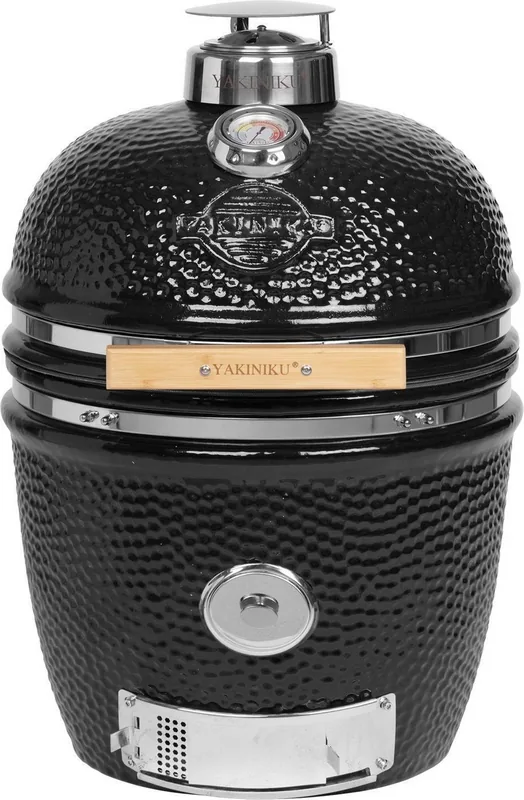
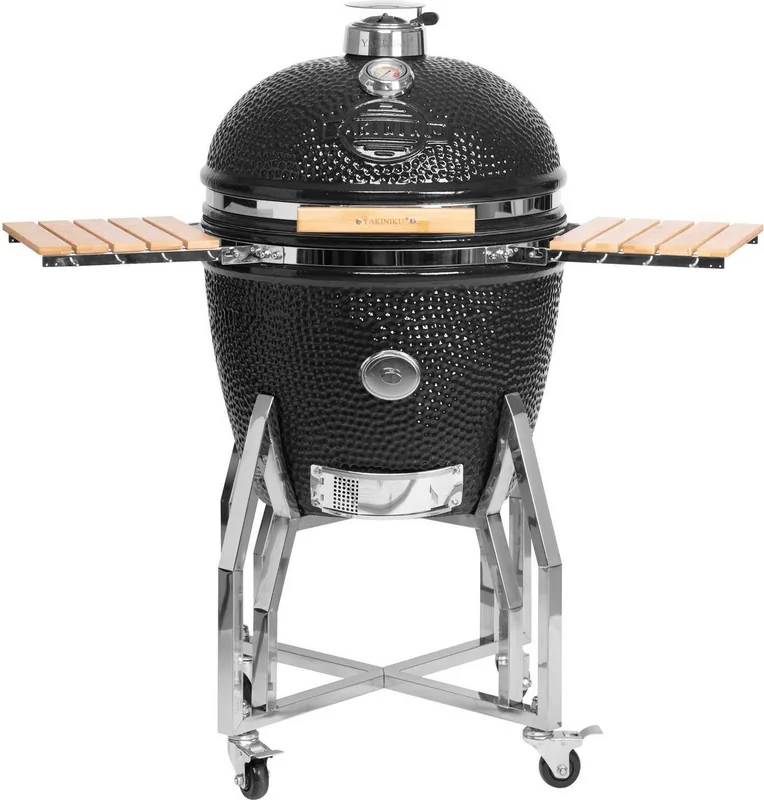
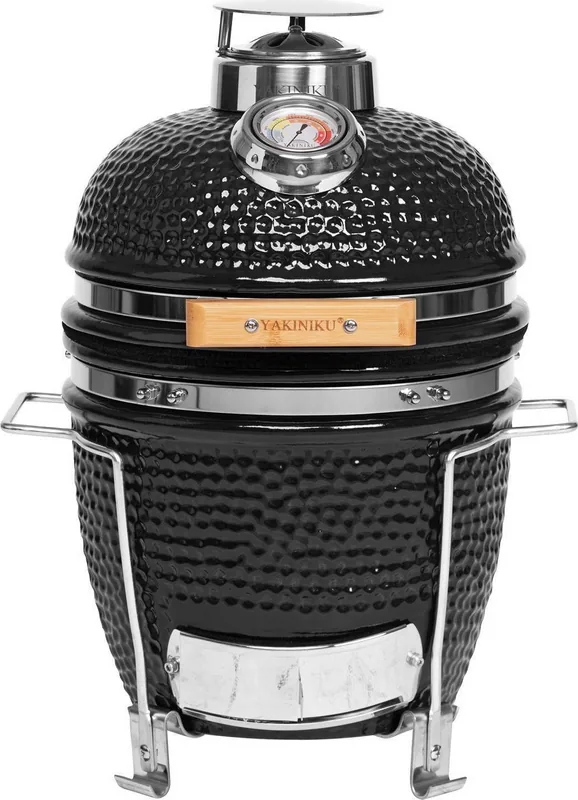
The Yakiniku Kamado Ceramic Grill is a high-quality kamado-style cooker engineered for versatile outdoor cooking. Built from extra-thick ceramic combined with cordierite and fitted with 304 stainless steel components, it retains heat efficiently, reduces charcoal consumption, and resists weather and temperature fluctuations. Its oval design promotes consistent air circulation, while a calibrated oxygen supply system (top daisy wheel and bottom vent) allows precise temperature control from low-and-slow smoking to high-heat searing.
This kamado comes in several sizes (Mini, Compact, Medium, Large, XLarge, XXLarge) and includes features such as a large ash pan, fiberglass/felt gasket for a tight seal, a double-insulated Woodchipper for adding smoking wood without opening the lid, and robust stainless hardware. Accessories and optional Pro-Set components (multilevel lift, half-moon heat deflectors and grates) expand functionality for multi-level cooking, indirect roasting, pizza baking, and smoking.
Assembly is documented step-by-step for each model and stand configuration, with clear parts lists and safety guidance. Lighting instructions recommend natural lump charcoal, fire lighters, and specific vent settings; the kamado typically reaches cooking temperature within twenty minutes and maintains heat for long sessions with far less fuel than open grills. Cleaning and maintenance guidance cover ash removal, interior soot management, exterior care, gasket upkeep, and recommended cleaning tools.
The manual emphasizes safety: use outdoors only, keep clear of flammable materials, never use volatile fluids, always use proper gloves and long-handled tools, and never leave the grill unattended while hot. Warranty terms are detailed—private-use and professional-use periods differ (e.g., up to 20 years on glazed ceramic lid/base for private use), with registration recommended and exclusions for misuse, salt/chlorine exposure, non-original parts, and certain ceramic hairline fissures.
Practical tips and an extensive FAQ cover charcoal amounts and burn times, relighting, temperature control, using the Woodchipper, cleaning the daisy wheel, thermometer calibration and dehumidifying, multi-dish cooking with the Pro-Set, and food safety. A comprehensive grilling times table provides estimated cook durations and methods for many proteins and vegetables.
Notes:
- Follow all safety instructions; improper use can cause severe injury or property damage.
- Use 100% natural lump charcoal for best results; avoid briquettes or fluids.
- Register the product online to streamline warranty claims and possible extended coverage.
Search for 67,706 Manuals online


Type-in Brand or Model