
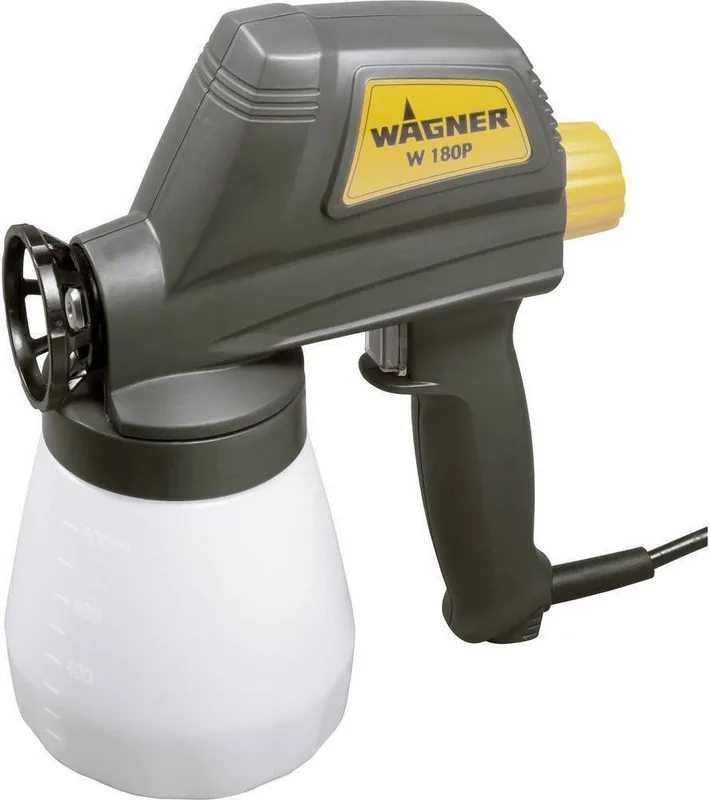
Wagner W 180 P Manual
PDF manual · 46 Pages
English



Quick check
Incorrect answer, please try again.
Chat with your Wagner W 180 P manual using AI
Get instant AI answers from your Wagner W 180 P manual
Ask anything about the Wagner W 180 P. Answers come from this manual, with the pages they are based on.
Ask a Question
Do you recommend W 180 P?
Yes NoFrequently Asked Questions
It can spray solvent-based paints and varnishes, acrylic enamel, water-dilutable varnishes, glazes, polishes, wood preservatives, disinfectants, plant treatments, impregnation products, oils, and other water-based liquids. Check coating instructions and prepare the material to the recommended viscosity.
Is this answer helpful?
Do not use dispersion paint, latex paint, strongly abrasive materials, glazes containing coarse particles, paint strippers, caustic solutions, or silicate paint. These products may clog, wear, or corrode pump components and are not recommended for the unit.
Is this answer helpful?
Often, yes. The required dilution depends on the coating type. Use the supplied viscosity cup to measure runout time and compare it with the recommended range for the material. Oils, polishes, and many wood treatments can generally be sprayed undiluted.
Is this answer helpful?
Test the spray pattern on cardboard, keep the gun level, and move it steadily using your arm rather than your wrist. Start and stop outside the work area. Apply thin coats in cross passes instead of applying one heavy coat.
Is this answer helpful?
Empty leftover material, add a suitable non-flammable thinner or cleaner, and spray briefly. Unplug the unit, disassemble the specified parts, clean them thoroughly, reassemble, and add a few drops of light oil to the intake and return openings.
Is this answer helpful?
Use safety goggles, respiratory protection, and hearing protection. Work in a well-ventilated area, remove ignition sources, protect nearby surfaces from overspray, and never point the high-pressure nozzle at people or animals.
Is this answer helpful?
Advantages and Disadvantages
Advantages

- Compact 1.5 kg electric sprayer with an 800 ml container for manageable DIY coating tasks.
- Adjustable material-flow control helps tailor application to coating thickness and project needs.
- Compatible with many varnishes, glazes, wood preservatives, oils, and water-based liquids.
- Includes a viscosity measuring cup to help prepare materials for consistent spray performance.
- Replaceable pump and available accessories support maintenance and expanded reach.
Disadvantages

- Not suitable for dispersion or latex paints, abrasive materials, coarse glazes, strippers, caustics, or silicate paints.
- Many paints require careful thinning and viscosity testing before use.
- Thorough cleaning after every use is necessary to avoid clogs, wear, and performance issues.
- The 800 ml container may require refilling during larger exterior projects.
- High-pressure spraying requires protective equipment, ventilation, masking, and careful technique.
Product Specification
Power
110 W
Flow rate
270 mL/min
Paint coverage
8.29 sq ft/min
Paint cup
27.05 fl oz
Package contents
Nozzle set (0.03 in), needle jet nozzle, spray attachment (27.05 fl oz), cleaning set, accessory set
Product Description
Wagner W 180P Exterior Sprayer Electric Paint Spray System - Read, Download & Print Free
The Wagner W 180P Exterior Sprayer Electric Paint Spray System is a compact airless paint sprayer designed for home improvement, maintenance, and exterior finishing projects. With a 110 W motor, an 800 ml material container, and a maximum delivery rate of 270 g/min, it offers a practical way to apply coatings more quickly and evenly than with a conventional brush or roller.
Its high-pressure atomization system pushes material through a 0.8 mm round spray nozzle, helping create a consistent coating on fences, garden furniture, doors, woodwork, and other prepared surfaces. The adjustable material-flow control allows users to tailor output to the coating and task, which can help reduce overspray and prevent heavy applications that lead to drips.
The W 180P is compatible with a broad selection of liquid materials, including solvent-based paints and varnishes, acrylic enamels, water-dilutable varnishes, glazes, polishes, wood preservatives, disinfectants, impregnation products, oils, and other water-based liquids. Many coatings require thinning before spraying, and the included viscosity cup helps users check whether the material is prepared correctly. The maximum supported runout time is 80 seconds.
For the best finish, surfaces should be smooth, clean, dry, and free from dust. Test spraying on cardboard is recommended before beginning a project. Smooth arm movements, a steady working distance, and thin cross-coats can improve coverage while reducing streaks, orange peel texture, and paint runs. A flexible nozzle extension is available separately for ceilings, low surfaces, and difficult-to-reach areas such as radiators.
Cleaning is an essential part of ownership. After use, empty remaining material, spray a suitable non-flammable cleaning liquid briefly, disconnect the power, clean the removable components, and add a few drops of light oil to the intake and return openings. Regular care supports reliable pump performance and helps prevent clogs.
Notes
- Do not use flammable materials or clean the sprayer with flammable solvents.
- Dispersion paint, latex paint, abrasive coatings, coarse glazes, caustic solutions, strippers, and silicate paints are unsuitable.
- Wear eye, respiratory, and hearing protection, and ensure strong ventilation during spraying.
- Never aim the high-pressure spray at people or animals.
Search for 67,706 Manuals online


Type-in Brand or Model