
Vigor V4411 Manual
PDF manual · 16 Pages
English



Quick check
Incorrect answer, please try again.
Chat with your Vigor V4411 manual using AI
Get instant AI answers from your Vigor V4411 manual
Ask anything about the Vigor V4411. Answers come from this manual, with the pages they are based on.
V4411 Maintenance Schedule
Keep the brake bleeder clean after finishing the operation.
Never store fluid in the brake bleeder; remove old fluid if excessively dirty and refill with fresh fluid.
Ask a Question
Do you recommend V4411?
Yes NoFrequently Asked Questions
The bleeder has a 3-liter capacity, allowing multiple bleeding operations before needing a refill.
Is this answer helpful?
Use the recommended operating pressure between 1.0 and 1.2 bar (15–17 psi). Do not exceed 1.4 bar (20 psi) to avoid damaging the vehicle’s hydraulic system.
Is this answer helpful?
The set includes a European adapter (M45xP3.0) and a universal adapter with butterfly nut, J-screw and iron chain. These cover most master cylinder necks; quick-connect fittings make switching components easier.
Is this answer helpful?
The device is intended for bleeding brake lines rather than full fluid change procedures. It draws fluid through the system; for full replacement follow manufacturer service guidance or professional methods.
Is this answer helpful?
Monitor the pressure gauge closely, keep pressure within 1.0–1.2 bar, and press the relief valve button immediately if pressure approaches unsafe levels. Ensure all connections are secure before pumping.
Is this answer helpful?
Do not store brake fluid in the bleeder. Dispose of old fluid per local regulations, avoid skin and eye contact, rinse thoroughly if contact occurs, and contact a doctor if ingested.
Is this answer helpful?
Clean the unit thoroughly after each use, remove and dispose of contaminated fluid before refilling, inspect seals and fittings for wear, and keep the manometer and relief button functional to ensure safe operation.
Is this answer helpful?
Advantages and Disadvantages
Advantages

- Manual operation requires no power, enabling portable and workshop use.
- Includes European and universal adapters to fit a wide range of master cylinders.
- 3-liter reservoir reduces the need for frequent refills during bleeding jobs.
- Integrated pressure gauge and relief valve improve safety and control.
- Quick-connect fittings and simple mechanical design lower maintenance needs.
Disadvantages

- Manual pumping can be tiring for larger jobs compared with powered bleeders.
- Not intended for full fluid replacement workflows—designed for bleeding only.
- Exceeding recommended pressure risks damaging vehicle hydraulic systems.
- Brake fluid handling requires careful disposal and protective measures.
- Adapter compatibility may still require extra parts for rare master cylinders.
Product Specification
Type
Tool
Product Description
Vigor Manueller Bremsentlüfter-Satz 3l Manual
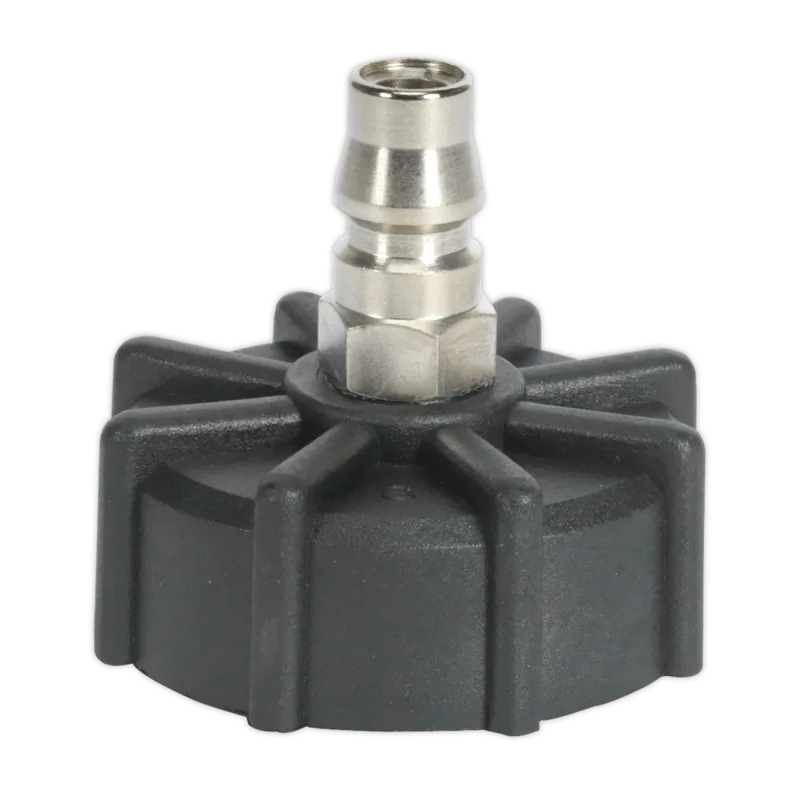
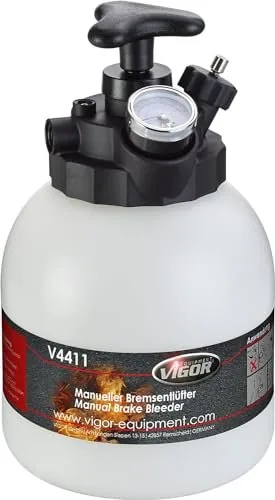
The Vigor Manueller Bremsentlüfter-Satz 3l Manual is a compact, hand-operated brake bleeder designed for safe, controlled brake system maintenance. With a 3-liter capacity and clear pressure gauge, this tool enables technicians and DIY enthusiasts to evacuate old brake fluid and draw fresh fluid into the reservoir without using powered vacuum pumps. Built for versatility, the kit includes both a European adapter (M45xP3.0) and a universal adapter set with a butterfly nut, J-type screw, iron chain and quick-connect fittings to suit a wide range of master cylinder designs.
Key features and how it works
The kit centers on a robust container with a screw cap and a pump handle that creates vacuum by manual pumping. A main 1m Ø7.5 mm tube links the container to adapters. The integrated relief button prevents overpressure, while the pressure gauge helps maintain the recommended operating range of 1.0–1.2 bar (15–17 psi). For safety the manual cautions not to exceed 1.4 bar (20 psi) to avoid hydraulic damage. To use, fill the bleeder with fresh brake fluid, securely connect the main tube to the selected adapter, anchor the adapter (iron chain or cap) to the master cylinder, then pump the handle to draw fluid through the brake lines while monitoring the gauge and releasing excess pressure as needed.
Practical benefits
This manual bleeder is ideal for controlled, portable bleeding jobs where compressed-air systems are not available. The clear manometer and relief valve give precision and safety; quick-connectors and multiple adapters reduce setup time across vehicle types. The 3-liter reservoir minimizes refills, and the durable fittings and simple mechanical construction make it low-maintenance and reliable in workshop and mobile service contexts.
Safety and maintenance notes
Always follow the vehicle service manual or consult a trained professional before use. Do not store brake fluid in the bleeder; clean the unit after each use. If the extracted fluid is heavily contaminated, remove and dispose of it properly, then refill with clean fluid—do not pump dirty fluid through the vehicle hydraulic system. Avoid eye and skin contact with brake fluid; rinse thoroughly and seek medical attention if ingested.
Notes
- Recommended operating pressure: 1.0–1.2 bar (15–17 psi). Do not exceed 1.4 bar (20 psi).
- Keep all connections tight: main tube, cap, and adapter must be firmly locked before starting.
- Use the relief button to safely lower pressure if necessary.
Search for 67,706 Manuals online


Type-in Brand or Model
Lena Fischer
9 months ago
Do I need an external compressor, and is filling and emptying the brake fluid actually easy (so you get all fluid out) or do I need a funnel and extra steps?
Manual.ly
9 months ago
No compressor is needed. According to the instructions, the unit is designed for easy, pressure-free operation and offers straightforward handling. For brake fluid filling, use the specified fill port and (if required for your setup) the recommended funnel/adapter to avoid spills. When emptying, keep the device in the position described in the manual and run the drain/evacuation steps until the discharge runs clear. If there is any residue, a final short rinse/drain cycle through the same port helps remove remaining fluid. Always use the correct adapters for your brake system to ensure smooth flow and complete draining.